 Jobboy
Introduction
Professionals with academic or research backgrounds often struggle to showcase their publications effectively on a resume in 2026. Recruiters in competitive fields such as science, education, healthcare, and technology seek candidates who highlight relevant achievements without overwhelming the document or burying key qualifications. This comprehensive guide provides step-by-step strategies to feature publications strategically, ensuring your resume stands out while remaining ATS-friendly. Whether you have a handful of peer-reviewed articles or an extensive list of conference papers, learning how to list publications on a resume helps demonstrate expertise and thought leadership in a targeted way.
Why Publications Matter on a Modern Resume
Publications demonstrate deep expertise, research capabilities, and the ability to contribute original insights to your field. For roles in academia, R&D, consulting, or specialized industries, they signal credibility and a proven track record. In 2026, with increasing emphasis on data-driven decision making, employers value candidates who can translate complex research into practical outcomes. However, the key is relevance—only include works that align with the target job description to avoid diluting your core qualifications. Irrelevant publications can make your resume appear unfocused, so always evaluate each entry against the job requirements before adding it.
Choosing the Right Section for Publications
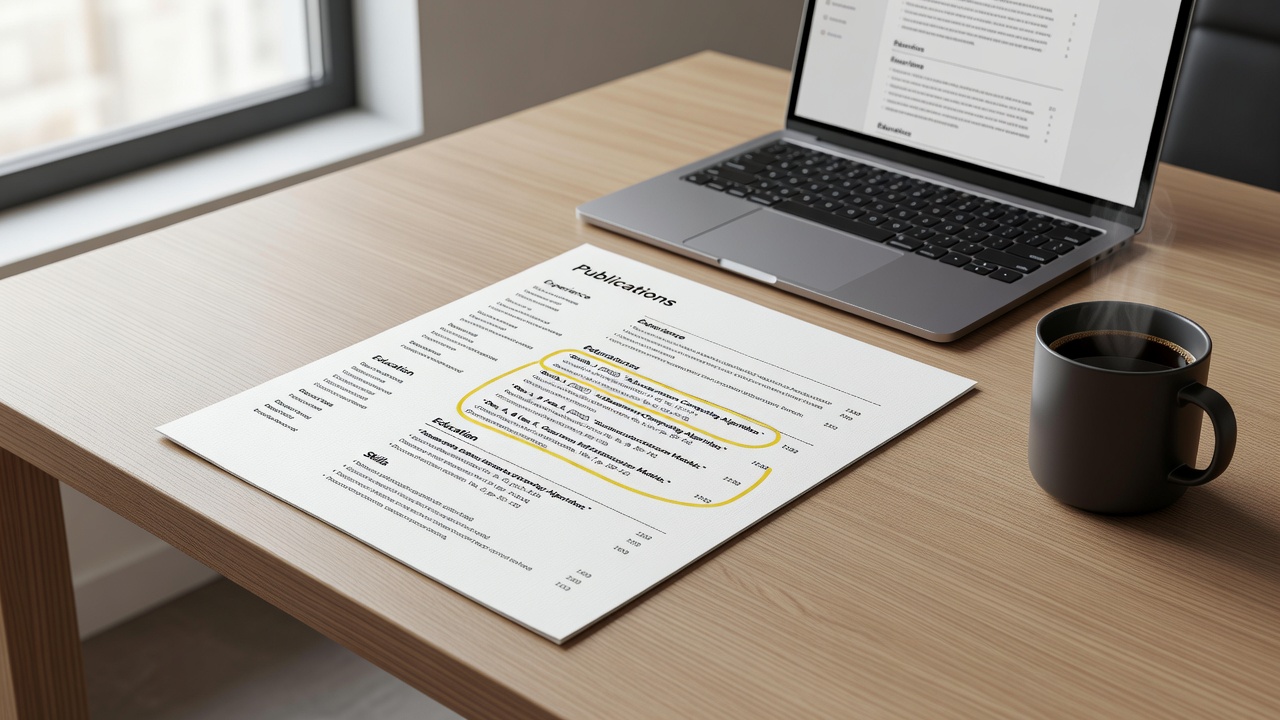
Decide between a dedicated Publications section or integrating entries into your Experience or Education areas. A standalone section works best when you have multiple relevant works that showcase your scholarly contributions. Integration suits those with fewer publications by weaving them into project descriptions under Experience, such as noting a published report that resulted from a specific role. Consider your career stage, industry norms, and the job requirements to choose wisely. Early-career professionals may benefit from integration to keep the resume concise, while mid-career researchers often prefer a prominent dedicated section.
Optimal Placement Strategies
Place the Publications section near the top if research forms a central part of the role, or after the Experience section for most industry positions. Always prioritize the most recent and impactful works first, using reverse chronological order. This structure helps recruiters quickly scan for value within the first few seconds of review. If space is limited on a one-page resume, consider moving older or less relevant items to an online portfolio linked in your header.
Citation Styles: APA, MLA, and Beyond
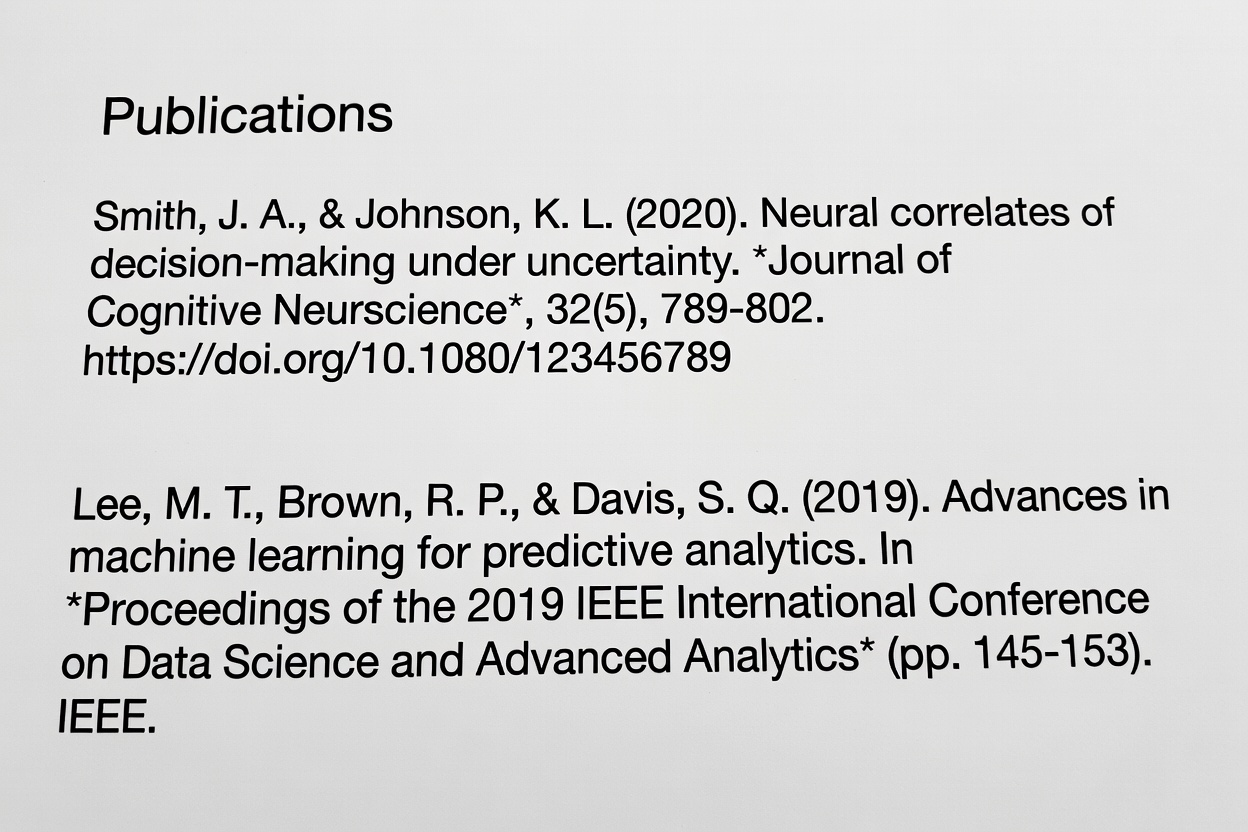
Use consistent formatting based on your field and the expectations of the target employer. APA style suits social sciences, education, and business, while MLA fits humanities and language-related roles. Chicago or IEEE styles may apply in engineering and technical fields. Always verify the preferred style for your industry by checking job postings or company websites. Inconsistent citations can create a poor impression and cause ATS systems to flag your document.
- APA example: Author, A. A. (Year). Title of article. Title of Periodical, volume(issue), pages. https://doi.org/xx.xxx/yyyy
- MLA example: Author Last Name, First Name. “Title of Article.” Title of Journal, vol. number, issue number, year, pages.
- Additional tip: Include DOIs or stable URLs when available to allow recruiters to verify your work quickly.
Consistency prevents formatting errors that could flag your resume during ATS scans and shows attention to detail.
Examples for Journal Articles versus Conference Papers
Journal articles typically include full citation details, volume and issue numbers, page ranges, and DOIs. Conference papers may note the event name, location, and whether the work was peer-reviewed or presented as a poster. Tailor each entry to highlight impact, such as citation counts, key findings, or real-world applications. For instance, a journal article on climate modeling could include a note about its influence on policy recommendations.
Handling Lengthy Publication Lists
If your list exceeds five to seven entries, summarize by grouping similar works or featuring only the most relevant ones under a “Selected Publications” heading. Link to a full academic profile such as Google Scholar or ORCID for complete details. This approach keeps your resume focused while providing access to your broader body of work. Group by theme when appropriate, such as “Publications on Machine Learning Applications” for a data science role.
ATS-Friendly Formatting and Keyword Integration
Optimize for applicant tracking systems by using standard section headings like “Publications” and incorporating target keywords naturally, such as “peer-reviewed research,” “empirical analysis,” or specific methodologies from the job description. Avoid tables, graphics, columns, or unusual fonts that ATS cannot parse. Use standard bullet points and plain text citations. Test your resume by submitting it through free ATS simulators available on career sites to ensure readability.
Real Resume Examples
Consider a research scientist resume featuring three key publications under a dedicated heading, each with a brief impact note such as “Cited 45 times; influenced FDA guidelines.” In contrast, a marketing professional might integrate one industry report into their Experience section to show applied expertise, describing how the published findings drove a 20% increase in campaign engagement. These examples illustrate how context and brevity improve impact.
Comparing Resume and CV Approaches
Resumes are concise (one to two pages) and job-focused, while CVs allow exhaustive lists without page limits. In 2026, tailor publications for resumes by selecting three to five highlights unless the role explicitly requires depth. CVs remain appropriate for academic or international applications where comprehensive documentation is expected. Understanding this distinction prevents common errors like submitting an overly long resume that gets discarded.
Additional Practical Steps and Mistakes to Avoid
Start by auditing your publication list and ranking entries by relevance. Next, draft citations in the chosen style and proofread for accuracy. Finally, seek feedback from a mentor or career coach. Common pitfalls include overloading with irrelevant works, inconsistent citations, neglecting to quantify impact, and failing to update older entries. Always proofread for accuracy and tailor to each application rather than using a generic version.
FAQ
How many publications should I list? Limit to the most relevant three to seven unless the position demands more; prioritize quality over quantity.
Should I include unpublished works? Only if they are accepted or in press, and clearly noted as such to maintain transparency.
What if I have no publications? Focus on other strengths like projects, presentations, or technical reports instead, and emphasize transferable research skills.
How do I handle co-authored publications? List them with all authors or use “et al.” after the first few names, and consider bolding your name for clarity.
Can I include preprints or blog posts? Yes, when relevant, but label them appropriately and ensure they demonstrate professional expertise.
Conclusion
Strategically listing publications elevates your resume in 2026 by proving expertise without excess. Follow these guidelines to create a polished, targeted document that resonates with recruiters and passes ATS filters. For authoritative citation resources, consult APA Style and MLA Style. With careful selection and formatting, your publications become powerful assets in advancing your career.


No comments yet. Be the first!