 Jobboy
Introduction to the 2026 Creator Economy
The creator economy continues to expand rapidly in 2026, offering remote freelancers new opportunities beyond traditional content creation. Niches like short-form video editing, community management, and affiliate strategy development are seeing strong demand as brands and creators seek specialized support. This growth stems from platforms prioritizing authentic, engaging content that drives direct audience connections and revenue streams. Remote freelancers who position themselves in these emerging areas can access flexible work while helping creators scale their operations sustainably. This article explores these niches in depth, providing step-by-step entry guides, platform comparisons, pricing benchmarks as of 2026-09-15, and practical advice for freelancers transitioning into creator-focused work. By the end, readers will have actionable insights to identify profitable paths and avoid common setbacks.
Short-Form Video Editing: A High-Demand Skill
Short-form video remains dominant across platforms, driving the need for skilled editors who can create engaging clips quickly. Remote freelancers in this niche help creators and brands produce content for TikTok, Instagram Reels, and YouTube Shorts that captures attention within the first three seconds. Success requires understanding pacing, text overlays, trending audio, and platform-specific algorithms. To enter this field, start by mastering tools like CapCut and Adobe Premiere Rush. Build a portfolio with sample edits of trending formats, then pitch services on freelance marketplaces. Many freelancers begin by offering revisions on existing creator content to demonstrate value before landing full projects.
Step-by-Step Entry Guide
- Learn core editing techniques through free tutorials on YouTube and practice daily for two weeks to build muscle memory.
- Practice creating 15-60 second videos optimized for retention, focusing on hooks, B-roll, and call-to-actions.
- Offer initial gigs at competitive rates to gather testimonials and refine your workflow based on client feedback.
- Scale by specializing in niches like fitness or tech reviews, creating templates that speed up future deliveries.
- Track performance metrics such as view duration and engagement rates to iterate on your editing style.
Platform comparisons show TikTok favoring fast-paced edits with effects while Instagram prioritizes polished aesthetics and color grading. As of 2026-09-15, many freelancers report steady project-based work in this area, often combining it with motion graphics for higher earnings.
Community Management for Creator Brands
Creators increasingly rely on freelancers to manage Discord servers, Facebook groups, and comment sections to build loyal audiences. This role involves fostering engagement, moderating discussions, and turning followers into active participants who support monetization efforts like memberships or product launches. Effective community managers understand psychology of online interactions and use data to measure sentiment and growth. Entry begins with understanding platform guidelines and tools like Discord bots or moderation bots on other sites.
Step-by-Step Entry Guide
- Volunteer to moderate small creator communities to gain experience and document results such as increased daily active users.
- Develop skills in conflict resolution, content scheduling, and running polls or AMAs that boost participation.
- Network on LinkedIn and creator-focused forums to connect with growing creators seeking help.
- Transition to paid roles by demonstrating engagement metrics like reply rates and retention percentages in proposals.
- Expand services to include monthly reports analyzing community health and suggesting improvements.
Compared to platforms like Patreon for monetized communities versus free options on Reddit, freelancers can charge based on community size and activity levels, tailoring strategies to each environment.
Affiliate Strategy Development
Freelancers skilled in building affiliate programs help creators monetize through partnerships with brands in ethical and effective ways. This involves researching products that align with audience interests, creating disclosure-compliant links, and tracking performance with analytics dashboards. Authoritative guidance on disclosures is available from the Federal Trade Commission. Successful strategies often include email sequences, dedicated landing pages, and performance reviews to optimize commissions over time.
Step-by-Step Entry Guide
- Study successful affiliate campaigns from top creators by analyzing their link placements and promotional methods.
- Learn analytics tools to measure conversion rates, click-throughs, and audience demographics accurately.
- Start with personal affiliate links to test strategies and build credibility before offering services to clients.
- Offer strategy audits to creators seeking revenue growth, including competitor analysis and custom recommendations.
- Integrate tools for automated reporting and compliance checks to deliver ongoing value.
Resources like Shopify provide platforms for seamless affiliate integrations, enabling freelancers to recommend complete setups.
Platform Comparisons and Pricing Benchmarks
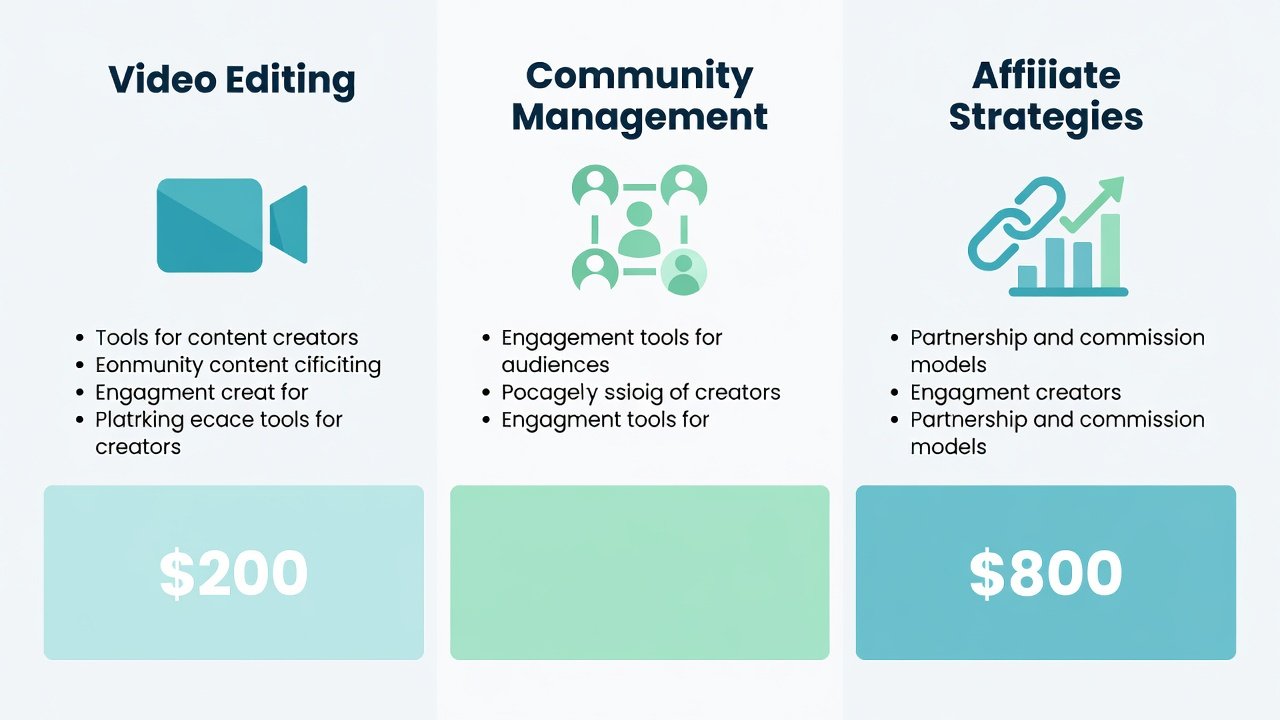
Key platforms include Upwork for broad freelance opportunities with proposal systems, Fiverr for quick gigs and packages, and specialized sites like Contra that focus on direct creator connections. Pricing varies by experience and niche depth, but as of 2026-09-15, short-form editing projects often range from $200-$800 per package depending on volume and revisions. Community management retains freelancers at monthly retainers while affiliate strategies command project fees plus performance bonuses. Real case studies show freelancers increasing income by 40-60% after specializing in these niches through consistent client acquisition and upselling services.
Tools for Scaling Your Gigs
Essential tools include Notion for project management and client onboarding, Canva for quick graphics and thumbnails, and analytics platforms like Google Analytics for performance tracking. Integrate with Patreon for direct creator monetization support and use Zapier to automate workflows between apps. Freelancers should also explore AI-assisted editing software to handle repetitive tasks, freeing time for creative strategy. Diversify client sources by maintaining profiles on multiple platforms and building a personal website for inbound leads. Regular skill updates through webinars ensure competitiveness as tools evolve.
Real Freelancer Case Studies Showing Income Growth
One editor started with basic TikTok clips in early 2025 and by mid-2026 had scaled to managing video needs for five mid-sized creators, achieving a 50% income increase through retainer agreements. Another community manager transitioned from general social media work by focusing on niche Discord servers, growing monthly revenue through tiered service offerings. A third freelancer specializing in affiliate strategies used data-driven audits to help a lifestyle creator launch a program that generated consistent passive income, leading to repeat business and referrals.
Common Pitfalls to Avoid
Freelancers often undervalue their services initially or neglect contracts that protect against scope creep. Always use clear agreements outlining deliverables, timelines, and payment terms. Another mistake is ignoring tax implications of creator economy income; consult resources such as IRS guidelines for proper reporting. Staying updated on platform algorithm changes prevents sudden drops in content performance, and over-reliance on single clients creates instability.
FAQ on Transitioning to Creator-Focused Work
How do I start if I have traditional freelancing experience?
Leverage existing skills like writing or design and adapt them to creator needs, such as scripting short videos or designing community graphics while learning platform specifics gradually.
What income growth can I expect?
Many see initial growth within 3-6 months through targeted niches, consistent outreach, and portfolio building that attracts higher-value clients.
Are there risks with platform dependency?
Yes, diversify across multiple platforms to mitigate algorithm or policy shifts that could impact visibility and earnings.
What tools help with client acquisition?
LinkedIn outreach, cold email templates, and participation in creator forums often yield the best results for landing initial gigs.
Conclusion
By focusing on these 2026 creator economy niches, remote freelancers can build sustainable careers with diverse monetization paths. Applying the step-by-step guides, leveraging the right tools, and learning from case studies positions professionals for long-term success while avoiding pitfalls that derail many newcomers.
No comments yet. Be the first!