 Jobboy

Introduction: Breaking Free from Career Paralysis in 2026
Mid-career professionals often face overwhelming indecision when weighing promotions, job switches, or upskilling paths. Mental models provide structured thinking tools to cut through this fog, turning vague anxiety into clear action. Drawing from cognitive science and real-world applications in tech and finance, this guide shows how inversion, first principles, and opportunity cost can transform your 2026 planning. These approaches help you evaluate LinkedIn networking strategies and long-term growth with precision while addressing the unique pressures of a rapidly evolving job market influenced by AI advancements and economic shifts.
Decision paralysis stems from information overload and fear of regret. By applying proven mental models, you can systematically dismantle biases and create repeatable frameworks for progress. This article explores each model in depth, provides neuroscience-backed exercises, shares detailed case studies, and delivers actionable checklists to integrate these tools into your routine without disrupting existing career development habits.
Understanding Key Mental Models for Career Decisions
Inversion: Thinking Backward to Move Forward
Inversion involves considering the opposite of your goal to reveal hidden obstacles. Instead of asking how to secure a promotion, ask what would guarantee failure. This flips assumptions and highlights risks like neglecting skill gaps or poor networking. For mid-career professionals, inversion prevents common pitfalls such as overcommitting to roles that look prestigious but lack growth potential. In practice, start by listing five failure scenarios for a job change, then reverse-engineer preventive steps. This method uncovers blind spots that forward thinking often misses, such as cultural mismatches in new teams or overlooked family impacts from relocation.
Neuroscience research from the National Institutes of Health supports inversion's power, as it engages the brain's problem-solving networks differently than forward planning alone. For example, a finance professional might invert a job change by listing all ways it could derail their retirement timeline, leading to smarter compensation negotiations and contingency planning.
First Principles Thinking: Deconstructing to Rebuild
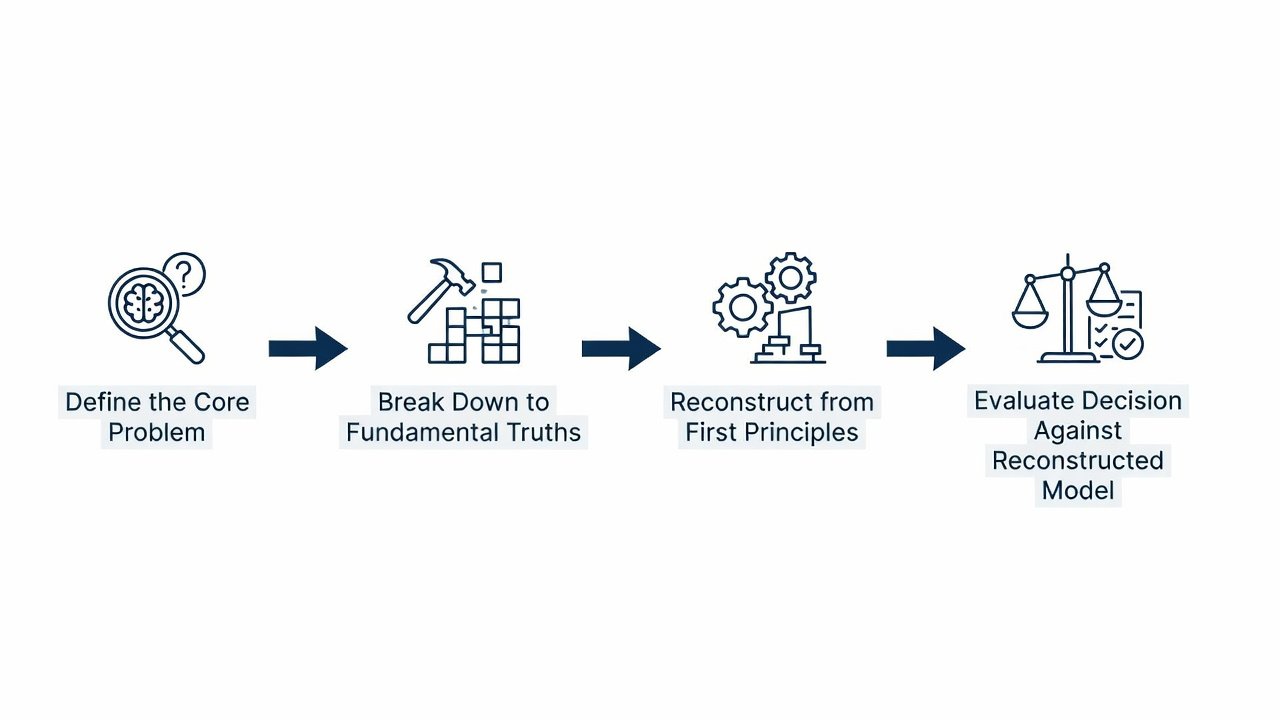
First principles break problems into fundamental truths, ignoring assumptions. In career contexts, this means questioning whether a promotion truly aligns with your core values rather than chasing titles. Tech leaders often use this to pivot from saturated roles to emerging AI ethics positions by boiling down their skills to transferable fundamentals like problem-solving and data analysis. To apply it, break your current situation into core elements: daily responsibilities, required competencies, market trends, and personal motivations. Then rebuild possible paths without relying on conventional advice from peers or social media. This avoids herd thinking common in LinkedIn echo chambers and reveals unconventional opportunities, such as internal lateral moves that build rare expertise.
Expand this by creating a personal first-principles worksheet: identify non-negotiables like work-life balance or creative autonomy, then test each career option against them. Professionals who master this report clearer prioritization during annual reviews.
Opportunity Cost: Weighing the Hidden Trade-offs
Every choice carries an unseen alternative. Calculating opportunity cost means comparing the value of upskilling in data analytics versus pursuing management training. A 2026 tech professional might realize that spending evenings on certifications means forgoing family time or side projects with higher long-term ROI. In finance, this model helps weigh staying for stability against jumping to high-growth startups where equity could compound faster. Build a simple matrix listing top three options, their direct benefits, and what you sacrifice in time, energy, and missed experiences. Review this quarterly to adjust course before inertia sets in.
Neuroscience-Backed Exercises to Strengthen These Models
Daily practice builds mental muscle. Start with a 10-minute inversion journal: write your career goal, then list failure modes and their root causes. Follow with first-principles mapping on paper, breaking one decision into five atomic facts. End with an opportunity cost reflection on the day's small choices. Studies indicate consistent use improves prefrontal cortex activity linked to better decisions. Incorporate breathing techniques before sessions to reduce anxiety and enhance focus, drawing from established cognitive training protocols.
Real-World Examples from Tech and Finance Professionals
In tech, a product manager at a major firm applied inversion to reject a lateral move that looked appealing on LinkedIn but would have stalled technical growth. By listing failure paths like skill atrophy and lost visibility, they instead negotiated a hybrid role combining management with hands-on work. In finance, an associate used opportunity cost to time a job change after reviewing industry reports showing salary stagnation in traditional banking. They mapped alternatives including freelance consulting and internal advancement, ultimately choosing a fintech role with equity upside. Another example involves a software engineer who used first principles to deconstruct a tempting promotion offer, realizing it conflicted with their core interest in coding rather than people management, leading to a specialized track with better fulfillment.
Step-by-Step Frameworks for LinkedIn Networking and Career Planning
- Define your north star using first principles by listing five core values and skills.
- Run an inversion audit on three potential paths, documenting at least five failure risks each.
- Map opportunity costs with a simple spreadsheet comparing time, money, and growth trade-offs.
- Schedule targeted LinkedIn outreach based on insights, focusing on 10 meaningful connections weekly.
- Review weekly and adjust by revisiting your models after each networking conversation.
- Integrate quarterly deep dives where you apply all three models to your five-year vision.
Comparing Common Biases with Effective Mental Model Use
Anchoring bias locks you to the first salary offer or job title seen. Mental models counter this by forcing consideration of alternatives through inversion and opportunity cost. Confirmation bias reinforces existing beliefs, while these tools challenge them systematically. Where anchoring narrows vision, mental models expand it, leading to stronger alignment in career satisfaction. Sunk cost fallacy keeps professionals in unfulfilling roles due to past investment; inversion directly counters this by focusing on future failure avoidance rather than past effort.
Daily Practice Checklists
- Morning: 5-minute inversion on one pending decision, followed by noting emotional triggers.
- Midday: First-principles breakdown of a networking message or email draft.
- Evening: Opportunity cost review of the day's choices with a quick rating scale.
- Weekly: Full framework application to one career goal, including LinkedIn profile updates.
- Monthly: Share insights with a mentor or accountability partner for external feedback.
FAQs on Integrating Mental Models with Career Routines
How do these fit existing development plans? Layer them onto quarterly reviews by dedicating 30 minutes per model. Can beginners start small? Yes, begin with one model per week and gradually combine them. What if models conflict with team advice? Use them to question and refine options rather than reject input outright. How long until results appear? Most professionals notice improved clarity within two to four weeks of consistent practice. Should I track progress in a journal? Absolutely, a dedicated career decision log amplifies the benefits over time.
Conclusion: Your 2026 Action Plan
Adopting these mental models equips you to navigate career indecision with clarity and confidence. Start today with one exercise, build consistency through daily checklists, and watch decision quality improve across promotions, job changes, and skill investments. Resources like Harvard Business Review, National Institutes of Health, and Psychology Today offer further reading to deepen your practice and sustain long-term professional growth.

No comments yet. Be the first!