 Jobboy

Introduction
Navigating today’s competitive job market requires more than just a polished resume and a strong LinkedIn profile. Job seekers need a complete toolkit of websites, apps, and services that handle everything from discovering openings to acing final interviews. This guide explores the most effective resources available, explaining how each tool works and why it belongs in your daily workflow.
Top Job Boards for Finding Opportunities
Job boards remain the fastest way to see thousands of openings in one place. Start with Indeed, which aggregates listings from company career pages and smaller job sites. Set up daily email alerts for your target roles and locations to receive fresh postings without constant manual searching. LinkedIn Jobs offers another powerful option because it combines listings with professional networking. Use its easy-apply feature to submit applications directly from the platform while also researching company employees who can provide referrals.
Glassdoor adds valuable context by showing salary ranges, company reviews, and interview experiences shared by real candidates. Cross-reference postings on multiple boards to increase visibility and catch exclusive listings that appear only on niche sites such as Dice for tech roles or USAJobs for federal positions.
Resume Builders That Produce ATS-Friendly Results
Applicant tracking systems filter out up to 75 percent of resumes before human eyes ever see them. Modern resume builders help you avoid common pitfalls. Rezi uses AI to tailor bullet points to specific job descriptions while maintaining clean formatting. Teal HQ lets you organize multiple resume versions in one dashboard and suggests keyword improvements based on live job postings.
Canva’s resume templates strike a balance between visual appeal and ATS compatibility when you stick to simple layouts. Always export as PDF and test the file by copying text into a plain document to confirm everything remains readable.
Interview Preparation Platforms and Practice Tools
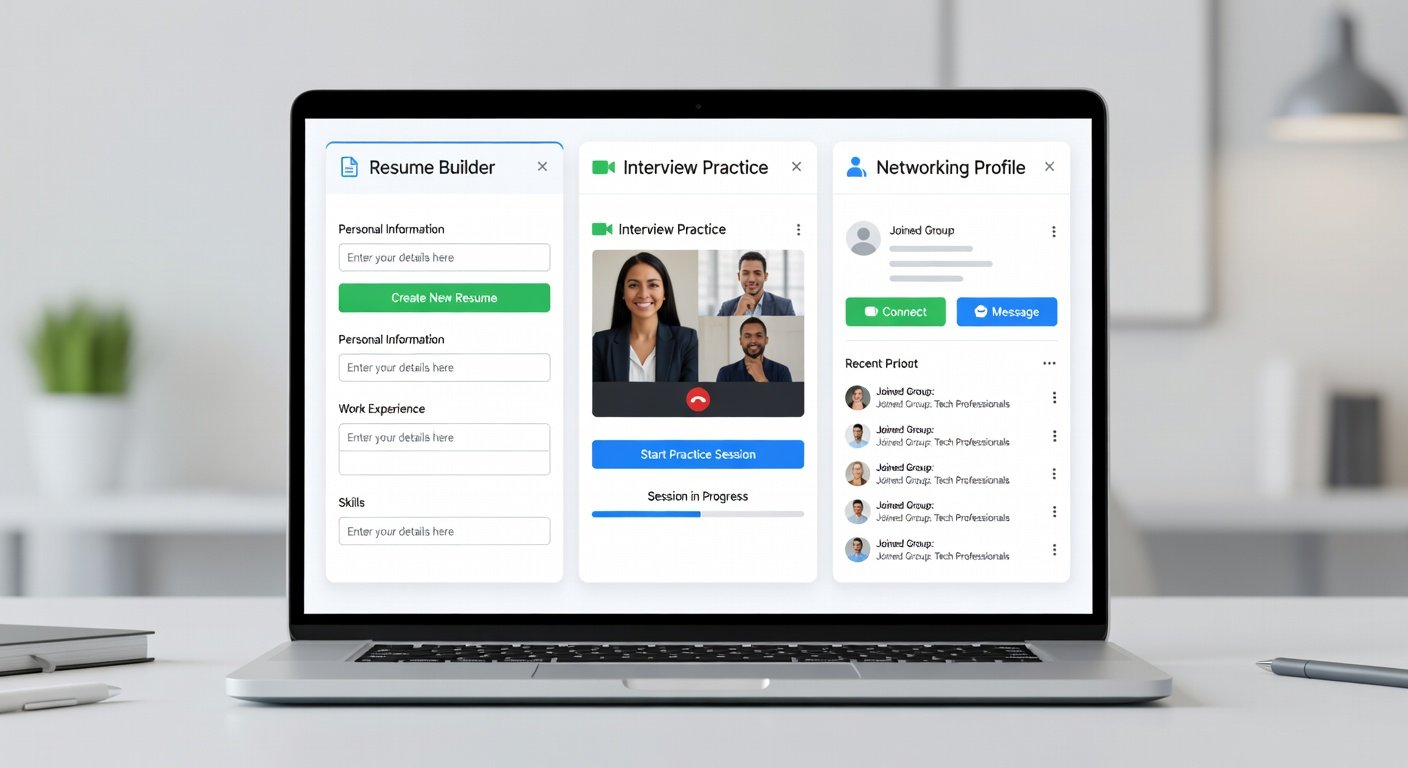
Interview success depends on consistent practice. Big Interview offers video-based mock interviews with industry-specific questions and instant AI feedback on your delivery. Pramp pairs you with other job seekers for live coding or behavioral interviews, simulating real pressure without cost.
For industry research, review common questions on Glassdoor’s interview section and prepare concise STAR stories (Situation, Task, Action, Result). Record yourself answering on your phone to refine pacing and body language before the actual meeting.
Networking and Professional Branding Tools
Hidden job markets often yield the best opportunities. LinkedIn remains essential for building connections, joining industry groups, and following target companies. Send personalized connection requests that reference shared interests or recent company news rather than generic templates.
Additional platforms include Meetup for local or virtual industry events and Twitter Lists for following thought leaders in your field. Maintain a consistent personal brand across all profiles by using the same professional headshot and headline that highlights your value proposition.
Additional Productivity Apps Every Job Seeker Needs
- Hunter.io or RocketReach for finding recruiter email addresses when applying directly
- Notion or Trello to track applications, deadlines, and follow-up tasks in one organized workspace
- Grammarly to catch typos in cover letters and messages
- Calendly to simplify scheduling informational interviews
Putting Your Toolkit Into Action
Combine these resources into a daily routine: spend mornings scanning new postings on Indeed and LinkedIn, afternoons tailoring applications with your resume builder, and evenings practicing interviews or reaching out to new contacts. Track every application in a central spreadsheet or Notion database so you can follow up effectively within one week.
Revisit your toolkit monthly. New features appear regularly on platforms like LinkedIn and Teal, and staying current gives you an edge over less organized candidates.
Conclusion
The right combination of job boards, resume builders, interview practice tools, and networking platforms transforms a scattered job search into a focused, efficient process. Start with the core tools outlined above, customize them to your industry, and refine your approach based on the results you see. Consistent use of this job seeker’s toolkit will help you move from application to offer with greater speed and confidence.


Comments (2)