 Jobboy

2026 ATS Bypass: Job Application Success Hacks
Applicant Tracking Systems have evolved significantly by 2026, incorporating advanced AI that scans resumes for relevance, experience, and cultural fit. Job seekers must adapt with sophisticated optimization tactics to ensure their applications reach human recruiters. This guide explores the latest ATS developments and delivers actionable techniques for resume success, helping candidates navigate increasingly intelligent filters on platforms like LinkedIn and Indeed while maximizing visibility in competitive talent pools.
How Modern ATS Technology Works in 2026
In 2026, ATS platforms use sophisticated natural language processing and contextual AI to evaluate not just keyword presence but also semantic meaning, career progression, and skill relevance. These systems parse documents to extract information like job titles, dates, and achievements while flagging inconsistencies such as employment gaps or mismatched timelines. They also integrate with employer HR databases to compare candidates against historical hiring data and predict long-term retention potential. Advanced features now include sentiment analysis on summary sections and cross-referencing with public professional profiles. Understanding this helps job seekers move beyond basic keyword stuffing toward holistic optimization that aligns with both machine logic and recruiter priorities. For deeper insights into evolving HR technologies, resources from SHRM provide ongoing industry analysis and best practices for navigating these tools effectively.
Advanced Keyword Integration Strategies
Keyword optimization in 2026 requires strategic placement and natural language flow to satisfy AI without triggering red flags. Start by dissecting each job description for primary skills, tools, and responsibilities, then mirror those terms in your resume's summary, experience bullets, and skills list. For example, instead of listing "managed projects," write "led cross-functional project teams using Agile methodologies to deliver 15% efficiency gains and reduce delivery timelines by three weeks." Incorporate secondary keywords like industry-specific acronyms and soft skills such as "stakeholder communication" or "data-driven decision making" without forcing them into awkward sentences. Avoid over-repetition by varying phrasing across sections and distributing terms evenly. Test density by reading the resume aloud to ensure it sounds human and persuasive. This approach improves parsing accuracy on major job boards while boosting relevance scores and increasing the likelihood of advancing to interview stages.
Choosing the Right File Formats and Technical Structure
File format selection remains critical for ATS compatibility in 2026. Stick to .docx for editable parsing or standard PDFs without embedded elements, interactive features, or compressed images. Avoid .pages, .rtf, or image-based files that cause extraction failures and automatic rejections. Structure your resume with clear, standard headings like "Professional Summary," "Work Experience," and "Education" in a single-column layout that flows linearly from top to bottom. Use 10-12 point sans-serif fonts such as Arial or Calibri with 1.15 line spacing for optimal machine readability. Include consistent date formats like "January 2023 – Present" and bullet points limited to 4-6 lines each that focus on outcomes. Eliminate headers, footers, tables, columns, and graphics that confuse parsers and disrupt data extraction. These choices ensure clean data extraction across systems used by recruiters on Indeed and similar sites, reducing technical barriers that derail otherwise qualified candidates.
Step-by-Step Checklist for Testing and Refining Submissions
Follow this detailed process to validate your optimized resume before applying to ensure maximum compatibility and impact:
- Copy the full job description and highlight required skills, tools, and qualifications to build your targeted keyword list, noting both exact phrases and semantic equivalents.
- Revise your resume by weaving keywords into achievement-focused bullets while preserving quantifiable results, such as "Increased sales by 22% through targeted digital campaigns that engaged over 50,000 users monthly."
- Format the document in .docx using standard headings and clean typography, then save a test version without any special characters or symbols that could corrupt parsing.
- Upload the file to an ATS preview tool or paste content into a plain text editor to simulate parsing and check for missing sections, garbled text, or omitted achievements.
- Review the extracted text for accuracy, correcting any misread dates, titles, or skills immediately and rephrasing ambiguous statements for clarity.
- Run a second test after minor tweaks, ensuring the output matches at least 95% of your original content and flows logically for human reviewers.
- Customize slightly for each role by swapping in role-specific keywords and submit via LinkedIn or Glassdoor, tracking responses in a spreadsheet to refine future versions based on patterns.
This checklist minimizes rejection rates and builds confidence in your applications by providing repeatable validation steps.
Real-World Before-and-After Resume Case Studies
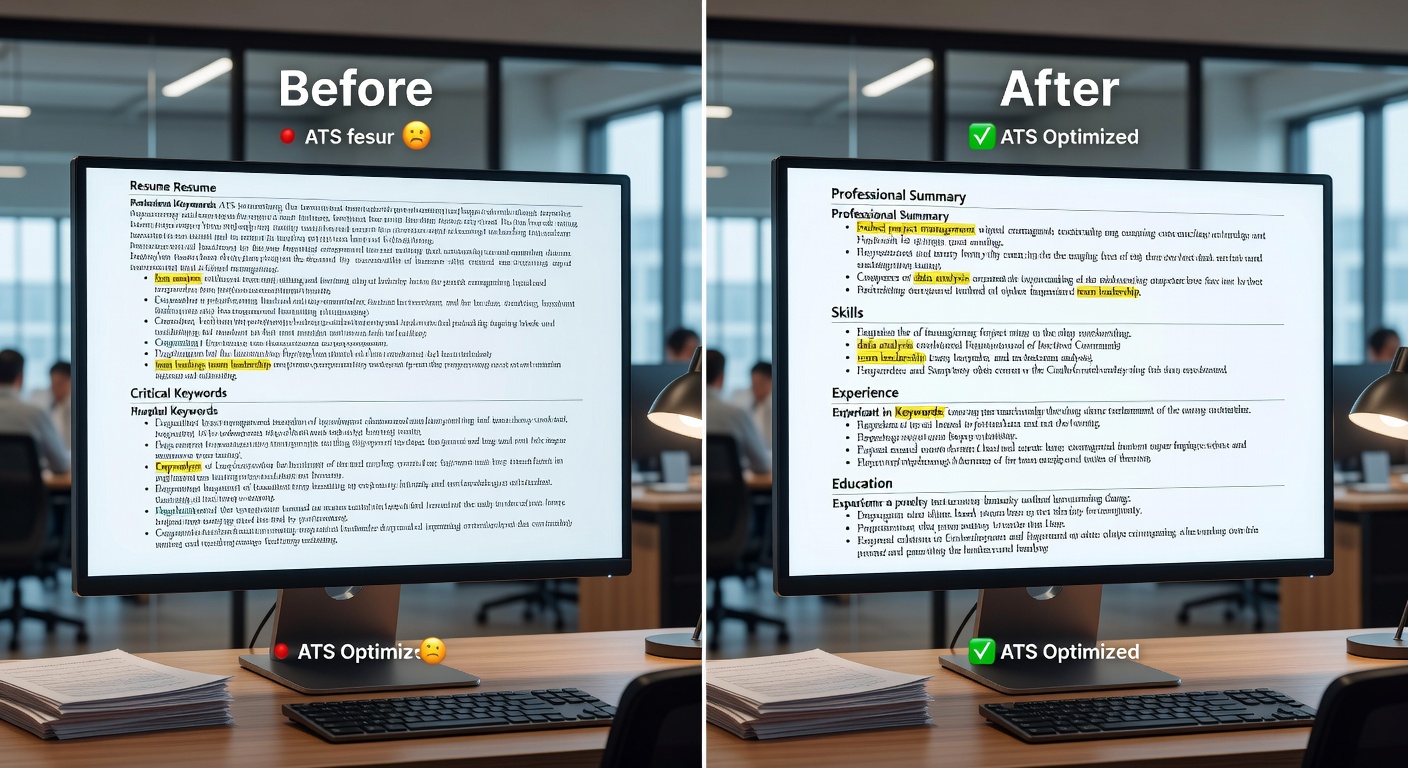
Case Study 1: Marketing Manager Application. The original resume used vague language like "handled social media" and featured a two-column layout that broke during parsing, resulting in zero callbacks. After optimization, keywords such as "content strategy," "SEO optimization," and "campaign analytics" were integrated into results-driven bullets: "Developed SEO-driven content strategy that boosted organic traffic by 40% and generated 120 qualified leads per quarter." The clean single-column .docx version passed ATS filters and generated five interview requests within a month on LinkedIn.
Case Study 2: Software Engineer Role. The candidate's initial PDF included icons, tables, and custom fonts that resulted in zero parsed skills and automatic disqualification. Restructuring to a simple format with headings like "Technical Skills" listing "Python, AWS, and Machine Learning Frameworks" plus quantified experience such as "Optimized database queries to improve application speed by 35%" led to successful extraction. This version secured interviews at two tech firms after applications through Glassdoor.
Case Study 3: Healthcare Administrator Position. Before changes, generic phrases and inconsistent formatting failed to match system criteria, leading to repeated application failures. Post-optimization with terms like "HIPAA compliance," "patient workflow efficiency," and "electronic health record implementation," plus a tested checklist process, the resume advanced to the shortlist stage on Indeed postings and yielded two interviews.
Streamlining Job Hunting Across Major Boards and Listings
Applying these hacks consistently saves time by enabling rapid customization without starting from scratch each time. Maintain a master resume template updated quarterly with your latest achievements, then tailor keywords per role in under 15 minutes. On platforms like Indeed and LinkedIn, use saved searches combined with optimized uploads to increase visibility and receive recruiter outreach. Monitor application analytics where available to identify which sections drive responses and adjust accordingly. This systematic method reduces frustration, prevents duplicate effort, and accelerates progress through competitive hiring pipelines by focusing energy on high-potential opportunities.
Common Mistakes to Avoid and Pro Tips
Many applicants fail by stuffing keywords unnaturally or using creative fonts and layouts that ATS cannot read, leading to immediate filtering. Always proofread for grammar and spelling, as AI now flags poor writing quality and penalizes submissions. Pro tip: Mirror the exact job title phrasing in your experience section when applicable to boost match scores. Another tip involves saving multiple versions for different industries and testing each with free online simulators before submission. These refinements compound over dozens of applications, leading to higher success rates and more efficient job searches overall.
Conclusion
Mastering 2026 ATS bypass techniques transforms job applications from shots in the dark into strategic, high-yield efforts. By combining advanced keyword use, compatible formats, rigorous testing via the checklist, and real-world examples, candidates can consistently reach recruiter desks. Implement these methods today to streamline your search and achieve interview success on leading job platforms.


No comments yet. Be the first!