 Jobboy

Introduction: Why Decoding Job Listings Matters in 2026
Job hunting in 2026 demands more than submitting applications at scale. With AI screening tools, evolving workplace expectations, and increased competition for quality roles, every job posting contains layers of information that can either accelerate your success or waste valuable time. Learning to decode these listings helps you identify genuine opportunities, align your profile accurately, and avoid common pitfalls that derail even experienced candidates. Recruiters and hiring managers often embed subtle signals about team dynamics, growth trajectories, and organizational priorities directly into the text.
This comprehensive guide provides practical, step-by-step methods to extract hidden insights from postings, including culture signals, skill priorities, compensation hints, and warning signs. By applying these techniques consistently, you can prioritize high-potential roles, customize stronger applications, and improve your overall application-to-interview conversion rate in a competitive market.
Step 1: Break Down the Structure of a Typical Job Posting
Most listings follow a predictable format that includes a company overview, key responsibilities, requirements, qualifications, and benefits or perks sections. Begin by reading the entire post twice—once for overall tone and once for specific details. Responsibilities sections often reveal day-to-day realities and workload expectations, while requirements indicate must-have versus nice-to-have qualifications. Note any repeated phrases or emphasized skills, as these highlight core priorities for the hiring team and the role itself.
For instance, a marketing coordinator posting that mentions "data-driven decision making" three times across different sections signals a strong emphasis on analytics over creative intuition alone. Use this structural breakdown to create a quick match score before investing significant time in tailoring an application. Pay attention to the order of listed duties, as items appearing first typically represent the most critical aspects of the position.
Identifying Company Culture Cues
Culture clues frequently appear through deliberate language choices, values statements, and descriptions of team interactions. Words like "fast-paced," "autonomous," "collaborative," or "family-oriented" offer direct insights into the work environment. Look for explicit mentions of work-life balance policies, diversity and inclusion initiatives, professional development programs, or remote work flexibility. A company that emphasizes "innovation," "ownership," and "continuous learning" likely values proactive, self-motivated employees over those who prefer rigid hierarchies and detailed supervision.
Compare these cues against your personal work style preferences early in the process. If a posting repeatedly stresses "availability during evenings and weekends as needed," evaluate whether that aligns with your boundaries and long-term sustainability. Cross-reference culture signals with external sources such as LinkedIn company pages, recent employee posts, and official career sites to validate the internal narrative presented in the job description.
Decoding True Skill Requirements
Job postings commonly list an aspirational or comprehensive skill set that exceeds what any single candidate might possess. Distinguish between essential and preferred skills by closely examining phrasing. Requirements using absolute terms like "must have," "required," or "non-negotiable" carry significantly more weight than softer language such as "preferred," "nice to have," or "a plus."
- Map your professional experience directly to listed skills using quantifiable achievements from past roles.
- Identify transferable skills when exact technical matches are absent, especially in adjacent fields.
- Prioritize roles where you meet at least 70-80% of the core requirements to maintain strong candidacy.
- Research emerging tools mentioned to determine learning curve feasibility before applying.
Real-world example: A software engineer posting requiring "5+ years Python experience" while listing "familiarity with cloud platforms" as preferred allows strong Python developers newer to AWS or Azure to apply with confidence, provided they highlight relevant projects in their materials.
Uncovering Salary Hints and Compensation Clues
While explicit salary ranges remain optional in many postings, indirect clues provide valuable context for total compensation expectations. References to "competitive compensation," "equity participation," "performance bonuses," or "comprehensive benefits packages" indicate a focus on holistic rewards rather than base salary alone. Geographic location mentions or hybrid/remote options often correlate with regional market rates tracked by authoritative sources like the Bureau of Labor Statistics.
Analyze similar roles across multiple platforms to estimate realistic ranges for your experience level. Postings that avoid any compensation language may signal either flexibility during negotiations or strict internal banding that limits initial offers. Consider benefits such as professional development stipends, wellness programs, or parental leave policies as part of the overall value proposition when comparing opportunities.
Spotting Red Flags in 2026 Listings
Remain vigilant for vague language, unrealistic expectations, or inconsistent details that suggest deeper organizational issues. Common red flags include excessive years of experience demanded for junior-level roles, lengthy unprioritized responsibility lists, and phrases like "wearing many hats" without mention of supporting resources or team structure.
- High turnover indicators such as repeated postings for the same position over short periods.
- Overemphasis on "passion" or "hustle" without corresponding support for employee well-being.
- Contradictory requirements that combine entry-level pay with senior-level duties.
- Lack of clarity around reporting structures or success metrics for the role.
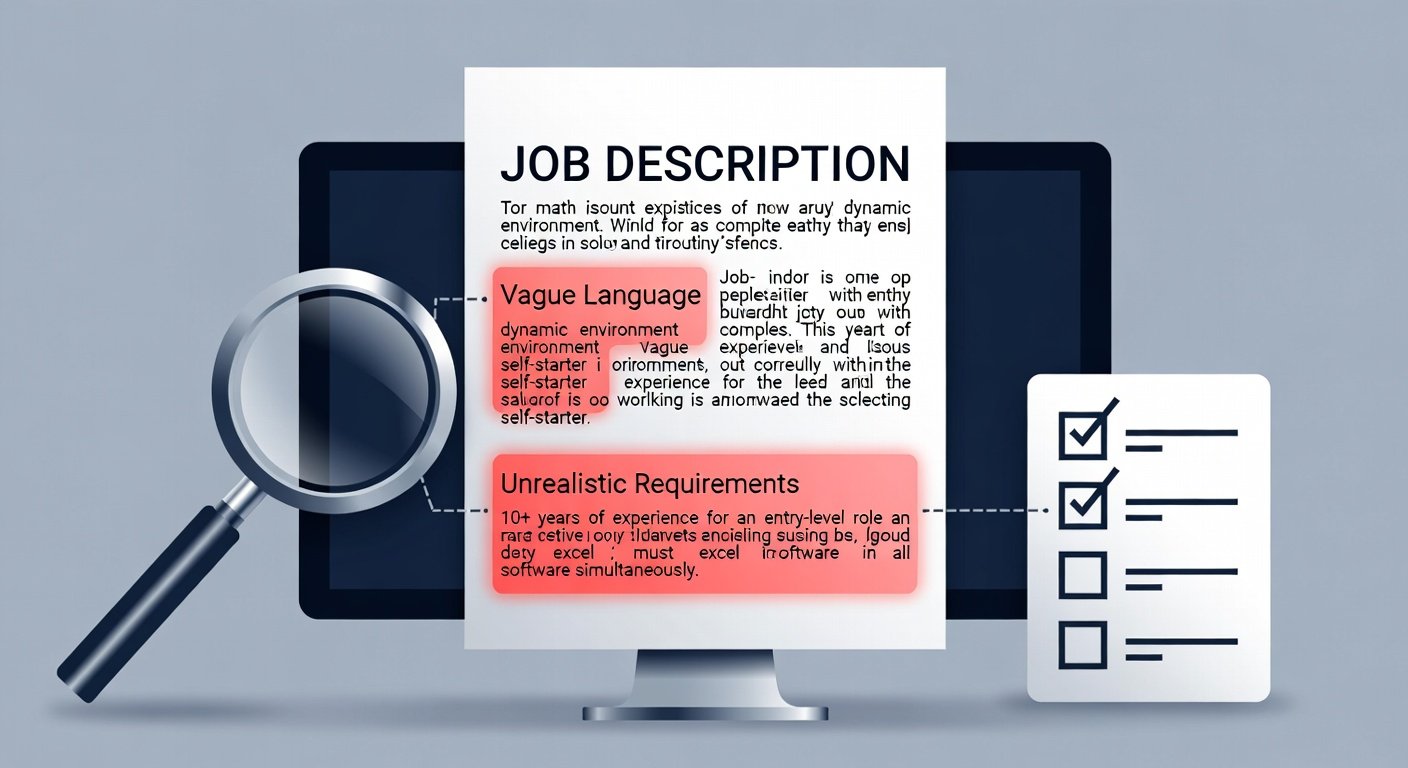
These signals often point to understaffed teams, unclear expectations, or high-pressure environments. Always verify by researching the company through trusted career platforms and recent news before proceeding.
Practical Techniques to Match Your Profile Effectively
Develop a simple scoring system for each posting you encounter. Assign weighted points across categories such as culture alignment, skill overlap, growth potential, compensation transparency, and location flexibility. Only pursue roles that score above your established personal threshold to conserve energy for quality applications.
Tailor every application by mirroring exact terminology from the posting in your resume and cover letter. This approach improves ATS compatibility while demonstrating genuine interest and attention to detail. Additionally, prepare specific examples from your background that directly address the top three responsibilities listed in the description.
How to Prioritize High-Potential Applications
After scoring multiple listings, rank them by overall fit and application effort required. Focus first on roles where your profile matches closely and the company appears stable and values-aligned. Track your results over several weeks, noting which types of decoded postings lead to interviews or offers, then refine your criteria accordingly.
Common Mistakes to Avoid When Analyzing Postings
Many candidates overlook subtle wording or apply to every listing without strategic filtering. Avoid assuming all requirements are mandatory or ignoring culture signals that conflict with your working style. Another frequent error involves neglecting to research the company beyond the job description itself, which can lead to mismatched expectations later in the process.
Conclusion: Applying These Insights for Faster Results
Decoding job listings transforms passive searching into strategic, targeted action. By systematically analyzing culture cues, skill requirements, compensation indicators, and red flags, you focus your energy on roles where success is most probable. Implement these expanded techniques consistently, document your findings for each application, and adjust your approach based on outcomes to achieve faster and more satisfying job search results in 2026.


Comments (1)