 Jobboy

Introduction
In 2026, burnout continues to reshape the talent landscape, making wellness a critical differentiator for employers seeking to attract and retain top performers. Integrating wellness initiatives directly into talent acquisition and retention strategies helps companies stand out in competitive markets while fostering long-term employee loyalty and reducing costly turnover. This comprehensive guide provides advanced, data-backed techniques for HR leaders who want measurable improvements in candidate attraction, onboarding success, and overall retention rates. By linking wellness programs to employer branding from the very first touchpoint, organizations can create authentic connections that resonate with candidates prioritizing mental health and work-life balance.
Understanding 2026 Burnout Trends and Their Impact on Recruiting
Recent reports highlight rising stress levels across industries, with mental health challenges directly affecting application rates, interview completion, and offer acceptance. Burnout trends in 2026 show that candidates are actively screening employers for genuine support systems rather than superficial perks. Employers who proactively address these concerns through wellness-focused branding see higher engagement from top candidates and stronger alignment during the early hiring stages. Linking wellness to employer branding strengthens onboarding success by setting clear expectations from the first interaction, which reduces early-stage drop-offs and builds trust before candidates even join the team.
Designing Wellness-Focused Job Postings
Effective job postings in 2026 emphasize holistic support rather than generic benefits lists. Include specific language about flexible schedules, dedicated mental health days, on-demand counseling access, and structured burnout prevention programs. Use targeted keywords like "wellness-first culture," "integrated mental health support," and "sustainable work practices" to improve search visibility and attract aligned talent. Provide concrete examples in postings, such as how teams use wellness check-ins or how new hires receive personalized wellness plans within their first week. This approach not only improves SEO performance but also filters for candidates who value long-term well-being over short-term incentives.
Steps for Embedding Mental Health Resources in Early Hiring Stages
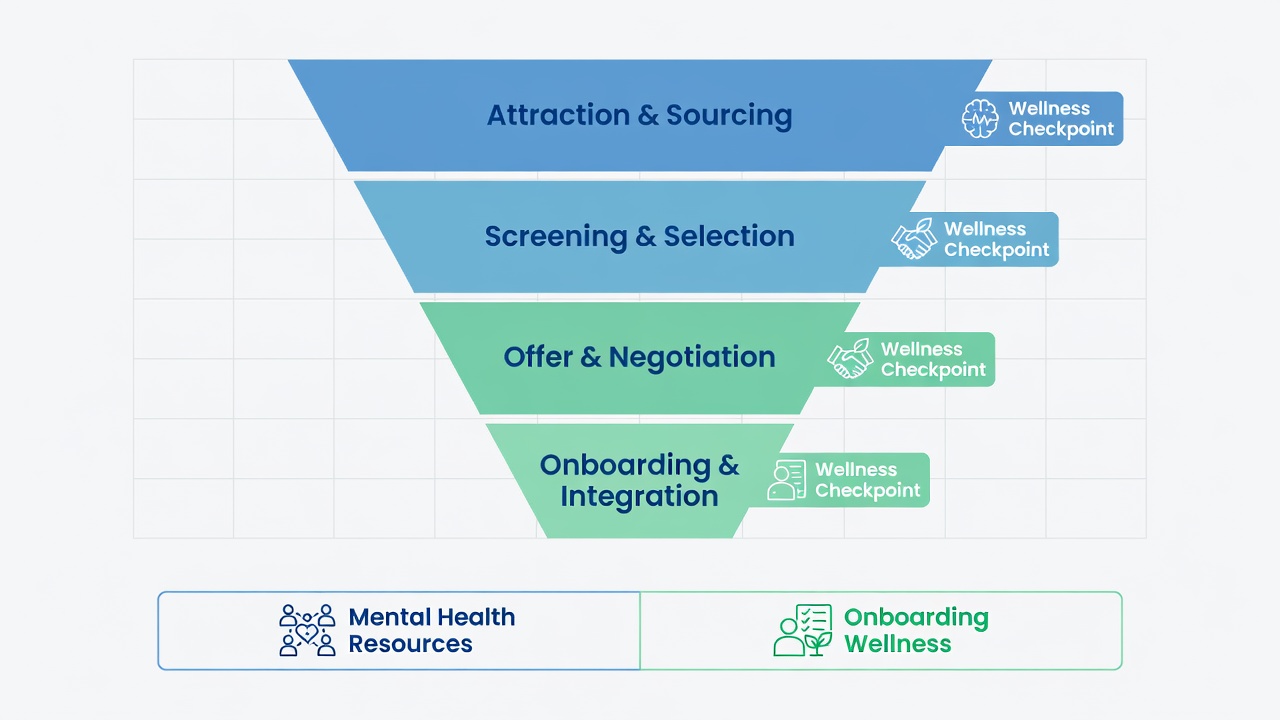
Embedding wellness resources early creates a seamless candidate experience that differentiates your organization. Follow these detailed steps: First, update application forms to include optional wellness preference questions that help tailor communications without creating barriers. Second, incorporate virtual wellness tours or resource overviews during initial screening calls so candidates immediately see the commitment to support. Third, provide immediate access to confidential employee assistance program information upon application submission, including links to self-assessment tools. Fourth, train recruiters on sensitive, non-discriminatory discussions around work-life balance and mental health boundaries. Fifth, follow up with personalized wellness onboarding plans for shortlisted candidates that outline available resources and upcoming workshops. These steps build trust early and position wellness as a core part of the employee journey rather than an afterthought.
Real-World Company Examples
Leading organizations demonstrate success by tying wellness directly to core values and recruiting processes. Companies highlighted in resources from the World Health Organization show how proactive mental health integration improves both attraction and retention metrics. Tech firms have reported stronger candidate pipelines after launching dedicated wellness portals during recruitment phases, allowing applicants to explore support options before applying. Manufacturing and healthcare employers using similar embedded approaches have achieved better retention in high-stress roles by highlighting real wellness outcomes during interviews and pre-boarding communications. These examples illustrate that consistent messaging across all hiring stages leads to higher offer acceptance and smoother transitions into the workplace.
Comparisons of Wellness ROI Versus Traditional Perks
Wellness programs frequently deliver superior long-term value compared to one-time perks like free snacks, occasional team outings, or basic gym stipends. Data-backed insights reveal that structured mental health support correlates with lower turnover and higher engagement levels over multiple quarters. While traditional perks provide short-term appeal and can boost initial interest, integrated wellness initiatives create sustainable cultural advantages that compound through improved productivity, reduced absenteeism, and stronger employer brand reputation. Organizations that shift focus from isolated perks to comprehensive wellness strategies often see compounding benefits in both talent acquisition speed and retention stability, making wellness a strategic investment rather than a line-item expense.
Actionable Checklists for Implementation
- Conduct a full audit of current recruiting materials, job descriptions, and career site content to identify gaps in wellness messaging and update at least 80 percent of postings within the next quarter.
- Develop a cross-functional wellness-recruiting task force that includes HR, talent acquisition, legal, and employee resource group representatives to ensure diverse perspectives and compliance alignment.
- Set quarterly metrics tied to candidate satisfaction scores, time-to-offer, and post-hire wellness program participation rates, reviewing results in leadership meetings.
- Pilot wellness modules in at least two distinct hiring funnels before scaling, collecting feedback from both candidates and hiring managers at each stage.
- Review compliance with local labor regulations and privacy laws on a quarterly basis, updating training materials and documentation accordingly.
- Create a content calendar for sharing wellness success stories and resources on social channels used in employer branding efforts.
Potential Pitfalls to Avoid
Common mistakes include overpromising wellness benefits without the internal capacity to deliver them consistently, which can damage trust and increase attrition. Another frequent error is ignoring cultural differences in global or diverse teams, leading to one-size-fits-all programs that fail to resonate. Organizations often treat wellness as a standalone perk instead of embedding it as an ongoing process across the employee lifecycle. Additional pitfalls involve failing to measure outcomes beyond anecdotal feedback, neglecting recruiter training on sensitive topics, and launching initiatives without clear leadership buy-in. Avoiding these issues requires deliberate planning, regular audits, and a commitment to continuous improvement based on employee input.
Measuring Success and Compliance Considerations
Track key metrics such as reductions in time-to-hire, improvements in offer acceptance rates, and 90-day retention percentages to quantify impact. Use anonymous surveys and pulse checks at multiple stages to gather honest insights without fear of reprisal. Ensure all programs comply with privacy laws and anti-discrimination regulations by consulting legal experts early in the planning process. Resources from the Centers for Disease Control and Prevention provide guidance on evidence-based workplace health promotion standards that support both compliance and effectiveness. Regular reporting to stakeholders helps maintain momentum and secure ongoing investment in wellness-recruiting integration.
FAQ
How do wellness programs affect compliance in hiring?
Programs must respect candidate privacy and avoid discriminatory questions during any stage of the process. Always document processes thoroughly, obtain necessary consents, and consult with legal counsel to align with regional employment laws.
What data supports retention lifts from wellness initiatives?
Multiple studies indicate that structured wellness programs correlate with meaningful improvements in retention when measured consistently over 12-month periods, particularly when initiatives are embedded early in the candidate experience.
Can small companies implement these strategies effectively?
Yes, small organizations can begin with low-cost digital resources, virtual workshops, and phased rollouts based on direct employee feedback, gradually expanding as results become evident.
How should companies balance wellness messaging with realistic expectations?
Focus on transparent communication about available resources while avoiding guarantees of specific outcomes. Highlight ongoing program development and invite candidate input to build credibility.
What role does technology play in scaling wellness during recruitment?
Applicant tracking systems and dedicated wellness platforms can automate resource sharing, track engagement metrics, and personalize communications without adding significant manual workload for recruiters.
Conclusion
By embedding wellness into every stage of talent acquisition and retention, organizations position themselves for sustained success in 2026 and beyond. The strategies, checklists, and examples outlined here provide a practical roadmap for meaningful, results-driven change that benefits both employees and the business.


No comments yet. Be the first!