 Jobboy

Introduction: Why Internal Talent Marketplaces Matter in 2026
Employee turnover remains a critical challenge for mid-sized companies, driving up recruitment costs and disrupting productivity. An internal talent marketplace offers a strategic solution by enabling employees to explore new roles, projects, and skill-building opportunities within the organization. This how-to guide walks HR teams through designing and launching such a platform using existing ATS and HRIS tools, focusing on practical implementation for companies with 200–2,000 employees. By 2026, organizations prioritizing internal mobility report higher retention rates. The approach aligns employee aspirations with business needs, fostering loyalty and reducing external hiring expenses. Companies that implement these systems often see improved engagement because employees feel their careers are supported rather than stagnant.
Understanding the Core Components of an Internal Talent Marketplace
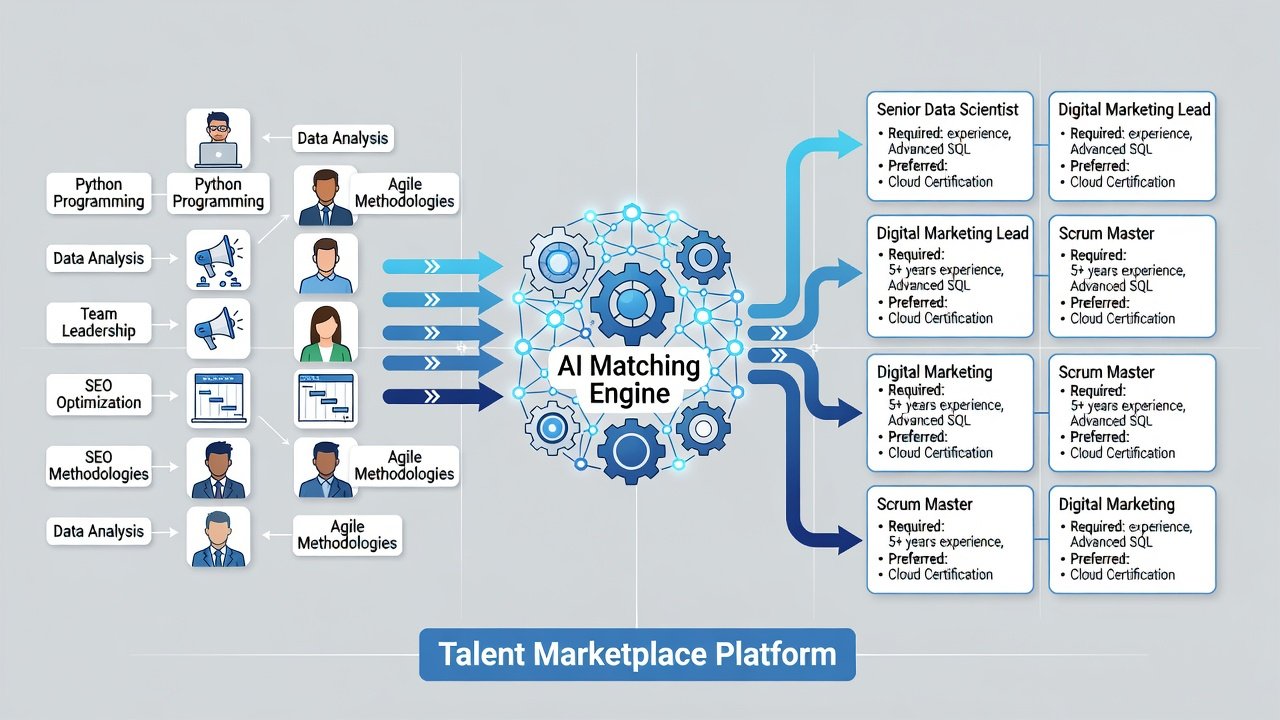
An effective internal talent marketplace integrates job postings, skill profiles, and AI-driven recommendations. It typically connects to your current Applicant Tracking System (ATS) for seamless opportunity listings and your Human Resource Information System (HRIS) for employee data. Key elements include self-service profiles where staff can highlight skills and interests, and matching algorithms that suggest roles based on experience and career goals. Additional components often involve project-based opportunities, mentorship matching, and learning pathways that feed directly into role recommendations. These features create a dynamic ecosystem where talent flows internally instead of exiting the company.
Platform Selection Criteria
When choosing or enhancing a platform, prioritize integrations with tools like Workday, BambooHR, or Greenhouse. Evaluate vendors for scalability, user-friendly interfaces, and compliance features. Mid-sized firms should focus on solutions that avoid heavy customization to keep implementation timelines under six months. Consider factors such as mobile accessibility, reporting dashboards, and the ability to handle both full-time roles and short-term gigs. Conduct vendor demos with real employee data samples to test matching accuracy before committing.
Leveraging AI Matching Algorithms Effectively
AI algorithms analyze skills, performance data, and career interests to match employees with opportunities. Start by defining clear data inputs from your HRIS, such as past roles and training completions. Test algorithms for bias by reviewing sample matches across demographics. Successful implementations use transparent scoring so employees understand why opportunities appear in their feed. Refine the model continuously by incorporating feedback loops where users rate the relevance of suggestions. One real-world example comes from a mid-sized tech firm that integrated AI matching into its existing ATS, resulting in a 25% increase in internal applications within the first quarter. Another manufacturing company layered in performance review data to improve match quality over time.
Build vs. Buy: Making the Right Decision
Building a custom marketplace offers full control but requires significant development resources. Buying a configurable solution from established providers accelerates launch and includes ongoing support. For most mid-sized companies, a buy approach with light customization proves more cost-effective and faster to deploy. Compare options by assessing total cost of ownership, including training and maintenance. Factor in how well each option integrates with current systems. A build decision may suit organizations with unique industry needs, while buy options typically include pre-built compliance tools and analytics. Create a weighted decision matrix that scores factors like timeline, budget flexibility, and internal IT capacity to guide the choice.
Integration Best Practices with ATS and HRIS
Begin integration by mapping data fields between systems to ensure accurate employee profiles and job listings. Use APIs for real-time updates. Conduct pilot testing with a single department before full rollout. Security protocols must align with data protection standards to maintain trust. Document every integration step and establish a cross-functional team including IT, HR, and legal stakeholders. Regular sync testing prevents data drift that could lead to inaccurate matches. SHRM resources provide detailed guidance on HR technology integrations, while Department of Labor guidelines outline compliance considerations for workforce data handling.
Change Management Tactics for Successful Adoption
Employee adoption hinges on clear communication and leadership support. Launch with town halls explaining benefits, followed by manager training sessions. Address concerns about job security by emphasizing growth opportunities. Gamify participation with badges or recognition for internal moves. Develop a network of internal champions who can share success stories and answer peer questions. Provide ongoing support through webinars, quick-reference guides, and one-on-one coaching for managers. Monitor sentiment through pulse surveys and adjust messaging accordingly to sustain momentum after the initial launch excitement fades.
Defining and Tracking Success Metrics
Measure mobility rates (percentage of roles filled internally) and retention lift (improvement in stay rates for marketplace users). Additional KPIs include time-to-fill for internal positions and employee satisfaction scores. Track these quarterly to refine the platform. Establish baseline measurements before launch so improvements can be clearly attributed to the marketplace. Include qualitative feedback by surveying employees who made internal moves about their experience. Many organizations also track diversity metrics in internal mobility to ensure equitable access to opportunities.
Step-by-Step Rollout Checklist
- Assess current ATS and HRIS capabilities and identify data gaps.
- Define objectives and success metrics with leadership buy-in.
- Select or configure the platform based on integration needs.
- Train HR staff, managers, and pilot participants thoroughly.
- Pilot with one team and gather structured feedback over 30 days.
- Launch company-wide with ongoing support and communication.
- Review metrics after 90 days and iterate on matching rules.
- Scale features such as project marketplaces in subsequent phases.
Real-World Examples of Successful Implementations
A manufacturing company with 800 employees used its HRIS to power an internal marketplace, achieving a 15% reduction in voluntary turnover within 12 months. Another services firm focused on project-based opportunities, boosting cross-department collaboration and reducing project delays. A healthcare provider integrated learning modules into the marketplace, enabling nurses to pursue specialty certifications that led to internal promotions. These examples highlight the importance of tailoring the platform to industry-specific needs while maintaining a user-centric design.
Common Mistakes to Avoid
Many organizations rush the launch without sufficient manager training, leading to low adoption. Others neglect data quality, resulting in poor matches that frustrate users. Avoid overcomplicating the interface or failing to communicate privacy protections clearly. Regular audits and user testing help sidestep these pitfalls.
FAQs on Internal Talent Marketplaces
How do we handle data privacy concerns?
Ensure compliance with regulations by anonymizing data where possible and obtaining employee consent for profile visibility. Regular audits help maintain security. EEOC guidelines offer additional direction on fair data practices in employment decisions.
What are common employee adoption barriers?
Fear of appearing disloyal or lack of awareness often hinder uptake. Counter these with strong internal marketing and manager involvement. Transparent communication about how data is used builds trust over time.
How can we measure ROI within the first year?
Calculate savings from reduced external hires and turnover costs against platform expenses. Many firms see positive returns by the nine-month mark through improved retention. Include both hard metrics like hiring cost savings and softer indicators such as engagement scores.
Conclusion
Designing an internal talent marketplace positions your organization for lower turnover and stronger talent retention in 2026. By leveraging existing tools, focusing on AI enhancements, and prioritizing change management, HR teams can deliver measurable results. Start with a clear plan and iterate based on data to maximize impact.

No comments yet. Be the first!