 Jobboy

Introduction
Internal talent marketplaces have emerged as a strategic tool for organizations seeking to align employee mobility with overarching business objectives. In 2026, companies face rapid skill evolution and competitive pressures, making these platforms essential for filling roles internally rather than relying solely on external hiring. This approach directly addresses skill gaps while supporting growth initiatives such as digital transformation and market expansion. HR leaders who design these marketplaces with clear ties to business strategy see measurable improvements in retention and agility. This article explores practical design principles, technology considerations, and real-world applications tailored for mid-sized companies looking to stay competitive.
By focusing on data-driven matching and employee development, organizations can reduce dependency on costly external recruitment. Many mid-sized firms report that well-implemented marketplaces help retain top performers who might otherwise leave for external opportunities. The following sections provide a comprehensive guide to building and sustaining such systems.
Understanding Internal Talent Marketplaces
An internal talent marketplace functions as a digital platform where employees can discover opportunities like projects, roles, and mentorship programs within the organization. Unlike traditional career paths, these systems emphasize fluid movement and skill-based matching over rigid hierarchies. Employees gain visibility into lateral moves, short-term assignments, and leadership development tracks that align with their strengths and interests.
By 2026, successful marketplaces integrate data from performance reviews, learning management systems, and business forecasts to prioritize opportunities that advance company goals. This creates a proactive workforce that adapts quickly to changing demands. For mid-sized companies with 500 to 5,000 employees, these platforms often serve as a bridge between siloed departments, fostering cross-functional collaboration that fuels innovation.
Aligning Mobility With Strategic Objectives
Effective marketplaces start with mapping business priorities to talent needs. For instance, if a company aims to expand into AI-driven services, the platform should highlight upskilling paths in data analytics and machine learning. This alignment reduces external recruitment costs and accelerates project timelines. HR teams should conduct quarterly reviews with business unit leaders to identify emerging skill gaps. These insights inform marketplace algorithms and content, ensuring mobility efforts support revenue targets and innovation roadmaps.
Companies that tie marketplace features directly to strategic planning often experience higher adoption rates. For example, a logistics firm might prioritize roles related to supply chain optimization during periods of rapid e-commerce growth. This targeted approach ensures that internal mobility contributes measurably to key performance indicators.
Platform Selection Criteria
Choosing the right platform requires evaluating scalability, user experience, and analytics capabilities. Key criteria include seamless mobile access, robust search functionality, and support for custom workflows that reflect company culture. Organizations should also assess vendor support for ongoing updates, especially as AI capabilities evolve. Platforms that offer intuitive dashboards allow both employees and managers to track progress without extensive training.
Security and compliance features are non-negotiable, particularly when handling sensitive employee data. Mid-sized companies often benefit from cloud-based solutions that scale without requiring heavy IT infrastructure investments. Comparing at least three vendors through pilot testing helps identify the best fit for specific organizational needs.
Integration With Existing HRIS Systems
Seamless integration with human resource information systems (HRIS) ensures data accuracy and reduces administrative overhead. Platforms that connect via APIs can pull real-time information on employee skills, tenure, and performance metrics. This connectivity allows the marketplace to surface relevant opportunities automatically based on updated profiles.
Best practices involve mapping data fields early and testing for compatibility during pilot phases. This prevents silos and enables holistic reporting on mobility trends across the enterprise. Integration also supports compliance by maintaining consistent records that align with company policies and external regulations. SHRM resources provide additional guidance on HR technology integration strategies.
AI-Driven Matching Rules for Role Suggestions
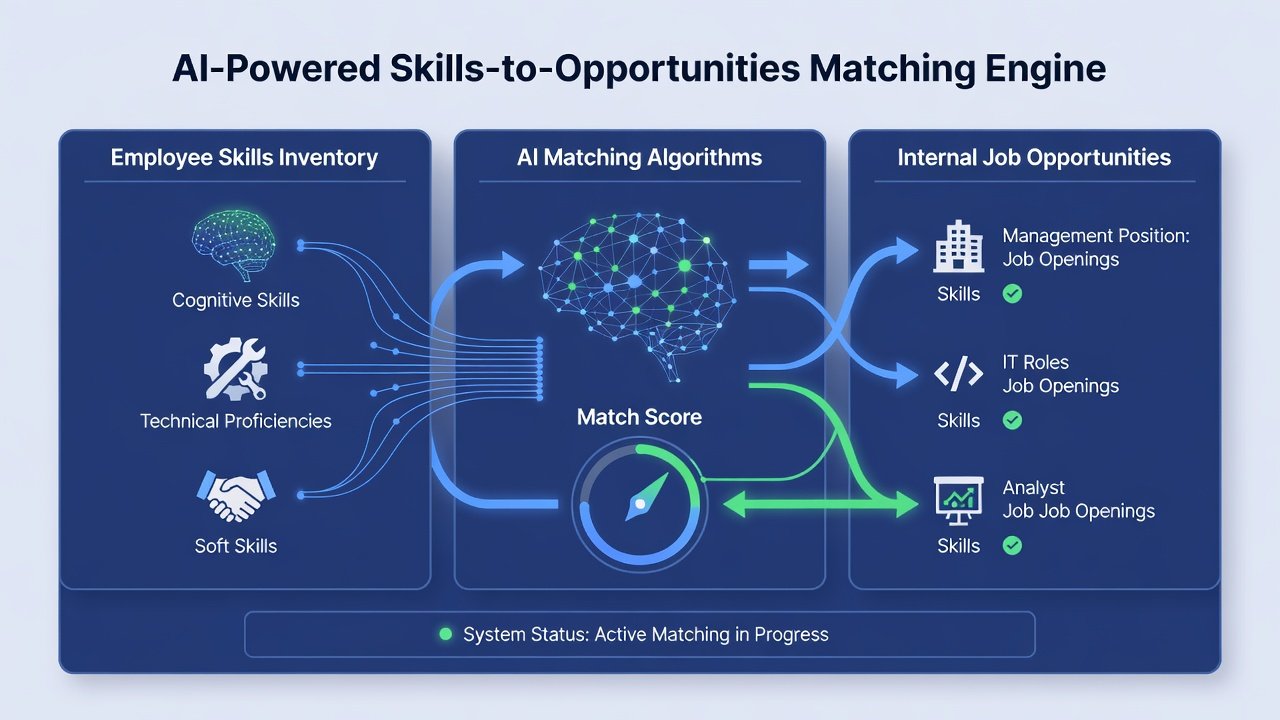
AI matching enhances the value of internal marketplaces by analyzing skills inventories against open opportunities. Rules can prioritize factors such as skill adjacency, career aspirations, and business-critical projects. Advanced configurations allow weighting for diversity goals or succession planning needs. Transparent explanations of match scores build employee trust and encourage broader participation.
Organizations should regularly audit AI algorithms for bias to ensure fair recommendations across demographics. Custom rules can incorporate business priorities, such as favoring candidates who have completed relevant training modules. This level of customization turns the marketplace into a strategic asset rather than a simple job board.
Step-by-Step Implementation Phases
- Discovery and Planning: Assess current mobility rates and define success metrics aligned with 2026 business goals. Involve stakeholders from HR, IT, and business units to create a shared vision.
- Technology Setup: Select and configure the platform, focusing on HRIS connectivity and AI rules. Conduct data cleansing to ensure profile accuracy before launch.
- Pilot Program: Launch with one department to refine matching logic and gather feedback. Use results to adjust algorithms and communication strategies.
- Full Rollout: Expand organization-wide with training sessions and communication campaigns. Provide manager toolkits to support team discussions about mobility.
- Optimization: Use analytics to iterate on features and address underused areas. Schedule annual reviews to incorporate new business objectives and technology advancements.
Change Management Tactics
Successful adoption depends on clear communication about benefits and addressing fears of job displacement. Leaders should involve managers early as champions who encourage team members to explore opportunities. Regular town halls and success story spotlights help normalize internal mobility. Providing incentives, such as recognition for mentors, further boosts engagement.
Mid-sized companies often face resistance from managers concerned about losing team members. Addressing this through shared accountability metrics and demonstrating overall talent retention gains can ease concerns. Training programs that teach managers how to coach employees on marketplace use prove especially effective.
Real-World Examples From Mid-Sized Companies
A mid-sized manufacturing firm implemented an internal marketplace to address engineering skill shortages. Within one year, internal mobility rates rose by 35%, and time-to-fill for technical roles dropped significantly through targeted skill development pathways. The company credited the platform with helping retain engineers who valued visible career growth options.
Another example comes from a regional healthcare provider that integrated its marketplace with performance data. This led to faster deployment of staff to high-priority initiatives, supporting expansion goals without increasing headcount. Both cases highlight how thoughtful design delivers tangible business outcomes.
Key Metrics to Track
- Internal mobility rate: Percentage of roles filled by existing employees.
- Time-to-fill reductions: Average days saved compared to external hiring.
- Employee engagement scores: Measured through platform usage and satisfaction surveys.
- Skill gap closure: Tracking completion of recommended learning paths tied to business needs.
- Retention rates among active marketplace users versus non-users.
Potential Pitfalls and How to Avoid Them
Common challenges include low adoption due to unclear value propositions and algorithmic bias that favors certain employee groups. Mitigate these by conducting bias audits and offering manager training on marketplace promotion. Overlooking data privacy can also erode trust, so establish clear policies on how employee information is used and shared within the system.
Another frequent mistake is launching without sufficient change management support. Companies that skip manager involvement often see stagnant usage. Regular feedback loops and visible leadership endorsement help overcome these hurdles. Department of Labor guidelines on workforce development offer additional context for avoiding compliance-related issues during rollout.
FAQs
How does an internal talent marketplace ensure compliance with labor laws?
Platforms incorporate configurable rules to respect location-based regulations and equal opportunity requirements. HR teams should consult legal experts during setup to embed necessary safeguards and conduct periodic reviews.
What measures protect employee privacy in these systems?
Leading solutions use anonymized data for matching where possible and require explicit consent for profile visibility. Regular audits help maintain compliance with privacy standards and build long-term employee confidence.
How is long-term ROI measured?
Organizations track retention improvements, reduced external hiring expenses, and accelerated project delivery over 18-24 months. Comparing pre- and post-implementation metrics provides clear evidence of value and guides future investments.
Conclusion
By focusing on strategic alignment and thoughtful execution, internal talent marketplaces become powerful engines for business success in 2026 and beyond. Mid-sized companies that invest in proper planning, integration, and ongoing optimization position themselves to close skill gaps efficiently while fostering a culture of continuous growth and opportunity.

No comments yet. Be the first!