 Jobboy

Introduction
Traditional onboarding programs often overwhelm new hires with lengthy sessions that lead to poor retention of information. In 2026, HR professionals are turning to microlearning—short, focused modules typically lasting 3-10 minutes—to accelerate ramp-up time and boost long-term engagement. This approach breaks complex topics into digestible pieces, making training more accessible across roles and schedules. Microlearning supports diverse learning styles and fits busy workflows, especially in hybrid environments. Companies adopting this method report faster productivity and higher satisfaction among new employees. The shift reflects broader changes in workforce expectations, where employees prefer flexible, on-demand learning over marathon training days.
By focusing on bite-sized delivery, organizations can reduce the time from hire to full productivity by weeks. This article provides a comprehensive guide for HR teams looking to implement microlearning effectively, covering everything from platform selection to measurement and real-world application.
Benefits of Microlearning for Onboarding
Short-form content improves knowledge retention by leveraging spaced repetition and immediate application. It reduces cognitive load, allowing learners to absorb and apply skills quickly. For mid-size companies, this translates to lower turnover costs and stronger team integration from day one. Additional advantages include higher completion rates compared to traditional programs, as employees can complete modules during natural breaks in their workday rather than blocking large chunks of time.
Microlearning also promotes continuous learning habits that extend beyond initial onboarding. New hires build confidence faster through repeated short exposures, leading to better performance in role-specific tasks. Research from talent development experts shows improved engagement when content aligns with individual learning paces, reducing frustration for both fast and slow learners. In practice, this method supports inclusivity for employees with varying experience levels or language proficiencies.
Selecting the Right Microlearning Platforms
When evaluating tools, prioritize user-friendly interfaces, mobile compatibility, and integration with existing HR systems like ATS or LMS. Key features include analytics dashboards, content authoring tools, and SCORM compliance. SHRM recommends platforms that offer customizable templates for role-specific content. Test for scalability and data security to ensure compliance with privacy standards. Another valuable resource is ATD, which highlights the importance of platforms supporting multimedia and progress tracking.
Consider factors such as ease of content updates, reporting depth, and vendor support responsiveness. Conduct pilot tests with actual new hires to gather feedback on usability before full rollout. Avoid platforms with steep learning curves that could frustrate HR admins or learners. Integration with tools like Slack or Microsoft Teams can further embed learning into daily workflows.
Designing Bite-Sized Content for Different Roles
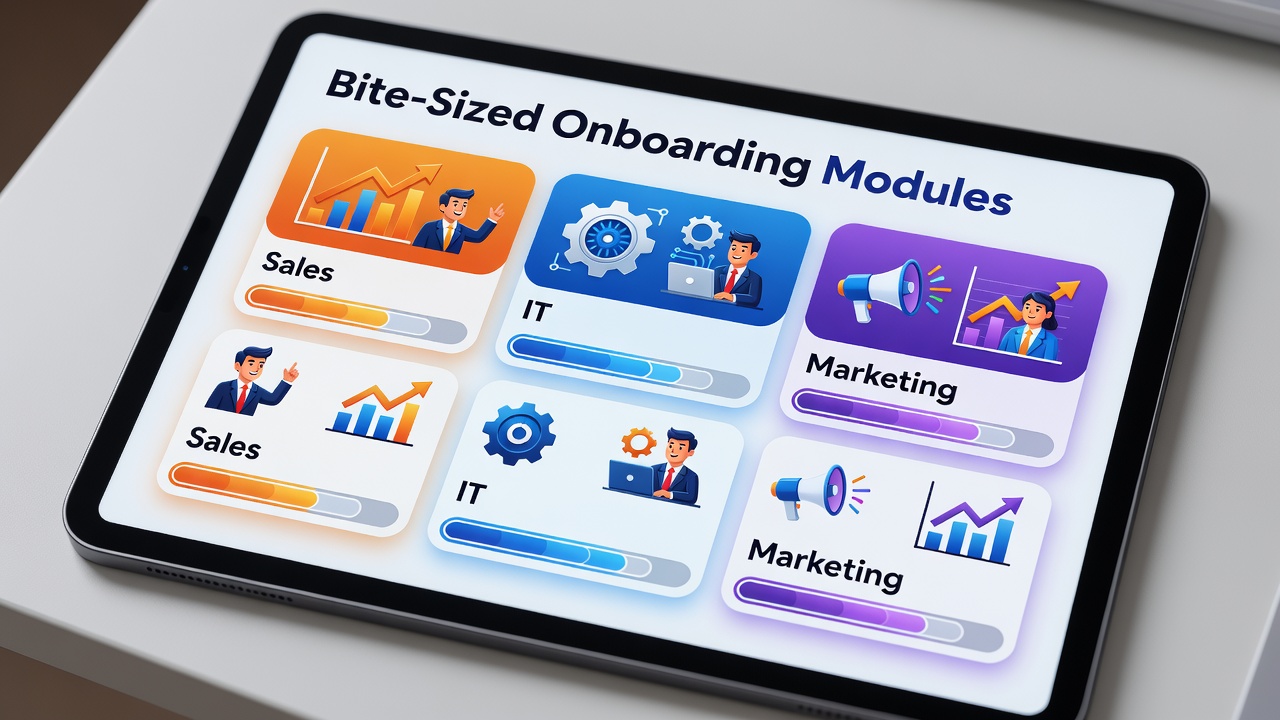
Effective modules target specific skills: sales teams might focus on product demos, while IT staff cover security protocols. Use multimedia like videos, quizzes, and interactive scenarios. Tailor difficulty based on experience levels to avoid frustration or boredom. Incorporate real company examples to make content relatable and memorable. For customer service roles, include scenario-based simulations of common client interactions. Engineering positions benefit from step-by-step troubleshooting guides delivered in under five minutes each.
Structure content around learning objectives, starting with a clear goal and ending with a quick knowledge check. Collaborate with department leads to ensure accuracy and relevance. Rotate topics to maintain freshness and address emerging needs, such as updates in company policies or tools. This customization ensures higher relevance and application rates across the organization.
Measuring Completion and Knowledge Retention Metrics
Track completion rates, quiz scores, and time-to-proficiency. Retention can be measured through follow-up assessments at 30, 60, and 90 days. Tools with built-in reporting help identify gaps, enabling timely interventions. Compare pre- and post-training performance to quantify impact on productivity. Advanced metrics might include learner satisfaction scores and correlation with performance reviews after six months.
Establish benchmarks early, such as aiming for 90% module completion within the first week. Use data to refine content, removing underperforming modules and enhancing high-impact ones. Regular reviews with managers provide qualitative insights that complement quantitative data, creating a holistic view of program effectiveness.
Real-World Examples from Mid-Size Companies
One logistics firm implemented 5-minute daily modules on compliance, resulting in 40% faster onboarding completion. A marketing agency used role-based scenarios for new creatives, improving project readiness by integrating feedback loops. These cases highlight adaptability across industries. Another example comes from a healthcare provider that deployed microlearning on patient privacy rules, achieving near-perfect compliance scores within the first month of employment.
In a technology services company, microlearning on client communication protocols helped new project managers reduce errors by 25% in their initial assignments. These successes stem from aligning modules tightly with job functions and providing immediate practice opportunities. Mid-size firms particularly benefit because they can iterate quickly without the bureaucracy of larger enterprises.
5-Step Implementation Checklist
- Audit current onboarding materials and identify topics suitable for microlearning conversion by reviewing existing presentations, manuals, and feedback forms to pinpoint high-priority areas.
- Choose and pilot a platform with a small group of new hires, gathering detailed usability feedback over two weeks to inform adjustments.
- Develop initial modules with input from subject matter experts and test for clarity through internal reviews and small learner trials before scaling.
- Roll out company-wide with manager training on supporting the program, including how to encourage completion and discuss module insights in team meetings.
- Review metrics quarterly and iterate based on learner feedback, adjusting content, timing, and delivery methods to optimize outcomes continuously.
Common Pitfalls to Avoid
Overloading modules with too much information defeats the purpose—keep them focused on single objectives. Ignoring mobile optimization alienates remote workers who access content on smartphones. Failing to update content regularly leads to outdated practices that erode trust in the program. Always align modules with business goals rather than generic templates. Another frequent mistake is neglecting manager involvement, which reduces accountability and follow-through.
Insufficient testing can result in technical glitches that discourage participation. Overlooking accessibility features excludes employees with disabilities. Finally, rushing the rollout without adequate change management communication creates resistance among staff accustomed to traditional methods.
FAQ
How does microlearning address budget concerns?
It reduces the need for extended training sessions and external facilitators, allowing internal teams to create reusable content efficiently while minimizing downtime and travel expenses associated with in-person workshops.
What about tech integration challenges?
Start with platforms that offer API connections to existing tools. Conduct a compatibility audit early and involve IT stakeholders to streamline setup, ensuring seamless data flow between systems without custom development costs.
Is microlearning suitable for all industries?
Yes, from healthcare to tech, it adapts well when customized to regulatory needs and role demands, providing flexibility that traditional training often lacks in regulated environments.
How long does it typically take to see results?
Most organizations notice improved completion rates within the first 30 days and measurable productivity gains by the 90-day mark when implementation follows structured steps.
Conclusion
Integrating microlearning transforms onboarding into an efficient, engaging process that drives retention and performance. By following these tips, HR teams can build programs that deliver lasting results in 2026 and beyond, fostering a culture of continuous development from the very start of employment.

No comments yet. Be the first!