 Jobboy

Introduction
In 2026, recruiters face intense competition for top talent, making personalized candidate journeys essential for improving conversion rates from application to acceptance. By tailoring experiences to individual preferences, companies can reduce drop-offs and build stronger connections with prospects. This approach involves collecting early data on candidate preferences, integrating simple CRM tools, and creating custom touchpoints across sourcing, interviewing, and onboarding. The result is higher engagement and better hiring outcomes. Personalization is no longer a nice-to-have feature but a core strategy that separates successful talent acquisition teams from those struggling with high abandonment rates.
Modern candidates expect the same level of customization they receive in consumer experiences. When a recruitment process feels generic, applicants quickly lose interest and move on to competitors who demonstrate they understand individual needs. This article explores proven techniques, real-world applications, and actionable steps to implement personalization effectively.
Why Personalization Matters in 2026
Generic recruitment processes often lead to disengaged candidates who abandon applications midway. Personalization addresses this by treating each candidate as unique, drawing from behavioral insights and stated preferences. Research from leading HR organizations shows that customized journeys can increase completion rates significantly compared to one-size-fits-all methods. In a tight labor market, every interaction counts toward building trust and demonstrating organizational culture.
Candidates today research companies thoroughly before applying. A personalized approach signals that the employer values their time and aspirations. This leads to stronger pipelines and reduced time-to-hire as motivated candidates progress faster through stages.
Key Benefits
- Higher application completion rates through relevant communications that match candidate interests and availability
- Improved offer acceptance by aligning with candidate values such as work-life balance or professional development opportunities
- Enhanced employer brand perception among passive and active seekers who share positive experiences online
- Lower cost per hire due to fewer wasted resources on unqualified or uninterested applicants
Gathering Preference Data Early
Start by embedding preference questions in initial sourcing forms or chatbots. Ask about communication channels, interview timing, and role priorities without overwhelming applicants. This data forms the foundation for all subsequent personalization. Use progressive profiling to collect more details as candidates move forward, ensuring the process never feels intrusive.
Effective methods include short surveys after the first application step, AI-powered chat interactions that adapt questions based on responses, and integration with social profiles where candidates have already shared preferences. Always explain how the data will be used to maintain transparency and build confidence.
Leveraging Simple CRM Integrations
Modern CRMs allow seamless data flow between applicant tracking systems and marketing tools. Integrate platforms to automate personalized emails, SMS reminders, and content recommendations based on collected preferences. SHRM provides extensive resources on effective talent management integrations that help mid-size teams get started quickly.
Popular lightweight options include connecting your ATS with tools like HubSpot or Salesforce Essentials. These setups enable dynamic content that changes based on whether a candidate prefers video updates or detailed written materials. Automation rules can trigger follow-ups at optimal times identified from preference data, reducing manual work while increasing relevance.
Mapping Personalized Touchpoints
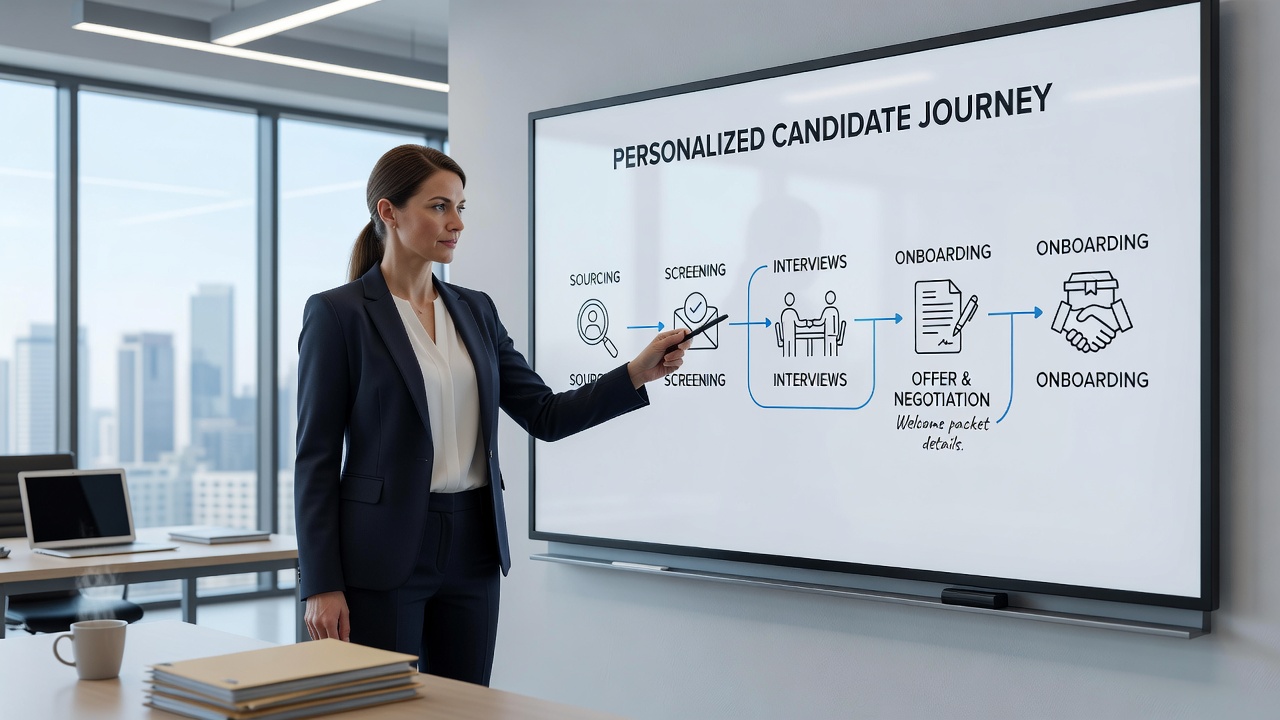
From first contact to onboarding, map every interaction. For example, send role-specific resources to candidates who express interest in career growth, or schedule interviews around stated availability windows. Touchpoints should feel consistent yet adaptive, covering sourcing emails, interview preparation packets, feedback after each stage, and welcome materials post-offer.
Document the full journey in a visual map that highlights decision points where personalization can occur. This exercise reveals gaps where generic messaging might cause drop-off and helps teams prioritize high-impact customizations.
Real-World Examples from Mid-Size Companies
A mid-size tech firm used preference data to customize interview prep materials, resulting in a 35% lift in offer acceptance. They segmented candidates by career stage and delivered targeted case studies and team introductions. Another logistics company personalized onboarding videos by department, cutting early turnover by 22% within the first quarter of implementation. A healthcare organization introduced preference-based scheduling that respected candidates' work shifts, leading to higher show-up rates for interviews and faster fills for critical roles.
Generic vs. Customized Journeys: A Comparison
Generic journeys treat all candidates the same, leading to lower engagement. Customized approaches adapt content, timing, and channels, fostering trust and commitment. Key differences include response times, content relevance, and follow-up frequency. Generic processes often use the same email templates regardless of role or background, while customized ones reference specific skills mentioned in applications or preferred communication methods. Over time, the customized path builds a stronger emotional connection that translates into higher conversion at each funnel stage.
Step-by-Step Implementation Guide
- Audit current recruitment stages for personalization gaps by reviewing drop-off points in your applicant tracking data.
- Select and deploy a lightweight CRM with preference fields that integrates easily with existing ATS software.
- Train recruiters on using data ethically and effectively, emphasizing privacy and relevance in every communication.
- Test journeys with A/B variants before full rollout to measure impact on completion rates and satisfaction scores.
- Iterate based on candidate feedback loops collected through post-stage surveys and analytics reviews.
- Document successes and create playbooks so the entire team can replicate high-performing personalized sequences.
Common Pitfalls to Avoid
Over-personalization can feel intrusive if data use is not transparent. Avoid assuming preferences without confirmation, and ensure compliance with privacy regulations at every step. Another common mistake is collecting data but failing to act on it, which frustrates candidates who shared information expecting tailored experiences. Teams should also guard against bias by reviewing personalization rules regularly to ensure fair treatment across all demographic groups.
Measurement Tactics
Track metrics like application completion rate, time-to-offer, and candidate satisfaction scores. Use analytics dashboards to quantify improvements and identify optimization opportunities. Harvard Business Review offers frameworks for measuring talent acquisition ROI that can be adapted to personalization efforts. Additional KPIs include offer acceptance percentage, candidate Net Promoter Score, and source-of-hire quality after personalization is introduced.
FAQ
How much data should I collect upfront?
Limit initial questions to 3-5 key preferences to maintain high response rates while gathering actionable insights. Additional details can be collected progressively as trust builds.
What tools work best for small teams?
Start with affordable CRM options that integrate directly with your ATS, focusing on ease of use over advanced features. Many teams succeed with freemium versions before scaling.
Can personalization scale for high-volume hiring?
Yes, by using automation rules and templates that adapt dynamically based on segments derived from preference data. This maintains a human touch without manual effort per candidate.
How do I ensure data privacy compliance?
Obtain explicit consent, clearly explain data usage, and provide easy opt-out options. Regular audits help maintain alignment with regulations like GDPR or CCPA.
Conclusion
Personalizing candidate journeys delivers measurable improvements in conversion rates. By focusing on early data collection, smart integrations, and thoughtful touchpoints, recruiters can create experiences that convert more prospects into committed hires in 2026 and beyond. Start small, measure results, and expand successful tactics across the full recruitment funnel for sustained success.


No comments yet. Be the first!