 Jobboy
Introduction to Internal Talent Marketplaces
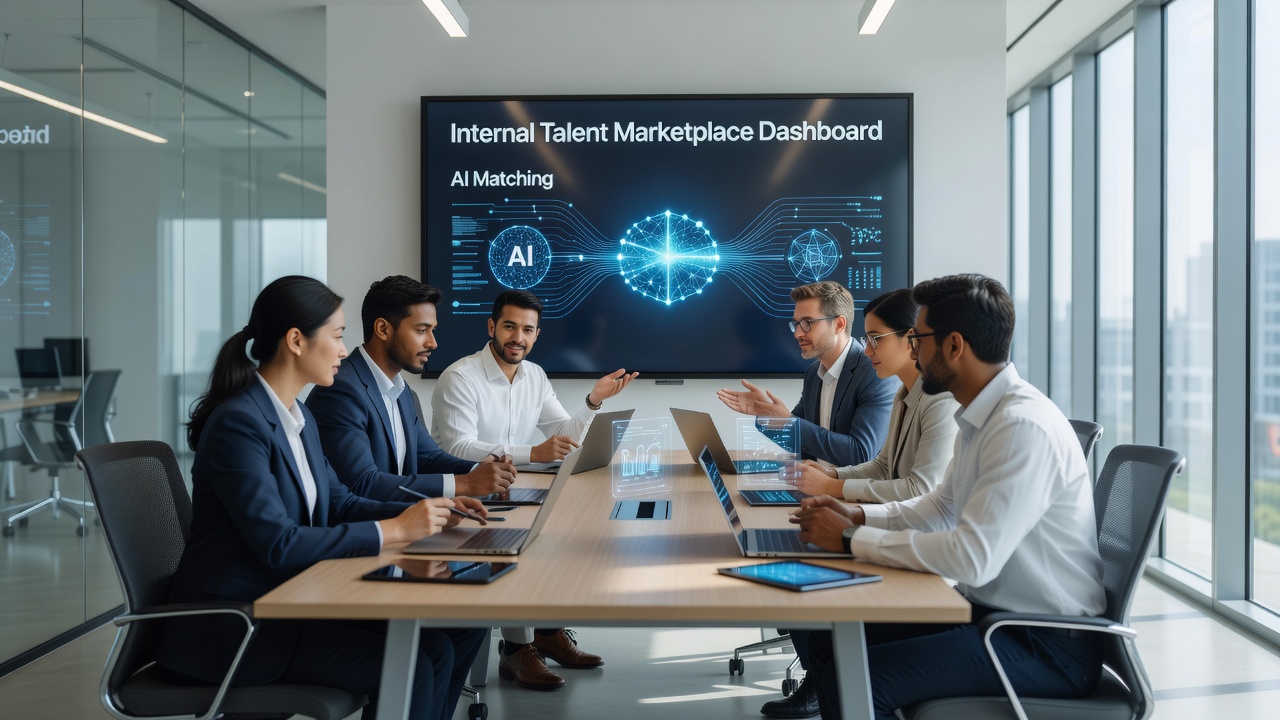
In 2026, organizations face increasing pressure to retain top talent amid competitive labor markets. An internal talent marketplace enables employees to explore roles across departments, fostering mobility without external hiring. This approach shifts focus from reactive recruitment to proactive career development, helping HR leaders improve retention rates. By leveraging AI-driven matching and employee self-service features, companies can create seamless internal movement. This guide covers platform selection, ATS integration, success metrics, change management, and real-world examples from mid-sized firms.
HR professionals are increasingly turning to these platforms as a strategic tool. Instead of losing skilled workers to competitors, organizations can match existing talent with new opportunities inside the company. The result is a more agile workforce that adapts quickly to changing business needs while employees gain clearer paths for advancement.
Understanding the Core Benefits for Retention
Internal talent marketplaces reduce turnover by empowering employees to pursue growth opportunities internally. Research from leading HR bodies shows that companies with strong internal mobility programs see up to 30% higher retention. Employees feel valued when they can visualize career paths without leaving the organization. Additional benefits include improved engagement, reduced time-to-productivity for new roles, and stronger cross-functional collaboration.
Key advantages include cost savings on external recruiting, faster role fulfillment, and enhanced engagement. In 2026, AI matching algorithms further personalize recommendations based on skills, experience, and career goals. This proactive model also supports diversity initiatives by surfacing opportunities to underrepresented groups who might otherwise be overlooked in traditional promotion processes.
Platform Selection Criteria for 2026
When evaluating platforms, prioritize AI capabilities, user-friendly self-service interfaces, and scalability. Look for solutions that integrate seamlessly with existing HR tech stacks. Key criteria include data security compliance, customizable matching algorithms, and mobile accessibility for today's workforce. Organizations should also assess vendor roadmaps to ensure ongoing innovation in areas like predictive analytics and skills-based matching.
Consider vendors offering robust analytics dashboards to track mobility trends. Mid-sized companies often benefit from platforms that support both full-time and project-based internal opportunities. It is wise to request demos that simulate real employee journeys, including how the system handles skill gaps and recommends learning resources alongside role suggestions.
Integrating with Existing ATS Systems
Successful implementation requires smooth integration with applicant tracking systems (ATS). This ensures employee profiles sync automatically, avoiding data silos. APIs and middleware tools facilitate real-time updates between the marketplace and ATS. Testing should cover edge cases such as employees on leave or those with multiple skill certifications.
HR teams should test integrations during pilot phases to confirm compatibility with legacy systems. This step prevents disruptions and maintains data accuracy across platforms. SHRM provides extensive guidance on selecting HR technology that aligns with organizational needs and compliance requirements.
Build vs Buy: A Practical Comparison
Organizations must decide between building a custom solution or purchasing off-the-shelf software. Building offers full customization but demands significant development resources and time. Buying accelerates deployment with proven features like AI matching. A build approach may suit companies with unique internal processes or highly regulated industries, while a buy approach typically delivers faster value for most mid-sized firms.
Mid-sized companies often choose buy options for faster ROI. Compare factors such as total cost of ownership, maintenance needs, and vendor support. Hybrid approaches, where core functionality is purchased and tailored modules are built, provide flexibility. Decision-makers should also evaluate long-term scalability, user adoption rates from similar organizations, and the availability of ongoing training resources from the vendor.
Change Management Steps for Successful Adoption
Implementing an internal talent marketplace requires careful change management. Start with executive sponsorship to align the initiative with business goals. Communicate benefits clearly to employees through town halls and training sessions. Without visible leadership support, even the best technology can fail to gain traction.
- Assess current culture and identify resistance points early through surveys and focus groups.
- Train managers on supporting internal moves rather than hoarding talent, including how to conduct stay interviews.
- Launch with a pilot group to gather feedback and refine processes before full rollout.
- Establish clear policies for role transitions and performance expectations to reduce ambiguity.
- Monitor sentiment continuously and adjust communication strategies based on employee feedback.
Regular feedback loops and recognition programs sustain momentum throughout rollout. Mistakes to avoid include under-communicating the purpose of the platform or failing to involve managers in the design phase, which can lead to low participation rates.
Success Metrics and Measurement
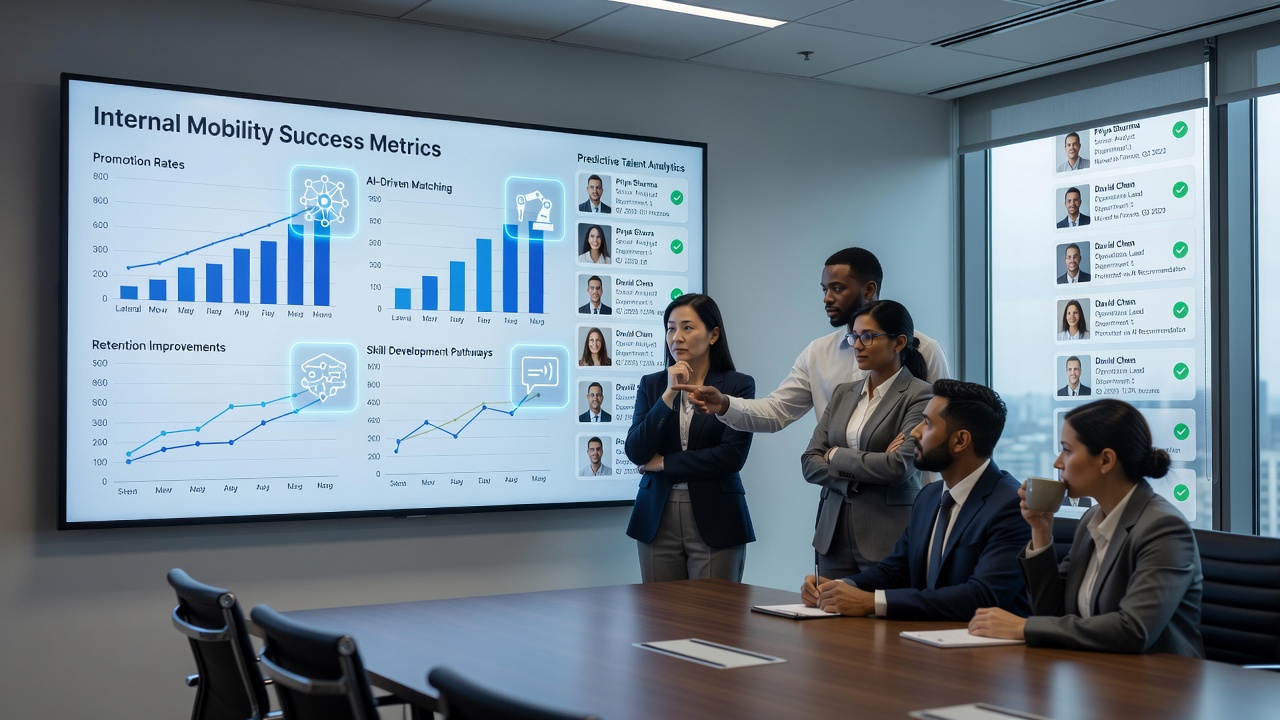
Track metrics such as internal mobility rates, time-to-fill for internal roles, and retention among marketplace users. Employee satisfaction surveys provide qualitative insights into career development perceptions. Advanced platforms offer AI-powered analytics to predict mobility trends and identify departments with high internal movement potential.
Set benchmarks like increasing internal hires by 25% within the first year to gauge impact effectively. Additional useful measures include the percentage of employees who update their profiles regularly and the average number of applications per open internal role. These indicators help HR teams refine the marketplace and demonstrate ROI to leadership.
Real-World Examples from Mid-Sized Companies
A mid-sized tech firm in the Midwest implemented an internal marketplace and achieved a 22% reduction in voluntary turnover within 18 months. Employees used self-service tools to apply for cross-department projects, leading to higher engagement scores. The company also reported improved collaboration between engineering and product teams after several successful internal transfers.
Another example comes from a healthcare provider with 1,200 employees. By integrating AI matching, they filled 40% of open roles internally, reducing external hiring costs and improving departmental collaboration. A third case involves a manufacturing company that combined the marketplace with targeted upskilling programs, resulting in a 35% increase in internal promotions over two years.
Frequently Asked Questions
How long does implementation typically take?
Most mid-sized organizations complete rollout in 3-6 months, depending on integration complexity and change management efforts. Companies with clean data and strong executive backing often finish on the shorter end of this range.
What are common hurdles during adoption?
Resistance from managers and data privacy concerns often arise. Address these through transparent policies and robust security features. Department of Labor resources on workforce development can offer additional context for compliance considerations.
Can small teams benefit from these platforms?
Yes, even teams under 500 employees see value in streamlined mobility and reduced external recruiting needs. Many platforms now offer tiered pricing suitable for growing organizations.
How does AI matching work in practice?
AI algorithms analyze skills, past performance, career aspirations, and even learning history to suggest suitable roles. Employees can review and refine these matches through self-service dashboards.
Conclusion
Internal talent marketplaces represent a strategic evolution in talent management for 2026. By focusing on mobility and development, HR leaders can build resilient workforces that drive retention and innovation. Start by assessing your current systems and engaging stakeholders to begin the journey toward a more dynamic internal labor market. With thoughtful planning and ongoing measurement, these platforms deliver lasting competitive advantages.


No comments yet. Be the first!