 Jobboy

Introduction to 2026 Creative Compensation Trends
The creative industries continue to evolve rapidly in 2026, with roles in design, marketing, and media offering competitive total compensation packages that reflect both skill demand and economic shifts. Professionals seeking to maximize their earnings must understand current benchmarks while preparing thoughtful, evidence-based requests during salary discussions. This guide provides in-depth analysis to help you determine appropriate compensation levels based on role, experience, and organizational context, going beyond surface-level overviews to deliver actionable insights for every stage of your career.
Successful negotiation begins with thorough research into industry standards. Factors such as company size, location, remote work policies, and emerging technologies like AI-assisted design tools significantly influence offers. By focusing on total rewards rather than base pay alone, candidates can secure packages that reflect their true value and support long-term financial goals. Understanding these dynamics empowers individuals to approach conversations with confidence and clarity.
Industry Benchmarks Across Creative Roles
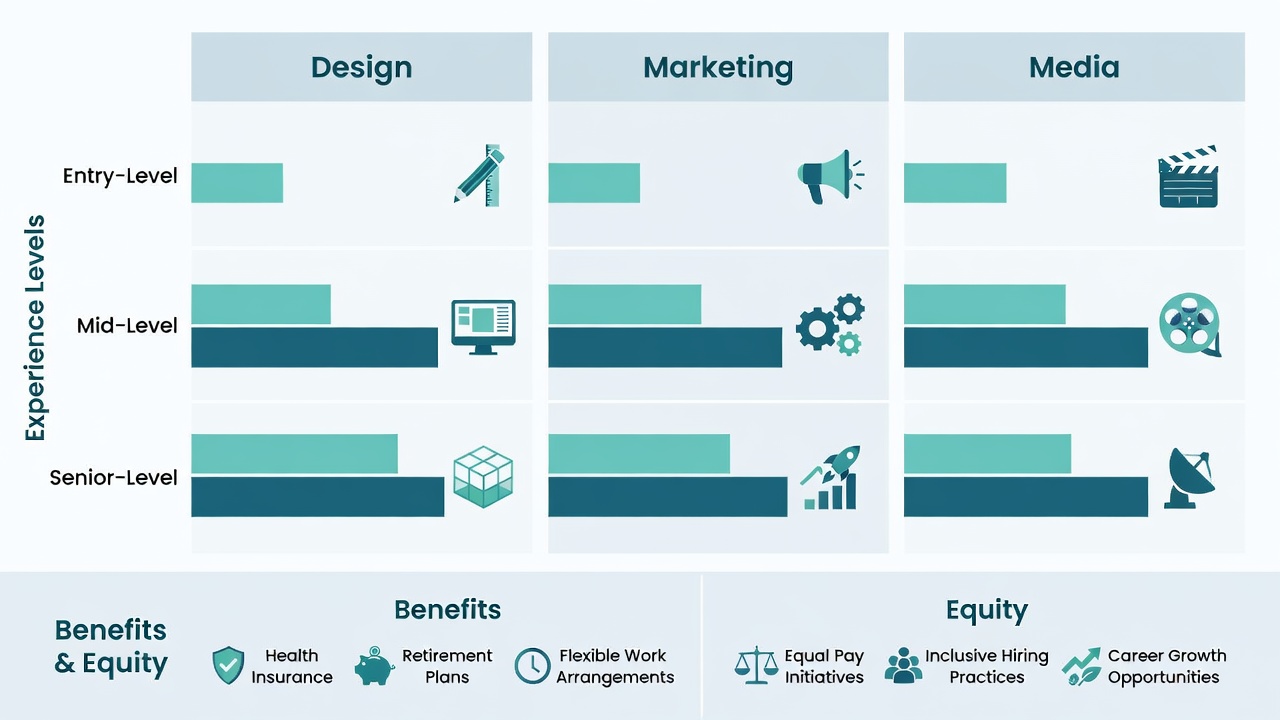
Design positions range from graphic designers to UX specialists, each carrying distinct market rates influenced by technical skills, portfolio strength, and familiarity with tools such as Adobe Creative Cloud or Figma. Marketing professionals, including content strategists and brand managers, often see compensation tied to campaign performance metrics, audience growth, and conversion rates achieved in previous roles. Media roles encompassing video production, digital journalism, and social media management emphasize storytelling abilities alongside platform expertise and analytics proficiency.
Comparisons reveal that larger enterprises typically provide higher base compensation paired with structured benefits and clear promotion pathways, whereas startups may emphasize equity and flexibility in exchange for higher risk. Mid-sized firms frequently balance both approaches, creating opportunities for hybrid negotiations that blend stability with growth potential. Regional variations also play a role, with coastal tech hubs often commanding premiums compared to inland markets, though remote arrangements have begun to level the playing field.
Valuing Benefits, Equity, and Total Rewards
Beyond base salary, comprehensive packages include health coverage, retirement contributions, professional development stipends, unlimited PTO policies, and equity options that can substantially increase long-term earnings potential. Equity in growing companies requires careful evaluation of vesting schedules, company trajectory, and exit scenarios to determine realistic value. Candidates should also consider wellness programs, parental leave, and mental health resources as integral parts of the total package.
Remote work allowances and home office stipends have become standard expectations in 2026. To accurately assess these elements, professionals can reference government labor data from sources such as Bureau of Labor Statistics and Department of Labor when building their negotiation strategy. Quantifying benefits helps present a holistic picture of value during discussions with hiring managers.
Steps to Prepare Data-Driven Salary Requests
- Compile personal achievements with quantifiable results from recent projects, such as increased engagement rates or completed campaigns.
- Research market data through authoritative labor statistics sources such as the Bureau of Labor Statistics to establish credible ranges.
- Assess your experience level against role requirements, noting any specialized certifications or unique skill combinations.
- Calculate the monetary value of benefits offered by comparable employers, including retirement matching and health premiums.
- Review your current compensation history and identify gaps relative to industry peers.
- Practice articulating your request with specific evidence and flexibility on structure, such as mixing salary with additional vacation days.
- Prepare for multiple scenarios, including counteroffers and phased increases tied to performance reviews.
- Document everything in a professional summary you can share during meetings.
Real-World Negotiation Examples
Consider a senior graphic designer at a mid-sized agency who prepared a request highlighting a 25 percent increase in client retention rates driven by redesigned brand assets. By referencing similar roles at peer organizations and proposing a phased increase tied to performance milestones, the individual secured an improved package including additional paid development time and a flexible schedule.
Another example involves a marketing coordinator transitioning to a larger media firm. The candidate documented campaign ROI metrics and negotiated a hybrid arrangement with partial remote flexibility, resulting in higher overall satisfaction without exceeding the company's budget parameters. A third case features a video producer who leveraged freelance portfolio samples to justify a move into full-time media management, successfully including equity grants after demonstrating past project impact.
Comparisons by Company Size
- Startups: Often feature equity-heavy packages with rapid growth potential but variable base pay and less predictable benefits structures.
- Mid-sized firms: Balanced offerings with competitive benefits, moderate salary bands, and opportunities for quick advancement into leadership.
- Enterprise organizations: Structured compensation scales with robust retirement and health options, clear career ladders, and comprehensive training programs.
Impact of Experience Levels and Remote Work
Entry-level creative roles emphasize foundational skills and portfolio building, while mid-career professionals command premiums for proven results and leadership. Senior positions frequently incorporate strategic oversight and team management, elevating total compensation further. Remote work has introduced new considerations, with some employers adjusting pay based on location while others maintain standardized rates regardless of geography.
Common Mistakes to Avoid
Many professionals undervalue their contributions by focusing solely on base pay without considering total rewards. Others fail to account for cost-of-living differences across regions or neglect to update their research with the latest market data. Always verify data freshness through reliable outlets like U.S. Census Bureau and tailor requests to the specific employer rather than using generic templates. Avoid emotional appeals; instead rely on facts and mutual benefit framing.
FAQ: Addressing Pay Raise Concerns
How do I initiate a salary conversation?
Schedule a dedicated meeting with your manager and frame the discussion around your contributions and market alignment using prepared data points.
What if the offer falls short?
Politely request time to review and counter with data-supported adjustments, emphasizing mutual benefits and your enthusiasm for the role.
Should I disclose current salary?
Focus instead on desired range and total compensation expectations to maintain leverage and avoid anchoring bias.
How often should I revisit compensation?
Plan annual reviews aligned with performance cycles, or sooner if you take on significant new responsibilities or complete high-impact projects.
What role does equity play in negotiations?
Equity can supplement base pay but requires understanding vesting, dilution risks, and company valuation trends before accepting.
Conclusion
Navigating 2026 creative industry compensation requires preparation, research, and strategic communication. By leveraging benchmarks, valuing all compensation components, and practicing negotiation scenarios, professionals can confidently request packages that reflect their expertise and market demand. Continuous skill development and periodic market reviews remain key to sustaining upward mobility in these dynamic fields, ensuring long-term career satisfaction and financial growth.


No comments yet. Be the first!