 Jobboy

2026 Guide to Negotiating Pay in Temporary and Contract Roles
Temporary, contract-to-hire, and project-based positions continue to grow in popularity as organizations seek flexibility while professionals pursue varied experiences and higher short-term earnings. In 2026, successful negotiation requires understanding the unique structure of these roles compared to permanent employment. This guide delivers actionable tactics, scripts, checklists, and real-world examples to help you maximize earnings while avoiding common pitfalls. Whether you are a seasoned contractor or new to flexible work arrangements, mastering these skills can significantly boost your financial outcomes and career satisfaction over the coming year.
Key Differences Between Contract and Permanent Compensation
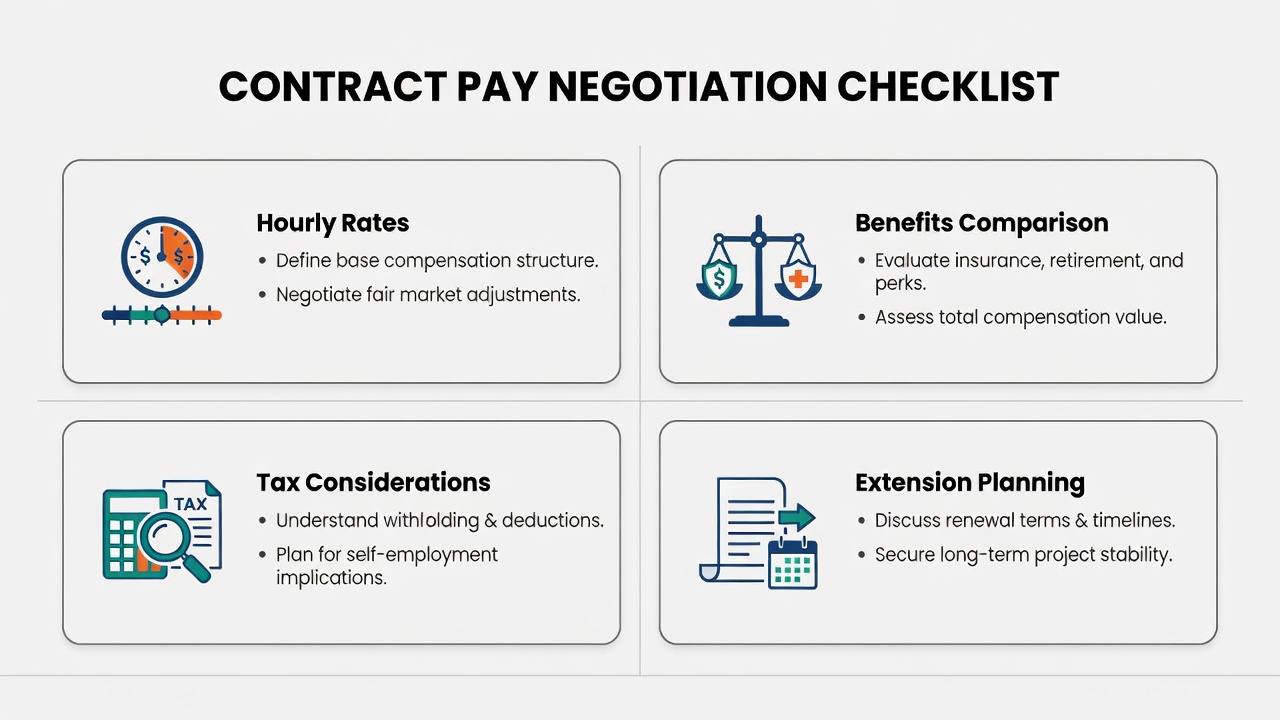
Contract roles typically pay hourly rates without traditional benefits such as health insurance, retirement matching, or paid time off. Permanent packages often include base salary plus equity, bonuses, and comprehensive benefits. Contract workers must factor in self-employment taxes and gaps between assignments. Renewal clauses can provide stability but may limit leverage if not negotiated early. Another critical distinction involves overtime eligibility and liability protections, which are usually absent in contract agreements. Professionals often focus search intent on maximizing short-term cash flow. However, overlooking long-term value can reduce overall earnings. Always compare offers using total compensation value rather than headline hourly rates alone. Understanding these nuances helps prevent surprises when tax season arrives or when a project ends unexpectedly.
Calculating Total Compensation Value
Start by converting hourly rates into annualized equivalents while subtracting hidden costs. Add the value of any stipends for equipment or training. Subtract estimated tax burdens and benefit premiums you must cover independently. This process reveals the true net value of each opportunity. Break the calculation into clear steps: first estimate total billable hours across the contract duration, then apply your effective tax rate, and finally deduct recurring expenses such as professional liability insurance or home office setup. Use a simple spreadsheet to track base pay, expected hours, renewal probability, and ancillary expenses. Compare multiple offers side by side before accepting. This disciplined approach prevents accepting seemingly high rates that deliver lower net income after taxes and downtime. Incorporate buffers for unpaid administrative time and potential slow periods between projects to arrive at a realistic annual figure.
Step-by-Step Negotiation Scripts for 2026
Effective negotiation begins before the first offer arrives. Research market benchmarks using authoritative sources such as the Bureau of Labor Statistics. Prepare a concise value statement highlighting specialized skills, past results, and availability for quick starts. When the initial discussion occurs, frame your request around mutual benefit rather than personal needs. Sample script for initial rate discussion: "Based on my experience delivering similar projects ahead of schedule, I am targeting an hourly rate in the range of X to Y. How does that align with your budget for this engagement?" If the response is lower than expected, follow up with: "I appreciate the offer. To make this work, could we explore including a performance bonus or covering certain professional development costs?" When discussing contract-to-hire transitions, ask: "If performance meets expectations, what is the typical timeline and compensation structure for converting to permanent?" Document every promise in writing and request a follow-up email summarizing the conversation. These scripts can be adapted for email, video calls, or in-person meetings.
Handling Extension and Renewal Negotiations
Many contracts include automatic renewal language that favors the client. Counter this by requesting a formal review meeting 30 days before expiration. Prepare data on deliverables achieved and market rate changes since the original agreement. Use this script: "I have enjoyed contributing to the team and would like to discuss extending our agreement. Given current market conditions and my expanded responsibilities, I propose a modest rate adjustment effective upon renewal." Always secure the new terms in an updated statement of work rather than relying on verbal assurances. If the client resists, explore non-monetary concessions such as flexible hours or priority consideration for future projects. Tracking your contributions throughout the engagement provides concrete evidence to support your position during these talks.
Comparing Contract Versus Permanent Offers With Examples
Consider two scenarios. A six-month contract at a premium hourly rate versus a permanent role with base salary and benefits. Calculate the contract's total earnings minus taxes and insurance costs, then project earnings across the full year including potential downtime. Permanent roles provide predictability but may cap immediate cash flow. In one example, a marketing specialist weighed a 12-month contract paying a competitive hourly rate against a permanent position with standard benefits. After factoring in self-employment taxes and a two-week gap between assignments, the contract option still yielded higher net income for the year. Professionals who plan for multiple sequential contracts often achieve higher annual totals when gaps are minimized through strong networking and recruiter relationships. Always model best-case, average, and worst-case scenarios to make an informed decision.
Checklist for Evaluating Hidden Costs
- Estimate quarterly tax payments using IRS guidelines from IRS.gov
- Calculate cost of health insurance during contract periods
- Factor in equipment, software, and workspace expenses
- Assess risk of non-renewal and plan emergency reserves
- Review non-compete and intellectual property clauses
- Include professional development and certification renewal fees
- Account for time spent on invoicing and client acquisition
Mistakes to Avoid When Negotiating Contract Pay
One frequent error is accepting the first offer without countering, which can leave thousands of dollars on the table over the life of the engagement. Another mistake involves ignoring renewal language until the final weeks, reducing your bargaining power. Failing to document verbal agreements often leads to disputes later. Professionals sometimes overlook the impact of non-billable time on overall earnings, resulting in lower effective hourly rates than anticipated. Finally, neglecting to compare total compensation across opportunities can cause you to choose a contract that appears lucrative but delivers less net value after taxes and expenses.
Real-World Case Studies
A software engineer accepted a nine-month contract at a strong hourly rate. By negotiating a performance bonus tied to milestone delivery, total earnings exceeded the initial offer by 12 percent. Another professional declined a contract-to-hire conversion because the permanent salary failed to offset lost flexibility and overtime premiums. A third case involved a project manager who secured two back-to-back contracts by maintaining relationships with multiple staffing agencies, resulting in continuous employment and a 15 percent increase in effective annual earnings compared to the prior year. These examples illustrate the importance of evaluating both immediate cash and long-term career trajectory while staying proactive about future opportunities.
Tools and Resources for Tracking Contract Pay Trends
Stay informed by subscribing to industry salary surveys and joining professional networks where contractors share anonymized rate data. Government resources such as the Department of Labor provide additional context on workforce trends. Spreadsheet templates and simple project management apps can help you log hours, expenses, and renewal dates in one place. Reviewing these tools quarterly ensures your negotiation targets remain aligned with current market conditions.
FAQs on Common Pitfalls
How do I handle low initial offers? Counter with data-backed requests and emphasize unique qualifications rather than simply asking for more money. Provide specific examples of past results to strengthen your position.
Should I accept a lower rate for a prestigious client? Only if the experience accelerates future opportunities enough to justify the short-term reduction. Weigh the networking value against potential earnings loss.
What tools track contract pay trends? Leverage industry salary surveys and professional networks for real-time insights. Combine these with official labor statistics for a complete picture.
How should I prepare for tax implications? Set aside a percentage of each payment in a separate account and consult a tax professional familiar with contract work.
Conclusion
Negotiating pay in temporary and contract roles demands preparation, clear communication, and ongoing evaluation. By focusing on total compensation, using proven scripts, and planning for extensions, professionals can secure stronger outcomes in 2026. Apply these strategies consistently to build both immediate earnings and long-term career resilience. Regular review of your approach will keep you competitive in an evolving marketplace.


No comments yet. Be the first!