 Jobboy

Introduction: Why a Career Manifesto Matters in 2026
In today’s fast-evolving job market, professionals need more than a resume or LinkedIn profile to navigate change effectively. A career manifesto serves as a personal strategic document that clarifies your core values, ambitious goals, and daily actions. It helps maintain focus amid promotions, career pivots, and economic shifts. Whether you are seeking a leadership role, planning an industry switch, or simply aiming for greater fulfillment, this living document acts as your north star. By the end of this guide, you will have a complete framework to create and sustain your own manifesto for lasting professional impact throughout 2026 and beyond.
Identifying Your Core Values as the Foundation
Every effective manifesto begins with deep self-reflection on values such as integrity, innovation, work-life balance, continuous learning, or collaboration. Start by listing 5–7 non-negotiables that define your professional identity. Consider past experiences where you felt most fulfilled or frustrated—these moments reveal what truly matters. Aligning future decisions with these values prevents burnout and ensures authentic growth. Research from career experts shows that value-aligned professionals report higher job satisfaction and retention rates. Spend time journaling about your proudest achievements and the principles they reflect. Revisit this list annually or after major life events to keep it relevant.
Practical Exercise: Values Audit
- Review your last three roles and note moments of high energy or deep dissatisfaction.
- Rank values by importance using a simple 1–10 scale, then narrow to your top five.
- Cross-reference with feedback from mentors, performance reviews, or 360-degree assessments.
- Write a short paragraph explaining why each value is non-negotiable for you.
This process creates the bedrock for all subsequent sections of your manifesto and helps filter opportunities that may not serve your long-term vision.
Setting Ambitious Yet Flexible Goals
Goals in a manifesto should stretch your potential while remaining adaptable to change. Use the SMART framework but add a flexibility layer: review quarterly and adjust based on market trends or personal circumstances. For 2026, consider targets like leading a cross-functional team, transitioning into a new industry, or achieving a specific certification that boosts your profile. Ambitious goals paired with contingency plans create resilience. For instance, a marketing manager pivoted to sustainability consulting by setting a goal to complete three relevant courses while maintaining her current role. A software engineer aimed for a senior position within 18 months but built in quarterly check-ins to pivot if remote opportunities arose. The U.S. Department of Labor emphasizes the importance of adaptable career planning in today’s economy.
Step-by-Step Process to Create Your Manifesto
Follow this proven sequence to draft a living document you will revisit regularly.
- Block 2–3 hours for initial brainstorming in a quiet space free from distractions.
- Write a personal mission statement in one paragraph that captures your purpose.
- Outline 3–5 long-term aspirations for the next 3–5 years, ensuring they tie back to your values.
- Break each aspiration into quarterly milestones and weekly actions that feel achievable.
- Design a simple visual layout—bullet points, mind map, or one-page infographic—for easy reference.
- Share a draft with a trusted colleague or mentor for initial feedback and refinement.
- Store the final version in both digital and physical formats for daily accessibility.
Many professionals keep their manifesto in a dedicated notebook or digital tool synced across devices for daily reference and motivation.
Real-World Examples from Diverse Professionals
Consider these anonymized cases that demonstrate the power of personalization. An HR specialist in healthcare created a manifesto centered on equity and inclusion, leading to a promotion into diversity leadership within 14 months. A freelance graphic designer focused on creative autonomy and client selectivity, resulting in higher project satisfaction and reduced burnout. A mid-career finance professional used her manifesto to transition into fintech by prioritizing upskilling in blockchain technology. These stories highlight how tailoring the document to individual circumstances drives measurable results and sustained motivation.
Comparing Manifesto Styles: Narrative vs. Bullet-Point vs. Visual
Choose a format that matches your working style and personality. The narrative style works best for reflective writers who enjoy reading their manifesto like a personal essay during quiet moments. The bullet-point style is ideal for quick daily scans and action-oriented individuals who prefer scannable lists. The visual style suits creative professionals who benefit from mind maps, vision boards, or color-coded charts. Many hybrid versions combine elements for maximum usability. Test one style for 30 days before committing, and adjust as needed. The Harvard Business Review regularly explores how different planning formats affect long-term career success.
Integrating Feedback from Networking and Upskilling
Your manifesto should evolve with new insights gained from networking events, mentorship conversations, and skill-building activities. After attending industry conferences or completing online courses, dedicate time to update relevant sections. For example, a conversation with a recruiter might reveal emerging skills in AI ethics; add this to your upskilling milestones immediately. Schedule monthly reviews to incorporate such input without losing your core direction. This iterative approach ensures your manifesto remains dynamic and responsive to real-world opportunities.
Maintaining Momentum Throughout 2026
Common challenges include losing motivation after initial excitement and external pressures derailing plans. Combat these by pairing your manifesto with accountability systems such as monthly check-ins with a mentor or joining a small mastermind group. Celebrate micro-wins publicly on professional networks to reinforce commitment. Track progress in a simple spreadsheet that logs actions against manifesto items. When setbacks occur, revisit your values section to reconnect with your “why.” Consistency compounds over time, turning manifesto-driven habits into automatic behaviors by year-end.
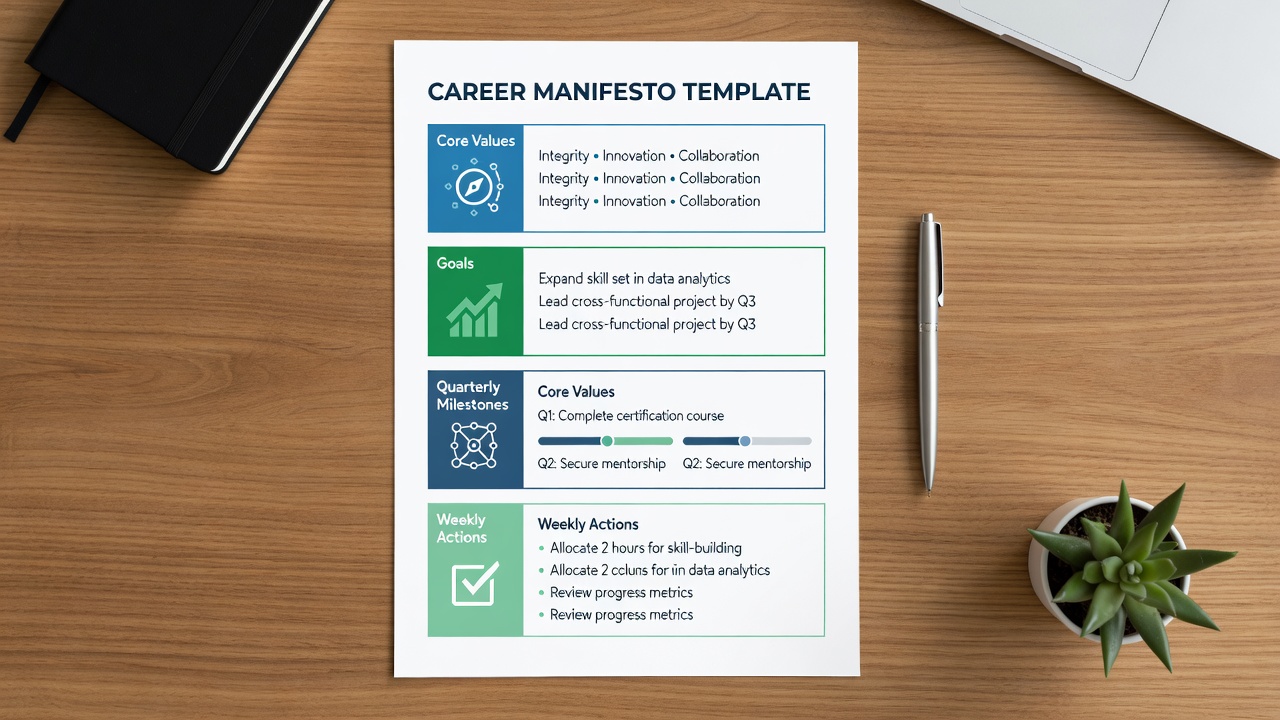
Practical Template You Can Adapt
Use this starter structure and customize it to your needs:
- Core Values: (List 5–7 with brief explanations)
- Personal Mission: (One paragraph summarizing your purpose)
- 2026 Aspirations: (3–5 goals with clear deadlines and success metrics)
- Quarterly Milestones: (Specific, measurable targets for each aspiration)
- Weekly Actions: (3–5 repeatable habits that move you forward)
- Review Schedule: (Specific dates for reflection and adjustment)
- Accountability Notes: (Names of mentors or groups providing support)
FAQ: Addressing Common Challenges
How often should I update my manifesto?
Review quarterly and make major revisions annually or after significant life events such as job changes or family shifts.
What if my goals conflict with my current job?
Use the manifesto to identify small pivots, such as volunteering for stretch projects that build toward your vision while maintaining performance in your role.
Can I share my manifesto with my employer?
Share selectively with trusted managers during development conversations to align expectations and seek support for your growth objectives.
How do I stay consistent when life gets busy?
Link manifesto actions to existing routines, like reviewing goals during your weekly commute or Sunday planning session.
What tools help maintain a manifesto effectively?
Many professionals use digital apps for reminders or physical journals for deeper reflection; choose what fits your lifestyle best.
Conclusion: Your Path to Lasting Impact
A well-crafted career manifesto transforms vague ambitions into deliberate progress. By grounding it in values, setting flexible goals, and integrating real-world feedback, you position yourself for sustained success in 2026 and beyond. Begin drafting today and treat the document as a dynamic companion rather than a static file. Your future self will thank you for the clarity and direction it provides.


No comments yet. Be the first!