 Jobboy

Introduction to Gamification in Professional Development
Gamification applies game mechanics such as points, badges, leaderboards, and challenges to non-game contexts like career growth. In 2026, professionals are turning to these methods to stay motivated beyond traditional courses. This approach transforms skill-building into an engaging experience that accelerates promotions and personal growth. Many workers seek innovative upskilling methods that deliver faster results than passive learning. Gamification taps into intrinsic motivation through rewards and competition, helping users build habits that lead to measurable career advances. By turning routine tasks into quests with clear rewards, individuals maintain higher engagement levels over extended periods. Research in behavioral psychology supports that variable rewards and progress visualization keep learners returning daily, unlike static training programs that often lose momentum after the first few weeks.
Professionals across industries report improved focus when they layer game elements onto existing development plans. Whether advancing in tech, marketing, or management, the core principle remains the same: make progress visible and rewarding. This article explores practical ways to implement these techniques for sustained career momentum throughout 2026 and beyond.
Top Gamification Apps and Platforms for Career Growth
Several platforms stand out for incorporating game elements into professional learning. Apps like Habitica turn daily tasks into RPG adventures where completing work goals earns experience points and virtual items. Duolingo-style streaks and leaderboards appear in professional tools such as LinkedIn Learning modules, where users unlock certificates after finishing course paths. Other strong options include Elevate for cognitive skill challenges with daily rankings and Todoist Karma for productivity scoring that encourages consistent task completion. Custom setups in Notion or Trello allow users to add their own point systems and achievement badges tailored to specific career objectives. When selecting tools, consider integration with existing workflows to maintain consistency throughout the year. For example, combining a habit tracker with calendar reminders creates a seamless loop that reinforces new behaviors without adding extra administrative burden. Many platforms also offer community features where users share progress publicly, fostering accountability similar to team sports environments.
Step-by-Step Implementation Guide for Daily Routines
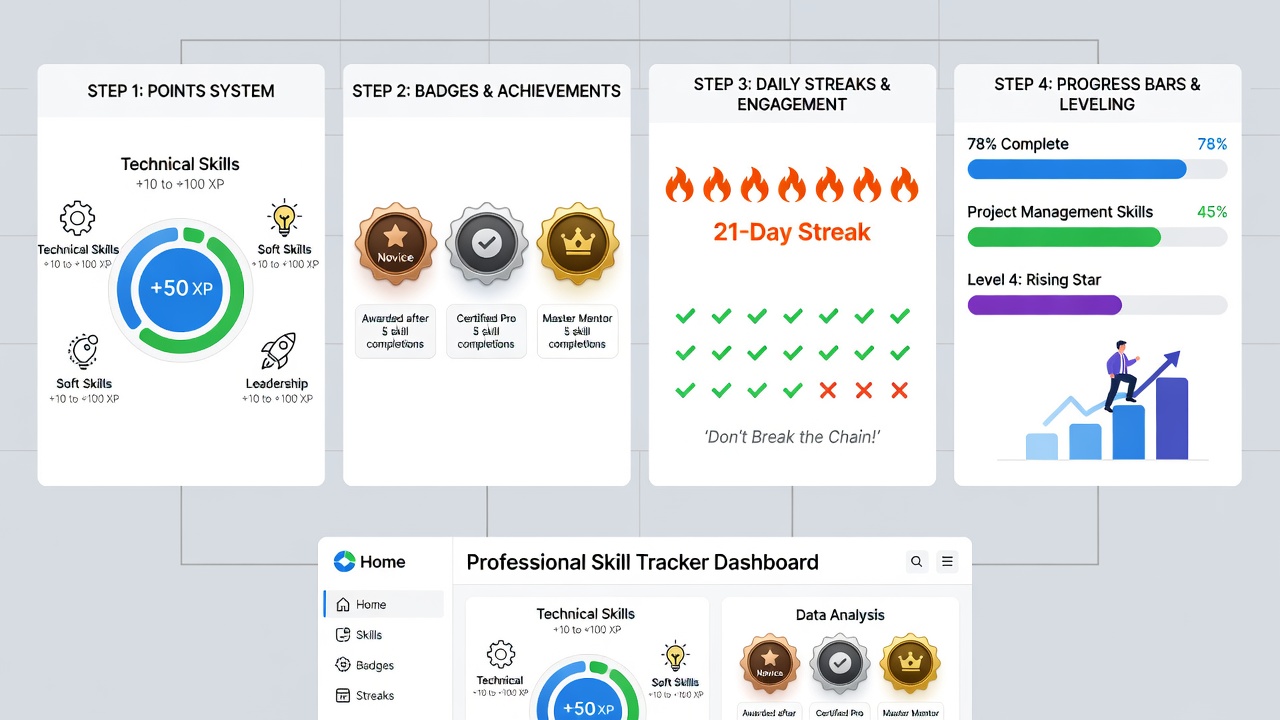
Start by identifying three core skills to develop, such as public speaking, data analysis, or project management. Assign point values to micro-tasks: 10 points for completing a 15-minute tutorial, 50 points for practicing in a real scenario, and 100 points for presenting findings to colleagues. Use the following structured approach to embed these elements into everyday life.
- Set up a simple tracking system using a spreadsheet or dedicated app to log points daily, reviewing totals each evening to celebrate small wins immediately.
- Introduce badges for milestones, like earning a "Negotiation Master" badge after five successful role-plays or client meetings, displayed visibly on your workspace or digital profile.
- Create weekly leaderboards with colleagues or online communities for friendly competition, rotating themes such as most certifications earned or most networking connections made.
- Review progress every Sunday and adjust challenges to prevent burnout, perhaps by introducing bonus multipliers for tasks completed before 9 a.m.
Consistency matters more than intensity. Begin with 20-minute daily sessions to build momentum without overwhelming your schedule. Track streaks to build positive reinforcement, and pair difficult skills with easier ones to maintain flow. Over time, these routines compound into significant expertise gains that stand out during performance reviews.
Real-World Case Studies of Professionals Achieving Promotions
Sarah, a marketing coordinator, used gamified challenges on a custom Notion board to track campaign metrics. By earning levels for each completed certification, she reached a senior role within eight months. Her method included sharing achievements on professional networks to attract mentorship opportunities. Another example involves a software engineer who joined a team leaderboard for coding problems. This friendly competition led to faster skill acquisition and a promotion to team lead, as documented in internal company reviews. A third case features a financial analyst who applied streak mechanics to regulatory compliance training. Completing 30 consecutive days of micro-learning modules earned her recognition at an industry conference and accelerated her path to a managerial position. These stories highlight how personalized gamification aligns daily effort with long-term advancement goals.
Comparisons to Conventional Learning Approaches
Traditional courses often suffer from low completion rates due to lack of immediate feedback. Gamification counters this with instant rewards that reinforce behavior. Studies from major learning platforms show higher engagement when elements like progress bars and achievements are present. Conventional methods provide structured knowledge but may lack the social and competitive drive that keeps learners returning. Combining both approaches yields the best outcomes for long-term retention and application. For instance, taking a standard online course while overlaying personal points for each module completed increases finish rates dramatically. The key difference lies in emotional investment: game elements create a sense of play that reduces the perceived effort of studying complex topics.
Integration Tips with Networking and LinkedIn Strategies
Link your gamification progress to LinkedIn by posting milestone badges and inviting connections to join challenges. This builds visibility while reinforcing accountability. Use networking events as bonus rounds: award yourself extra points for meaningful conversations that lead to mentorship opportunities. Track these interactions alongside skill milestones to create a holistic career dashboard. Consider joining industry-specific communities on the platform that run their own gamified challenges, such as monthly content creation contests. This dual approach amplifies both personal skill growth and professional visibility simultaneously.
Measuring Results and Overcoming Setup Challenges
Track metrics such as skills acquired, time invested, and career milestones reached. Use quarterly reviews to quantify impact, such as increased interview callbacks or successful salary negotiations. Common challenges include initial setup time and maintaining motivation. Address these by starting small and automating point tracking where possible. If progress stalls, introduce new game elements like surprise rewards or team collaborations. Many professionals also integrate reflection journals to document emotional benefits, which helps sustain long-term commitment even when external rewards feel distant.
Mistakes to Avoid When Implementing Gamification
One frequent error is overcomplicating the system with too many rules at the outset, leading to decision fatigue. Another is neglecting social elements, which reduces accountability. Avoid tying rewards solely to outcomes rather than consistent effort, as this can discourage beginners. Finally, do not ignore rest periods; sustainable progress requires built-in recovery days to prevent burnout and maintain enthusiasm over months.
Frequently Asked Questions
How do I choose the right gamification elements?
Match elements to your personality. Competitive individuals thrive on leaderboards, while others prefer solo quests and narrative-driven progress. Test different combinations for two weeks before committing.
What if my workplace does not support gamification?
Implement personal systems first. Share results selectively to demonstrate value before proposing team-wide adoption. Many start with private tracking and later expand.
How long until I see career benefits?
Most professionals notice improved habits within 30 days and tangible outcomes like promotions within six to twelve months with consistent effort. Regular measurement helps adjust the approach early.
Can gamification work for creative roles?
Yes. Focus on process points for ideation sessions or client pitches rather than purely quantitative metrics to keep creativity intact while adding structure.
Is there a risk of losing intrinsic motivation?
Balance external rewards with meaningful goals. Periodically reflect on why the skill matters personally to ensure game mechanics support rather than replace genuine interest.
Conclusion
Gamification offers a powerful way to enhance professional development in 2026 by making learning addictive and goal-oriented. By combining proven platforms, structured routines, and strategic networking, you can accelerate your path to career success. Begin today with one small challenge and build from there for compounding results over time.


No comments yet. Be the first!