 Jobboy

Introduction to Valuing Variable Pay Components
Professionals evaluating job offers often focus heavily on base salary while underestimating or overestimating the value of equity, bonuses, and profit-sharing plans. Understanding these variable components is essential for assessing total compensation accurately across industries like tech, finance, and healthcare. This guide provides in-depth methods to value stock options and RSUs, compares bonus structures by role level, shares real-world examples, and offers a step-by-step checklist to determine offer fairness. Variable pay can significantly impact long-term earnings, especially in high-growth sectors where equity represents a major portion of potential wealth creation. Candidates must learn to distinguish between granted value, vested value, and realized value to avoid common miscalculations that lead to suboptimal career decisions.
Methods to Value Stock Options and RSUs
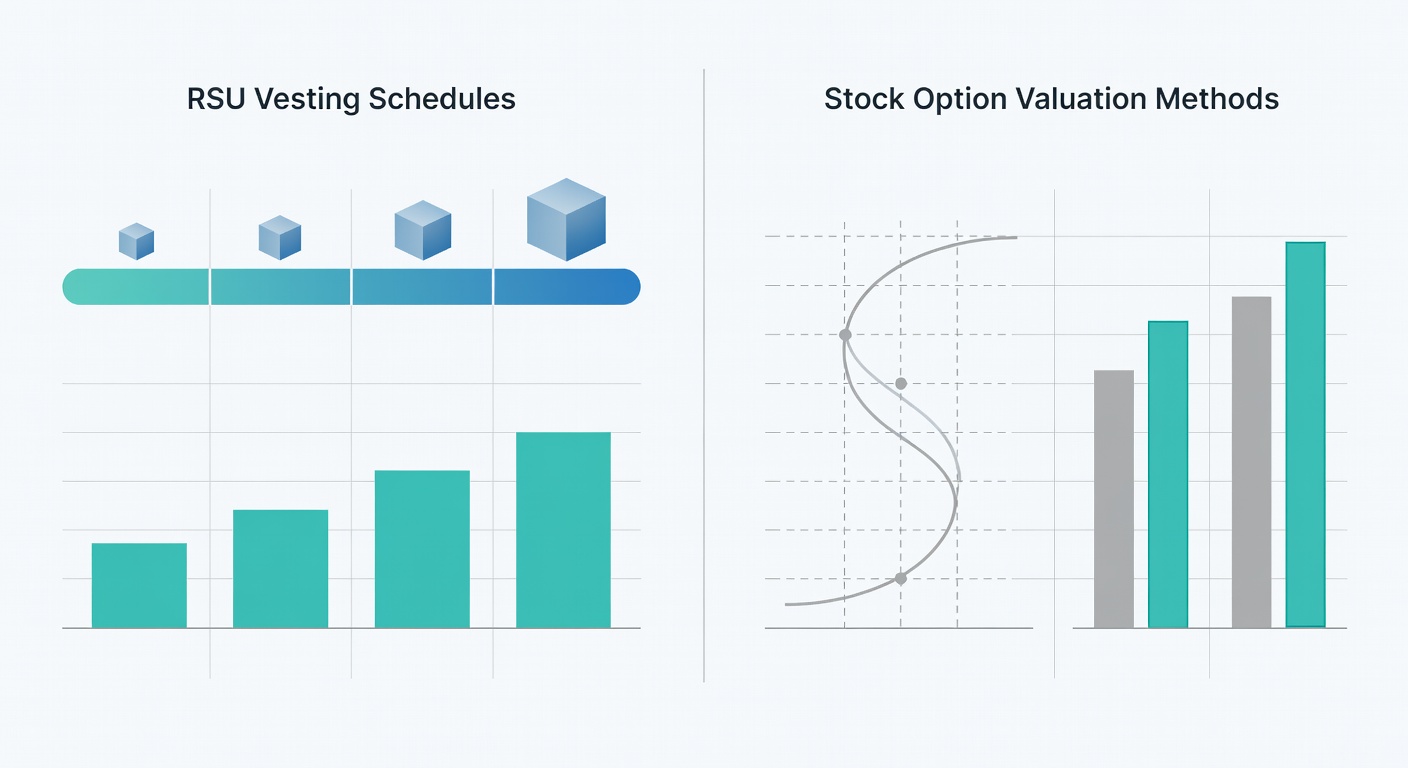
Stock options grant the right to purchase shares at a fixed strike price, while RSUs represent a promise of company shares upon vesting. To value them, start by reviewing the grant size, vesting schedule, and current fair market value. Use the Black-Scholes model for options or a simple grant-date fair value for RSUs. Factor in company stage: early-stage startups may have higher upside but greater risk of zero value. For public companies, examine recent stock performance and volatility metrics through regulatory disclosures. Private company valuations often rely on 409A reports, which provide independent assessments of fair market value at grant time.
Always discount for illiquidity and potential dilution from future funding rounds. Consider the time value of money when equity vests over multiple years. In practice, professionals should model multiple scenarios: best case, base case, and worst case outcomes based on company trajectory. This approach reveals the range of possible financial outcomes rather than relying on a single optimistic projection.
Key Differences Between Options and RSUs
Options require an exercise decision and carry downside risk if the stock price falls below the strike. RSUs have no exercise price but are taxed as income upon vesting. Both require careful modeling of tax impacts and holding periods to maximize after-tax value.
Comparing Bonus Structures by Role Level
Bonus structures vary significantly by seniority and industry. Entry-level roles might offer smaller percentages of base salary as performance bonuses, while senior positions can include substantial variable elements through profit-sharing. In sales roles, commissions often replace or supplement bonuses, tied directly to revenue targets. Technology companies frequently blend equity with cash bonuses, whereas professional services firms emphasize annual profit pools distributed among partners and managers.
- Individual contributor: Smaller, achievement-based bonuses focused on project delivery and individual metrics.
- Manager level: Mix of team performance, departmental goals, and individual contributions with moderate upside potential.
- Executive: Heavily weighted toward company-wide profit-sharing, long-term incentives, and strategic milestones that align with shareholder interests.
Review plan documents carefully to understand payout triggers, caps, and clawback provisions that may apply in certain circumstances.
Real-World Examples of Total Comp Outcomes
Consider a software engineer at a mid-sized tech firm receiving a grant of options alongside an annual performance bonus. In one scenario, strong company growth led to meaningful realized gains upon liquidity events, though vesting requirements meant the full benefit accrued only after several years of service. Another example from the finance sector shows how profit-sharing plans added substantial value for mid-level analysts when overall firm profitability exceeded internal targets over consecutive quarters.
A healthcare professional evaluating an offer from a growing biotech company might see equity grants that appear attractive on paper but carry high uncertainty until clinical milestones are achieved. These cases illustrate why candidates should simulate personal financial projections rather than accepting stated values at face value. Cross-industry patterns reveal that equity-heavy packages reward patience and risk tolerance, while bonus-focused structures provide more predictable near-term cash flow.
Step-by-Step Checklist for Assessing Offer Fairness
- Calculate base salary plus estimated annual bonus at target performance levels, including any guaranteed minimums.
- Determine equity value using grant details, vesting timeline, and appropriate valuation models while applying realistic discounts.
- Research company financial health, funding history, and potential exit scenarios through public records and industry analysis.
- Compare the total package against similar roles in your target industry and geographic market using multiple data sources.
- Factor in benefits, work-life balance policies, professional development support, and long-term career trajectory potential.
- Identify gaps in variable pay components and prepare specific negotiation requests supported by your research.
- Model tax consequences for each component using current guidelines to understand net take-home value.
- Review non-compete, non-solicit, and other restrictive covenants that could affect future opportunities.
Common Pitfalls in Overvaluing Unvested Equity
Many candidates overvalue unvested equity by assuming full realization without considering forfeiture risks, company failure, or tax events upon vesting. Treating equity as guaranteed cash ignores the possibility of zero payout in liquidation events or bankruptcy scenarios. Another frequent mistake involves ignoring dilution from subsequent investment rounds that reduce individual ownership percentages over time. Candidates should also avoid anchoring on headline grant values without modeling the probability-weighted outcomes across different company performance levels. These errors often result in accepting offers that underperform relative to more balanced compensation packages elsewhere.
FAQ: Tax Implications and Negotiation Leverage Points
What are the tax implications of equity and bonuses?
Bonuses are typically taxed as ordinary income upon receipt. Equity taxation depends on type: RSUs trigger income tax at vesting, while options may qualify for capital gains treatment if exercised properly after required holding periods. Additional considerations include alternative minimum tax exposure for incentive stock options and state tax variations. Consult official resources like the IRS for detailed guidance on reporting requirements and planning strategies.
How can I gain negotiation leverage?
Use data on comparable offers and highlight your unique contributions that align with company objectives. Focus discussions on vesting acceleration clauses, bonus guarantees, or equity refreshers rather than base salary alone. Leverage points include competing offers, specialized skills in demand, and demonstrated past performance that can directly influence company results. Timing negotiations after receiving a formal written offer maximizes your position.
What should I ask about profit-sharing plans?
Inquire about the formula used to calculate distributions, eligibility requirements, and historical payout ratios over the past several years. Understanding whether plans are discretionary or formula-driven helps set realistic expectations for future variable income.
Conclusion
Valuing equity and bonuses requires careful analysis beyond surface numbers. By applying the methods, comparisons, and checklist above, professionals can make informed decisions that align with long-term financial goals. Thorough due diligence on each compensation element reduces the risk of unpleasant surprises after accepting an offer. Always seek personalized professional advice for complex compensation packages involving significant equity components.


No comments yet. Be the first!