 Jobboy

2026 Salary Scripts by Industry: What to Ask for in Negotiations
Negotiating your salary or job offer in 2026 requires preparation, precise language, and an understanding of total compensation beyond base pay. This guide delivers ready-to-use scripts tailored to major industries, along with strategies for calculating your ask, handling counteroffers, and quantifying perks such as equity and PTO. Professionals across sectors can use these tactics to secure better packages while maintaining strong relationships with employers.
Why Industry-Specific Scripts Matter in 2026
Each sector has distinct compensation structures, growth patterns, and negotiation norms. Using generic phrases can weaken your position. Tailored scripts demonstrate research and professionalism while maximizing outcomes without damaging relationships. In a competitive job market, employers appreciate candidates who understand industry standards and articulate their value clearly. This approach leads to higher acceptance rates and long-term career satisfaction.
Professionals who prepare specific language report higher success rates. Start by researching market benchmarks through authoritative sources such as the U.S. Bureau of Labor Statistics. Understanding these nuances helps you avoid common pitfalls like undervaluing your contributions or overlooking non-salary elements that add significant worth to an offer.
Calculating Your Ask: Data-Driven Approach
Before any conversation, determine a realistic range. Review your current total compensation, market rates as of 2026-07-26, and the value you bring. Factor in inflation trends, skill demand, and company performance. Aim for the 60th to 75th percentile of market data when your performance is strong. Break down your request into base salary, variable pay, benefits, and long-term incentives to present a balanced proposal.
Document achievements with metrics. For example, quantify revenue generated or processes improved. This evidence supports your request and shifts the discussion from emotion to value. Create a personal spreadsheet comparing your current package against three to five comparable roles in your field. Include elements like health insurance costs, retirement contributions, and professional development allowances to arrive at a true total compensation figure.
Tech Industry Negotiation Scripts
Tech roles often emphasize equity and flexible benefits. Use this script for a raise discussion: "Based on my contributions to the Q2 product launch and current market data as of 2026-07-26, I am requesting a base salary adjustment to the upper quartile for my role. I am also open to discussing an equity refresh of X shares vesting over four years plus an additional week of PTO."
When receiving an offer, respond with: "Thank you for the offer. To align with 2026 market benchmarks for senior engineers at similar companies, I would like to explore a 10-15% increase in total compensation, split between base and equity." Follow up by asking about vesting schedules and refresh grants to ensure alignment with long-term goals. If the initial response is hesitant, pivot to discussing remote work stipends or learning budgets as alternative value-adds.
Healthcare Industry Negotiation Scripts
Healthcare negotiations frequently center on shift differentials, malpractice coverage, and continuing education stipends. Try this approach: "My experience managing high-acuity patient loads positions me well for this role. I propose a compensation package that includes base salary at the 70th percentile, full malpractice coverage, and a $5,000 annual professional development allowance as of 2026-07-26 standards."
For counteroffers: "I appreciate the revised offer. To fully reflect my certifications and on-call responsibilities, could we include an additional 401(k) match tier and two extra floating holidays?" Prepare multiple versions of your script to address different scenarios, such as when discussing relocation assistance or loan repayment programs common in this field.
Finance Industry Negotiation Scripts
Finance roles value bonuses and deferred compensation. Use precise language: "Reviewing 2026 compensation data, I am seeking a total package that includes a base salary increase plus a guaranteed bonus of 25% of base, with an additional performance component. I would also like to discuss a sign-on bonus to offset any forfeited deferred compensation from my current role."
Handling objections: "If budget constraints limit the base, I am flexible on structuring more of the compensation through long-term incentives that align with company performance goals." Always request written confirmation of bonus structures and clawback provisions to protect your interests.
Handling Counteroffers and Common Objections
Prepare responses to typical pushback. Budget limitations can be addressed with: "I understand budget cycles. Could we phase the increase over two review periods or add non-cash benefits?" When market data is disputed, reference external validation: "Here are the sources I reviewed, including BLS data as of 2026-07-26. How does the company benchmark internally?"
For equity requests, emphasize alignment: "Equity represents long-term alignment. I am open to discussing a grant that vests meaningfully over the next three years." Practice these responses aloud to maintain composure during live discussions. Consider involving a mentor for role-playing sessions beforehand.
Quantifying Perks and Total Compensation
Always evaluate the full package. Compare health premiums, retirement matches, remote work stipends, and unlimited PTO policies. Create a simple table to weigh offers side by side. Non-monetary elements like parental leave, wellness programs, and flexible scheduling can add substantial value over time.
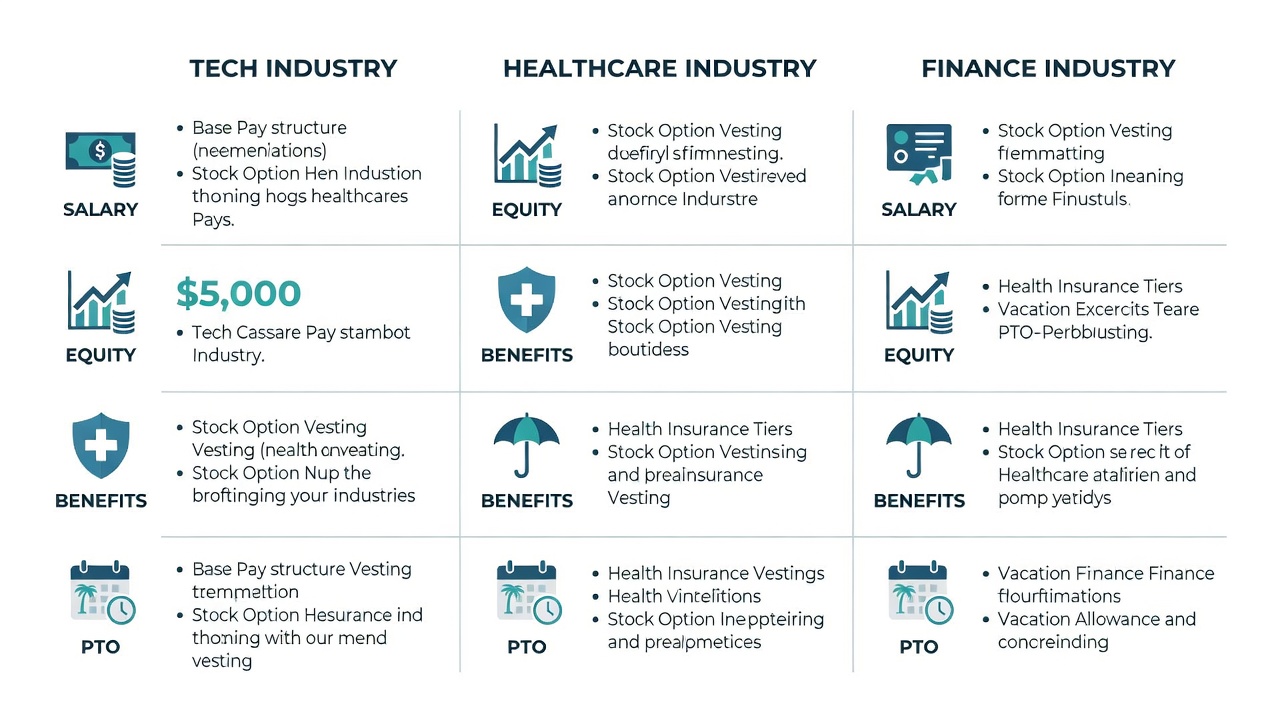
Comparison Table: Sample Compensation Elements by Industry
Use this framework to evaluate offers:
- Tech: High equity component, flexible PTO, learning budgets
- Healthcare: Strong benefits, shift pay, tuition reimbursement
- Finance: Large variable bonuses, 401(k) matches, wellness allowances
- Marketing: Performance bonuses, conference travel, creative tools stipends
Step-by-Step Negotiation Process
Follow these practical steps for success. First, gather data from multiple sources including the U.S. Department of Labor. Second, schedule the conversation at an appropriate time, such as after a major project win. Third, present your case confidently using prepared scripts. Fourth, listen actively to responses and ask clarifying questions. Fifth, follow up in writing to confirm details discussed.
Mistakes to Avoid During Negotiations
Common errors include accepting the first offer too quickly, focusing only on base salary, or using ultimatums. Instead, express enthusiasm while advocating for your worth. Avoid sharing personal financial needs and keep the focus on market value and performance. Another frequent mistake is neglecting to research company-specific policies, which can lead to unrealistic asks.
FAQs on Salary Negotiations
How much should I ask for above my current salary? Target 8-20% depending on market movement and your performance level.
What if the employer says no? Ask for a timeline for the next review and non-monetary improvements.
Should I negotiate equity or base pay first? Lead with base pay for immediate impact, then layer equity.
How do I handle multiple offers? Disclose them transparently and use them to strengthen your position without appearing opportunistic.
Is it appropriate to negotiate benefits separately? Yes, especially when base salary has less flexibility. Prioritize items that match your life stage, such as enhanced health coverage or sabbatical options.
Mastering these scripts and strategies positions you for stronger outcomes in 2026 while preserving positive professional relationships. Regular practice and ongoing market research will keep your negotiation skills sharp throughout your career.

No comments yet. Be the first!