 Jobboy

Introduction: The Shifting Landscape of Total Compensation in 2026
Job seekers in 2026 increasingly evaluate mental health benefits alongside base salary when assessing job offers. This evolution reflects broader societal recognition of workplace well-being as a driver of productivity and retention. Companies across sectors now position these perks as essential components of competitive packages rather than optional add-ons. As economic pressures and post-pandemic realities continue to influence hiring, candidates are prioritizing sustainable support systems that protect long-term career health. Search trends around benefits valuation and pay raise discussions highlight growing interest in quantifying non-cash elements. This article explores common mental health offerings, practical negotiation approaches, return-on-investment comparisons with cash bonuses, and real-world applications in tech and healthcare. Readers will also find a detailed evaluation checklist, sample offer breakdowns, and guidance on avoiding common pitfalls.
Common Mental Health Offerings in Modern Compensation Packages
Employers provide a range of supports designed to address stress, burnout, and emotional wellness. These typically include access to counseling services, mindfulness programs, flexible scheduling for therapy appointments, and dedicated mental health days. Employee assistance programs often deliver confidential counseling sessions at no cost to staff, while some organizations subsidize subscriptions to meditation and stress-management apps. Manager training focused on recognizing signs of mental health challenges helps create supportive team environments. Additional options encompass peer support networks and wellness stipends for personal development activities such as yoga classes or financial coaching that indirectly reduces anxiety. According to guidance from the World Health Organization, integrating such resources into workplace culture yields measurable improvements in employee engagement and reduces overall absenteeism rates. In practice, these benefits vary by employer size, with larger firms offering more comprehensive suites that include on-demand telehealth therapy and quarterly wellness workshops.
Negotiation Scripts for Adding Mental Health Benefits to Offers
Approaching salary discussions with data on personal and organizational value strengthens requests. Candidates can frame conversations around long-term performance rather than immediate cost. Sample script one: "Based on my research into industry benchmarks, I'm excited about the role but would like to explore adding access to comprehensive mental health resources as part of the package. This aligns with my focus on sustainable high performance and would help me contribute at my best over the long term." Another approach: "Can we discuss how the compensation structure supports well-being initiatives, such as therapy coverage or wellness days, similar to what leading organizations provide?" For mid-level roles, try: "I've reviewed the initial offer and see strong alignment in many areas. To make this decision easier, I would value the inclusion of mental health days or an expanded EAP benefit, which research shows improves retention and focus." Preparation involves researching the company's current benefits page and referencing competitor practices without confrontation. Timing the discussion after the initial offer but before acceptance maximizes leverage.
ROI Comparisons: Mental Health Perks Versus Cash Bonuses
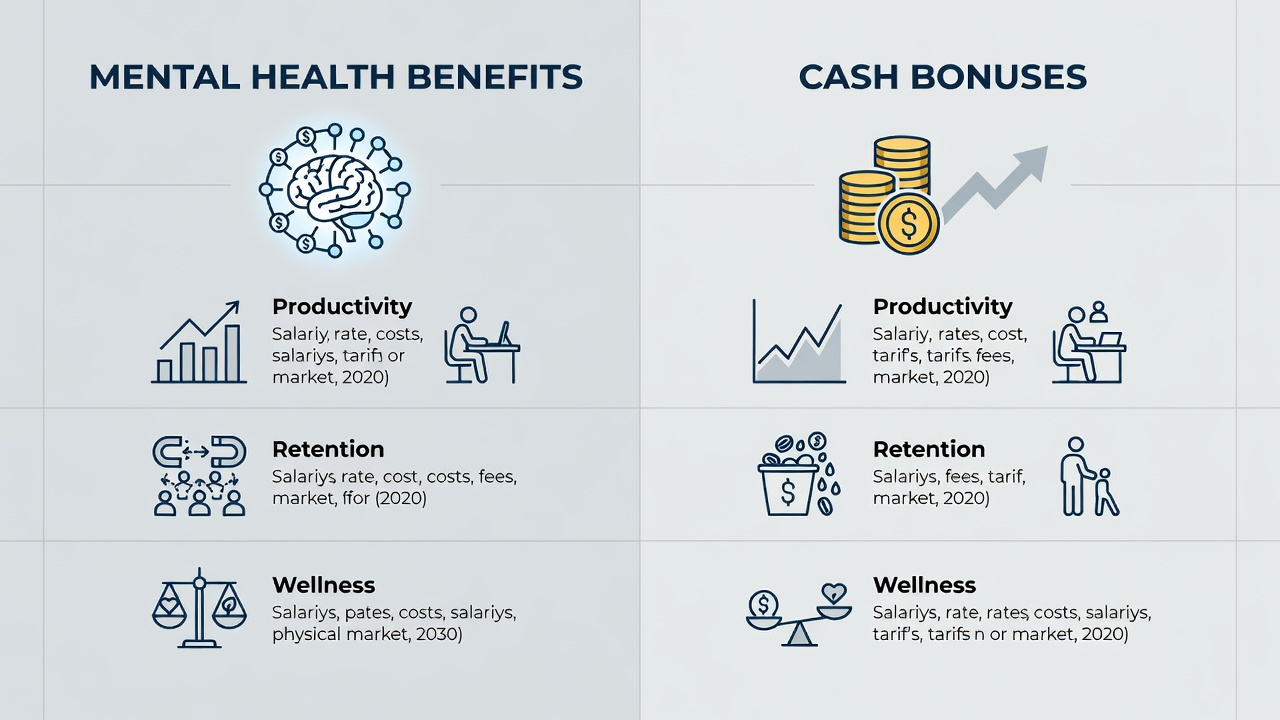
Evaluating the value of benefits requires looking beyond immediate dollar amounts. Cash bonuses deliver short-term liquidity, yet mental health supports often produce compounding returns through reduced absenteeism and higher retention. Studies from the Centers for Disease Control and Prevention indicate that proactive wellness programs correlate with lower healthcare utilization over time. In contrast, one-time bonuses may not address ongoing stressors that affect output. Consider a scenario where an employee facing burnout uses covered counseling to maintain consistent performance; the resulting productivity gains and avoided turnover costs frequently exceed the equivalent cash amount. Organizations report that teams with strong mental health resources show improved collaboration and innovation metrics. When comparing options, factor in time saved from flexible policies, which can equate to meaningful personal value not captured in salary alone.
Industry-Specific Benchmarks
Tech firms frequently bundle unlimited PTO with mental health stipends to attract talent in competitive markets. Healthcare organizations emphasize resilience training and on-site counseling to support staff facing high-emotion environments. These differences reflect sector demands, with knowledge workers valuing autonomy and care providers needing immediate emotional support tools.
Real-World Examples from Tech and Healthcare
A leading software company recently expanded its package to include quarterly mental health audits and personalized coaching, resulting in improved team collaboration metrics and lower reported stress levels. In healthcare, a hospital system introduced protected time for reflection sessions, which helped lower turnover among nursing staff by fostering a culture of psychological safety. Another example from a mid-sized tech startup involved adding peer-led wellness groups after employee feedback, leading to higher engagement scores in annual surveys. These cases demonstrate that tailored offerings aligned with workforce needs deliver measurable organizational advantages beyond individual satisfaction.
Step-by-Step Evaluation Checklist
- Review the full benefits summary for covered services and any caps on usage, noting whether telehealth options or in-person sessions are included.
- Compare the total value against industry peers using resources from the Bureau of Labor Statistics to understand typical offerings in your field.
- Assess personal utilization likelihood based on past needs and anticipated stressors in the new role.
- Calculate potential time savings from flexible policies versus equivalent salary increases, factoring in commute reductions or appointment ease.
- Discuss tax implications with a financial advisor before finalizing to ensure full understanding of any reporting requirements.
Sample Offer Breakdowns
Imagine two offers for a similar role. Offer A provides a higher base salary but standard benefits with limited counseling access. Offer B includes a slightly lower salary paired with an enhanced EAP, four mental health days annually, and a wellness stipend. Breaking down the second offer reveals added value through reduced personal expenses on therapy and greater work-life balance. Candidates should map each element to their priorities, such as family responsibilities or career stage, to determine which package supports overall well-being more effectively.
Mistakes to Avoid When Evaluating Mental Health Benefits
Common errors include overlooking utilization caps that limit sessions per year or assuming all programs offer the same quality of providers. Another pitfall is failing to ask about confidentiality protections, which can deter usage if employees fear stigma. Always verify whether benefits extend to dependents and confirm the process for accessing services during the first weeks of employment. Ignoring these details may lead to underutilization and diminished returns on the negotiated package.
FAQ: Tax Implications and Utilization Rates
Are mental health benefits taxable?
Many employer-sponsored programs qualify as nontaxable fringe benefits when structured through qualified plans, though individual circumstances vary and professional tax advice is recommended.
What are typical utilization rates?
Recent workplace reports show participation in counseling services ranging from 15 to 35 percent, with higher engagement when stigma-reduction efforts accompany rollout and clear communication about privacy protections.
Conclusion
Mental health benefits now form a core pillar of 2026 compensation strategy. By understanding offerings, mastering negotiation, and applying evaluation frameworks, professionals can secure packages that support both financial and emotional well-being for sustained career success.


No comments yet. Be the first!