 Jobboy

Introduction: Why AI Matters for Salary Talks in 2026
Salary negotiations have evolved with technology, and professionals who leverage AI tools gain a clear edge. In 2026, AI platforms help users process vast compensation datasets, generate personalized reports, and prepare precise asks. This guide covers selecting reliable tools, inputting your metrics effectively, and converting AI insights into actionable requests. Tech-savvy job seekers and current employees benefit most when they combine AI outputs with real industry benchmarks. The result is stronger confidence and better outcomes during discussions with hiring managers or HR teams. Beyond basic searches, AI enables dynamic modeling of different career scenarios, helping users anticipate counteroffers and evaluate total compensation packages that include equity, bonuses, and benefits.
Many professionals still approach negotiations with outdated information or gut feelings. AI changes this by providing instant access to aggregated, anonymized market data from millions of sources. Whether you are switching jobs, seeking a raise, or evaluating a promotion, these tools reduce uncertainty and support evidence-based conversations. The following sections break down each step with concrete examples and prompts you can adapt immediately.
Choosing Reliable AI Salary Analysis Tools
Not every AI platform delivers trustworthy compensation insights. Focus on tools backed by large datasets from verified sources. Popular options include platforms that integrate public labor statistics with private salary surveys. Always verify that the tool updates its data regularly and discloses its methodology. Key selection criteria include data privacy policies, integration with major job boards, and the ability to customize inputs like location, experience level, and industry. Test free versions first to evaluate report quality before committing.
When evaluating options, examine whether the platform pulls from government sources, crowdsourced employee reports, or proprietary employer surveys. Tools that combine multiple data streams tend to produce more balanced results. Look for features such as location-specific adjustments, role-level granularity, and exportable reports that you can reference during meetings. Avoid platforms that rely solely on user-submitted data without verification, as these can contain biases or outdated entries. Reading recent user reviews on independent sites helps confirm ongoing accuracy and usability.
Feeding Personal Metrics for Tailored AI Reports
AI performs best when you provide accurate, detailed inputs. Start by compiling your achievements: quantify projects completed, revenue generated, or efficiency improvements achieved. Include years of experience, certifications, and any leadership responsibilities. The more context you supply, the more relevant the output becomes. For instance, a product manager might list specific product launches, user growth metrics, and cross-functional team sizes rather than simply stating job title and tenure.
Sample prompt for an AI chatbot: "Analyze my salary based on 7 years in software engineering, leading a team of 5, achieving 25% cost reduction last quarter, located in Austin, Texas. Compare against 2026 market data and suggest a target range." Repeat this process with variations to test different scenarios, such as remote versus hybrid roles. Another useful prompt could focus on benefits: "Given my background, what non-salary benefits should I prioritize in negotiations, including professional development budgets and flexible scheduling options?" Experiment with adding constraints like company size or specific technologies to refine the analysis further.
Translating AI Outputs Into Specific Negotiation Asks
Raw AI reports often list ranges and percentiles. Convert these into concrete requests by identifying the 75th percentile for your role and experience. Pair base salary targets with benefit improvements like additional PTO or professional development stipends. Example: If AI analysis shows the market median at a certain level for your profile, position your ask 10-15% above that while citing specific achievements. Practice delivering this with data-backed language such as "Based on my contributions to a 25% efficiency gain and current market benchmarks, I am targeting a total compensation package that reflects the upper quartile."
Prepare multiple versions of your ask to accommodate different responses from the employer. One version might emphasize base salary, while another highlights equity or signing bonuses. AI can also generate sample email drafts or talking points that maintain a collaborative tone. After receiving an initial offer, feed the details back into the AI tool to model counteroffer scenarios and assess long-term financial impact.
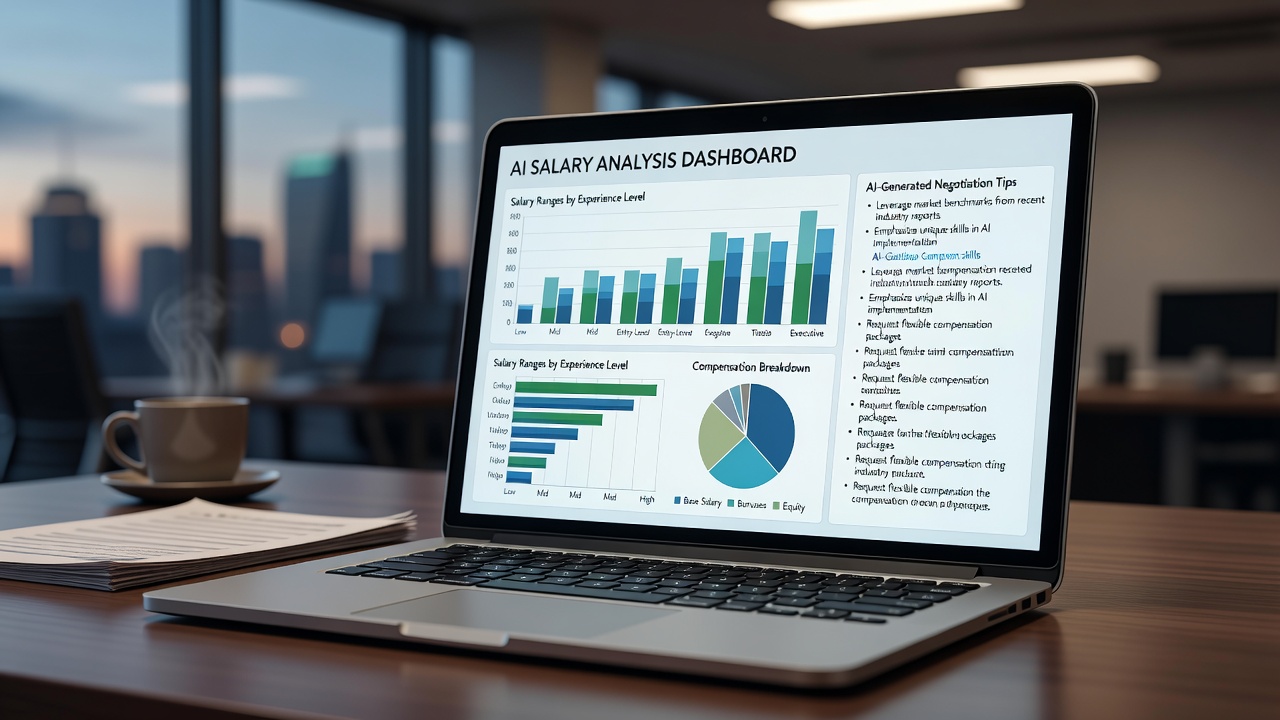
Industry Comparison Examples Using AI
AI tools excel at side-by-side comparisons. For marketing roles, input your metrics to see how your compensation stacks against peers in tech versus traditional sectors. In engineering, compare startup equity packages against established firms. Finance professionals can examine total rewards across banking, fintech, and consulting. These comparisons reveal not only salary gaps but also differences in work-life balance expectations and career progression speed.
Use the results to identify gaps and prepare counteroffers. One effective approach involves running multiple AI queries across regions to understand geographic premiums. A data analyst in Chicago might discover that relocating to a high-cost coastal city would require a 20-30% adjustment, while remote options could maintain parity. Document these findings in a simple spreadsheet so you can reference exact percentiles during discussions.
Step-by-Step Negotiation Preparation with AI
- Research baseline data with AI salary calculators and note the date of the underlying dataset.
- Input your quantified achievements for customized reports, including both hard metrics and qualitative leadership examples.
- Generate sample scripts and objection handlers tailored to your industry and experience level.
- Role-play the conversation using AI chat features, practicing responses to low offers or requests for justification.
- Finalize your target salary, benefits, and walk-away point while considering total compensation rather than base pay alone.
- Review the final package against tax implications and long-term career trajectory using AI scenario modeling.
Common Mistakes to Avoid
- Relying on outdated AI data without verifying recency of the underlying sources.
- Sharing sensitive personal information without reviewing privacy settings and data retention policies.
- Using generic outputs instead of tailoring them to your unique background and recent accomplishments.
- Failing to practice delivery after receiving AI suggestions, which can lead to awkward or unfocused conversations.
- Ignoring total rewards beyond salary, such as health benefits, retirement matching, and professional growth opportunities.
Conclusion
AI tools transform salary negotiations from guesswork into a structured, evidence-based process. By selecting strong platforms, supplying detailed metrics, and translating insights into clear asks, professionals position themselves for stronger 2026 outcomes. Combine these tactics with thorough preparation and you will negotiate with greater confidence and clarity, ultimately securing compensation that accurately reflects your value.
FAQ
How do AI salary tools protect my data?
Reputable platforms use encryption and allow users to anonymize inputs. Review each tool's privacy policy before uploading details and consider using pseudonyms for initial queries.
Can AI replace human salary research entirely?
No. AI augments research by processing data quickly, but cross-check outputs against official sources such as the U.S. Bureau of Labor Statistics for accuracy and context.
What if AI reports seem inaccurate?
Refine your inputs with more specific metrics and run comparisons across multiple tools. Supplement with insights from sites like Glassdoor or industry associations.
Should I disclose that I used AI during negotiations?
Focus on the data and your achievements rather than the source. Employers value preparation; the origin of your research rarely matters as long as the information is credible and relevant.


No comments yet. Be the first!