 Jobboy

Many professionals focus solely on base salary when evaluating job offers, but the true value of compensation often lies in benefits that can add tens of thousands of dollars annually. In 2026, understanding these elements helps you negotiate smarter and compare offers accurately. Benefits packages have evolved to include sophisticated components that directly impact your financial well-being, career trajectory, and work-life balance. Ignoring them means potentially undervaluing opportunities or overestimating the appeal of a higher base pay that comes with weaker support structures.
Why Benefits Matter More Than Ever in 2026
Base pay tells only part of the story. Comprehensive rewards packages now include health coverage, retirement contributions, wellness stipends, and location flexibility that directly affect your finances and lifestyle. Evaluating the full package prevents leaving money on the table during negotiations. In a competitive job market, employers differentiate themselves through these perks, which can represent 20 to 40 percent of total compensation depending on the role and industry. Professionals who learn to quantify these elements gain a clear advantage when deciding between multiple offers or preparing counterproposals.
Evaluating Health Plans with Real Benchmarks
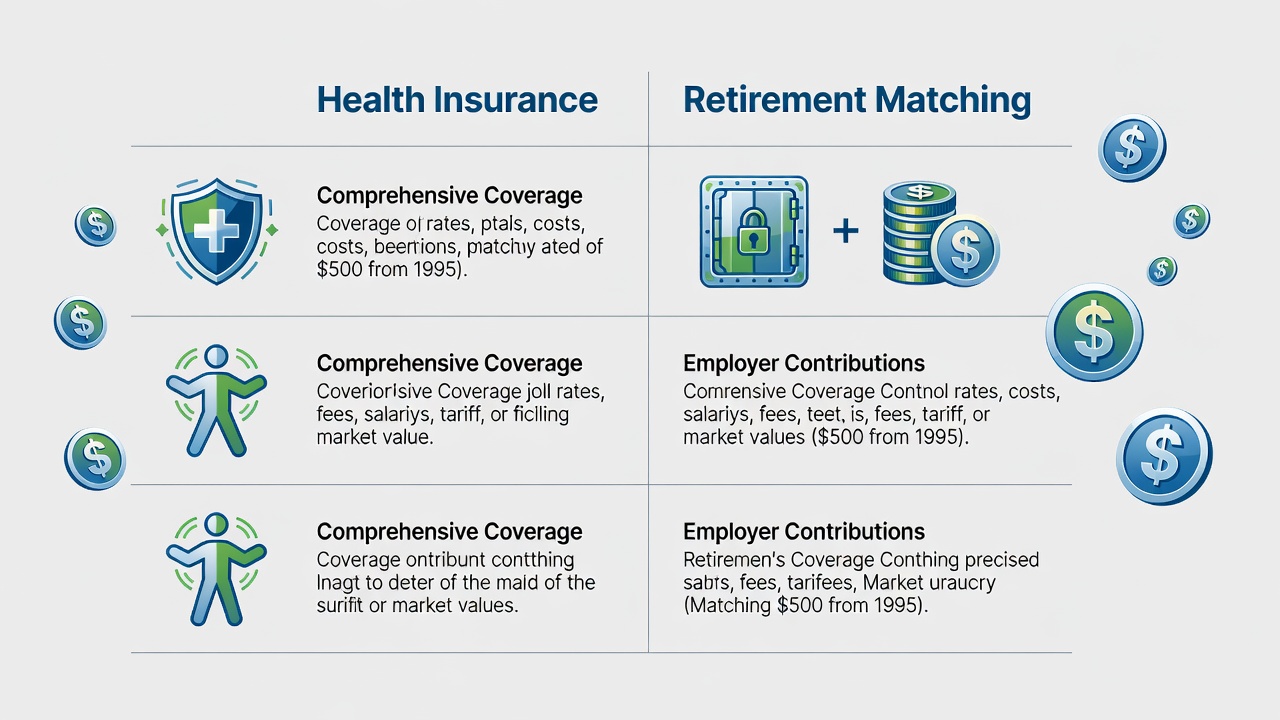
Health insurance remains one of the most expensive benefits to replace individually. Compare employer-sponsored plans by examining premiums, deductibles, out-of-pocket maximums, and covered services. Employer contributions to premiums can save employees significant amounts each year. Use your expected medical usage to calculate net value after accounting for copays and coinsurance. Consider factors such as network size, prescription coverage, and mental health benefits, which have become increasingly important. For families, the difference between a high-deductible plan with strong employer HSA contributions versus a traditional PPO can shift thousands of dollars in annual value. Review summary of benefits documents carefully and model scenarios for both routine care and unexpected events.
Retirement Matches and Their Dollar Impact
Employer 401(k) matches represent free money. A common structure offers 100 percent match on the first 4 to 6 percent of salary contributed. To calculate your personal ROI, multiply your contribution percentage by your salary and compare it against the match cap. This benefit compounds over time through tax-deferred growth, turning modest annual contributions into substantial nest eggs over a career. Vesting schedules matter as well; immediate vesting maximizes value while graded vesting may delay full ownership. Professionals should also examine whether employers offer additional vehicles such as profit-sharing or pension contributions that further enhance long-term security.
Learn more about contribution limits and tax advantages at IRS.gov.
Flexible Work Policies and Their Monetary Equivalent
Remote or hybrid options reduce commuting costs, childcare expenses, and wardrobe needs. Professionals in tech often value four-day workweeks or unlimited PTO at several thousand dollars annually. Quantify these by estimating weekly commute savings and any eliminated expenses. Beyond direct cost reductions, flexible arrangements can improve productivity and reduce burnout, indirectly supporting higher earnings through sustained performance. When evaluating offers, ask about core collaboration hours, equipment stipends, and policies for international remote work, as these details affect real-world usability.
Professional Development Stipends
Many companies offer annual learning budgets for courses, conferences, or certifications. These directly enhance your marketability while costing you nothing out of pocket. Track how these investments translate into future salary increases. Stipends often cover not only tuition but also travel, books, and membership fees. In fast-evolving fields, access to cutting-edge training can accelerate promotions or lateral moves into higher-paying roles. Document completion of funded programs on your resume to demonstrate ongoing growth to future employers.
Comparison Table: Dollar-Value Equivalents
| Benefit | Typical Value Range | How to Calculate |
|---|---|---|
| Health Premium Contribution | High | Employer share of monthly premium × 12 |
| Retirement Match | Medium-High | Match % × salary (up to cap) |
| Flexible Work Savings | Medium | Commute + childcare costs avoided |
| Development Stipend | Low-Medium | Annual allowance amount |
| Equity Grants | Variable | Current fair market value plus growth potential |
Step-by-Step Method to Calculate Personal ROI
- List all benefits with their estimated annual value, including both direct payments and cost avoidances.
- Subtract any employee contributions or costs such as premium shares or required minimum contributions.
- Divide total benefit value by base salary to find the percentage uplift and compare it to industry norms.
- Factor in vesting timelines, tax implications, and geographic cost differences for remote roles.
- Compare this total compensation figure across multiple offers and adjust negotiation targets accordingly.
Additional guidance on compensation data is available from BLS.gov.
Industry-Specific Examples
Tech Sector
Companies frequently provide strong equity packages alongside generous 401(k) matches and wellness stipends. Flexible work policies often include home office setup allowances and quarterly learning budgets. Employees commonly receive access to on-site fitness centers or mental health platforms at no additional cost. These elements combine to create total packages that can exceed base salary by substantial margins, especially when equity appreciates.
Finance Sector
Traditional firms emphasize robust health plans and performance bonuses. Professional development budgets support CFA or other certifications that lead to rapid advancement. Some organizations offer student loan repayment assistance or matching charitable donations, which add meaningful personal value while aligning with corporate responsibility goals.
Healthcare Sector
Shift differentials, tuition reimbursement for advanced degrees, and strong retirement plans are common. Many roles include loan repayment assistance for clinical staff. On-site childcare or eldercare support programs help retain talent in high-demand environments where work schedules can be unpredictable.
Common Mistakes to Avoid
- Ignoring vesting schedules on equity or matches, which can reduce realized value if you leave early.
- Overvaluing unlimited PTO without understanding actual usage policies and manager expectations.
- Failing to account for geographic cost-of-living differences in remote roles that affect take-home pay.
- Neglecting to review plan documents for exclusions or waiting periods on new benefits.
How to Negotiate Benefits Effectively
Start by prioritizing benefits that matter most to your personal situation. Present data-driven comparisons using the ROI framework above. Request specific enhancements rather than vague increases in total compensation. Many employers have flexibility within existing benefit structures even when base salary is fixed. Follow up in writing to document agreed changes.
FAQ
How do I value unlimited PTO?
Estimate the number of extra days you would realistically take and multiply by your daily rate while considering team norms and workload.
Are wellness stipends taxable?
Check with your HR department or review plan documents, as tax treatment varies by program design and jurisdiction.
What if a company offers lower salary but better benefits?
Run the full compensation calculation to see whether the benefits close the gap and project long-term financial outcomes.
Should I consider equity when comparing offers?
Yes, but apply conservative valuation models and understand liquidity timelines before assigning high dollar values.
Conclusion
By systematically evaluating every element of your compensation package, you gain clarity on true earning potential. Use the frameworks above during your next job search to negotiate confidently and choose roles that maximize long-term financial health. Taking time to understand the full rewards picture leads to better career decisions and stronger overall compensation outcomes.


No comments yet. Be the first!