 Jobboy

Introduction
Company mergers and acquisitions (M&A) create uncertainty for employees, especially regarding compensation. In 2026, as organizations consolidate to drive efficiency, workers must proactively review and safeguard their pay structures. This guide provides actionable steps to maintain salary growth and benefits value amid these shifts. Understanding the nuances of how deals unfold helps employees avoid surprises and position themselves advantageously during transitions that can reshape entire departments and reporting lines overnight.
Understanding How Mergers Affect Compensation
Mergers often lead to harmonization of pay scales, potential adjustments to bonuses, and changes in equity plans. Employees may face salary freezes, role reclassifications, or revised total compensation packages. In many cases, the acquiring company conducts a thorough audit of existing pay bands to align them with its own philosophy, which can result in both upward and downward adjustments depending on market positioning. Factors such as geographic location of the new headquarters, industry benchmarks, and overall deal synergies play significant roles in determining final outcomes. It is essential to recognize that compensation changes rarely happen in isolation; they frequently coincide with shifts in performance metrics, bonus eligibility criteria, and long-term incentive structures that reward retention through the integration period.
Reviewing Offer Letters for Hidden Changes
Start by examining your current offer letter and any updated documents post-announcement. Look for clauses on base salary, variable pay, and termination terms. Compare language around performance reviews and promotion paths, as merged entities may standardize these processes differently. Hidden provisions might include new non-compete language, altered severance calculations, or modified definitions of "cause" for termination that could affect future payouts. Employees should request side-by-side versions of documents from HR and note any discrepancies in writing. In practice, one employee at a mid-sized software firm discovered a clause that reduced overtime eligibility after the merger, prompting early discussions that preserved her original terms.
Comparing Pre- and Post-Merger Total Compensation
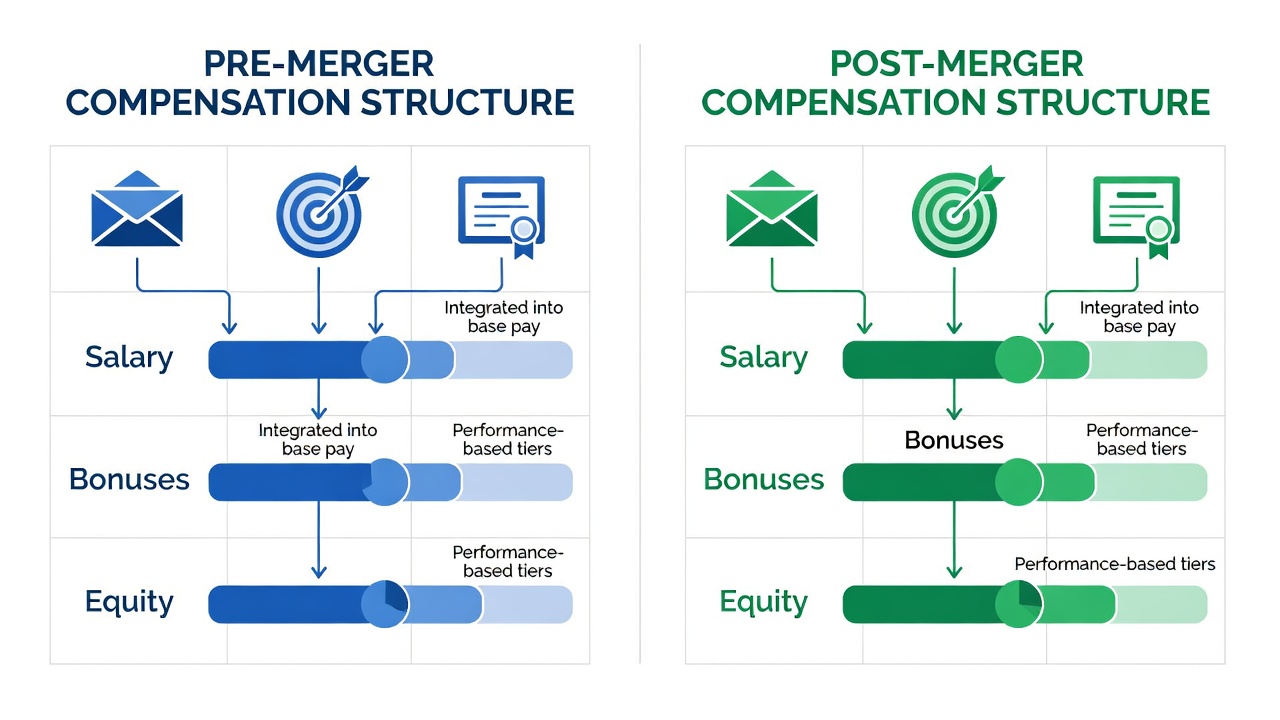
Create a detailed side-by-side analysis of your compensation before and after the merger. Include base pay, bonuses, health benefits, retirement contributions, and equity grants. This comparison reveals gaps that require attention through negotiation or advocacy. Break down each element into taxable and non-taxable portions, then factor in cost-of-living adjustments if the new entity operates in a different region. Use spreadsheets to track projected values over three to five years, accounting for potential inflation or market fluctuations. This exercise often uncovers that while base salary remains stable, the overall value of benefits may decline due to higher deductibles or reduced employer matching contributions.
- List all compensation components from your pre-merger package.
- Document proposed post-merger elements from HR communications.
- Calculate the net change in value, factoring in tax implications.
- Identify non-monetary perks like flexible work policies that may shift.
- Project future earnings under both scenarios to highlight long-term impacts.
Negotiating Retention Bonuses
Retention bonuses are common tools used by acquiring companies to retain key talent. Prepare a case highlighting your contributions and market value. Engage in discussions early, ideally before the deal closes, and seek written commitments on payout timelines and conditions. Effective negotiation involves presenting objective data such as your role in recent projects, industry salary surveys, and the cost of replacing your expertise. Employees who frame requests around business continuity rather than personal needs tend to achieve better results. Consider requesting partial upfront payments or accelerated vesting schedules to mitigate risk if the new organization restructures again shortly after integration.
Equity Vesting and Benefits Continuity
Equity awards often accelerate or convert during mergers. Review your vesting schedule and understand how new company stock options will be handled. Benefits such as health insurance and retirement plans typically continue but may change providers—confirm continuity to avoid coverage gaps. Double-trigger acceleration clauses, which activate only upon both a change of control and subsequent termination, are increasingly common and should be scrutinized carefully. For benefits, request detailed summaries of new plan documents at least 60 days before the transition date to allow time for personal adjustments like updating dependents or exploring supplemental coverage options.
Real-World Examples from Recent Deals
Illustrative cases from 2025-2026 tech and finance mergers show employees who successfully negotiated adjusted equity terms by presenting detailed compensation comparisons. In one scenario, a mid-level manager retained full bonus eligibility through proactive dialogue with the new leadership team. Another example involved a finance team at a healthcare company that collectively advocated for preserved 401(k) matching rates, resulting in a grandfathered policy for legacy employees. These outcomes demonstrate the value of organizing peers and maintaining transparent communication channels with integration task forces.
Step-by-Step Checklist for Employees
- Document your current total rewards package immediately upon merger announcement.
- Schedule a meeting with HR or compensation specialists within the first 30 days.
- Consult an employment attorney if significant changes appear unfavorable.
- Track all communications regarding pay adjustments in a dedicated folder.
- Explore internal mobility options to preserve or enhance compensation.
- Request formal confirmation of any verbal assurances in writing.
- Monitor stock performance of the acquiring company to inform equity decisions.
Common Mistakes to Avoid
Many employees delay reviewing documents or accept initial offers without negotiation. Avoid assuming benefits will remain identical and always verify details in writing. Another frequent error is failing to account for tax consequences of equity conversions or bonus payments. Employees should also refrain from discussing personal compensation details with colleagues in ways that could violate company policy, while still participating in group advocacy efforts where appropriate.
Legal Protections and Resources
Workers have certain rights during corporate transactions. Reviewing resources from government agencies can clarify protections related to wage continuity and benefit disclosures. For instance, guidance available at SEC.gov explains disclosure requirements that sometimes reveal compensation impacts. Similarly, information at DOL.gov outlines employee rights under ERISA for retirement plans, while EEOC.gov provides details on anti-discrimination rules that apply during workforce integrations.
FAQ
What happens to my equity if the company is acquired?
Equity typically converts to shares in the new entity or accelerates based on the merger agreement. Review your grant documents and consult HR for specifics.
Can I negotiate my salary during a merger?
Yes, especially if your role is critical. Use data from your compensation comparison to support requests.
Are benefits guaranteed to continue unchanged?
While many benefits persist, details like deductibles or providers may change. Confirm with the new benefits administrator.
How soon should I review my offer letter after announcement?
Ideally within the first two weeks to identify issues before integration plans solidify.
What if my role is eliminated post-merger?
Review severance terms in your original agreement and any new policies, then negotiate enhanced packages if possible.
Conclusion
Navigating compensation changes in 2026 mergers requires preparation and assertiveness. By following these strategies, employees can protect their financial interests and position themselves for continued growth. Stay informed and proactive throughout the transition process to turn organizational change into an opportunity rather than a setback.


No comments yet. Be the first!