 Jobboy

Introduction
Requesting a pay raise in 2026 requires more than intuition or a simple gut feeling. Employees need a structured, data-driven approach that connects measurable achievements directly to market realities, internal company performance, and the full value of total compensation. This comprehensive guide delivers a practical framework to help you quantify contributions, research reliable benchmarks, factor in economic variables like inflation, and negotiate with confidence. Whether you are in a corporate role, technical position, or management track, following these steps will strengthen your case and improve your chances of a successful outcome.
Step 1: Log Your Quantifiable Achievements
Begin the process by building a detailed achievement log that spans the review period, typically the past 12 months. Focus exclusively on metrics that demonstrate clear business impact such as revenue generated, costs reduced, efficiency gains, customer satisfaction scores, or projects delivered ahead of schedule. Avoid vague statements; instead, record precise figures supported by documentation like performance reviews, project management tools, sales reports, or stakeholder emails. For instance, if you led a process improvement initiative that reduced operational expenses by 18 percent, note the exact dollar savings and the time frame involved. Similarly, document if your efforts increased quarterly sales by $150,000 or improved team productivity by 25 percent through new workflows.
Organize your log into categories including individual technical contributions, cross-functional team leadership, innovation or process improvements, and any mentorship or training activities. Review past emails, quarterly reports, and meeting notes to gather supporting evidence. Update this document monthly to avoid scrambling at review time. This achievement log serves as the factual backbone for every subsequent calculation and conversation with your manager.
Step 2: Calculate Your Target Raise Amount
Once achievements are documented, translate them into a realistic raise percentage using a straightforward calculator method. Start with your current base salary and identify a target increase that aligns with performance level, tenure, and role scope. Typical ranges fall between three and ten percent, but exceptional results or strong market conditions may support higher figures. Test multiple scenarios by dividing the total quantified business impact by your annual salary to derive a defensible percentage. For example, if your initiatives generated $250,000 in new value and your salary is $85,000, a six percent request may appear reasonable after adjusting for company budget realities.
Always incorporate inflation adjustments and local market conditions by reviewing recent economic indicators. Adjust your ask downward if the organization is experiencing hiring freezes or revenue challenges. Document your math clearly so you can explain the rationale during discussions.
Step 3: Factor in Benefits and Total Compensation
Base salary represents only one component of your overall package. Calculate the monetary value of benefits including employer-paid health insurance premiums, retirement matching contributions, stock options or equity grants, tuition reimbursement, and flexible scheduling that reduces commuting costs. Many organizations provide annual total compensation statements that break down these figures. Adding twenty to thirty percent to your base salary estimate gives a more accurate picture when comparing your request to external offers or internal equity reviews. This holistic view prevents undervaluing your current role and helps frame the negotiation around long-term financial security rather than salary alone.
Step 4: Research Industry Salary Benchmarks
Validate your internal calculations against external data from trusted sources. Authoritative references such as the U.S. Bureau of Labor Statistics publish detailed occupational wage statistics that are updated on a regular schedule. Cross-reference similar roles by geographic location, years of experience, and industry sector. Supplement this with data from the U.S. Department of Labor for broader labor market trends. Collect at least three independent data points and note the date of each source so your manager can verify the information. This external validation adds credibility and reduces the perception that your request is arbitrary.
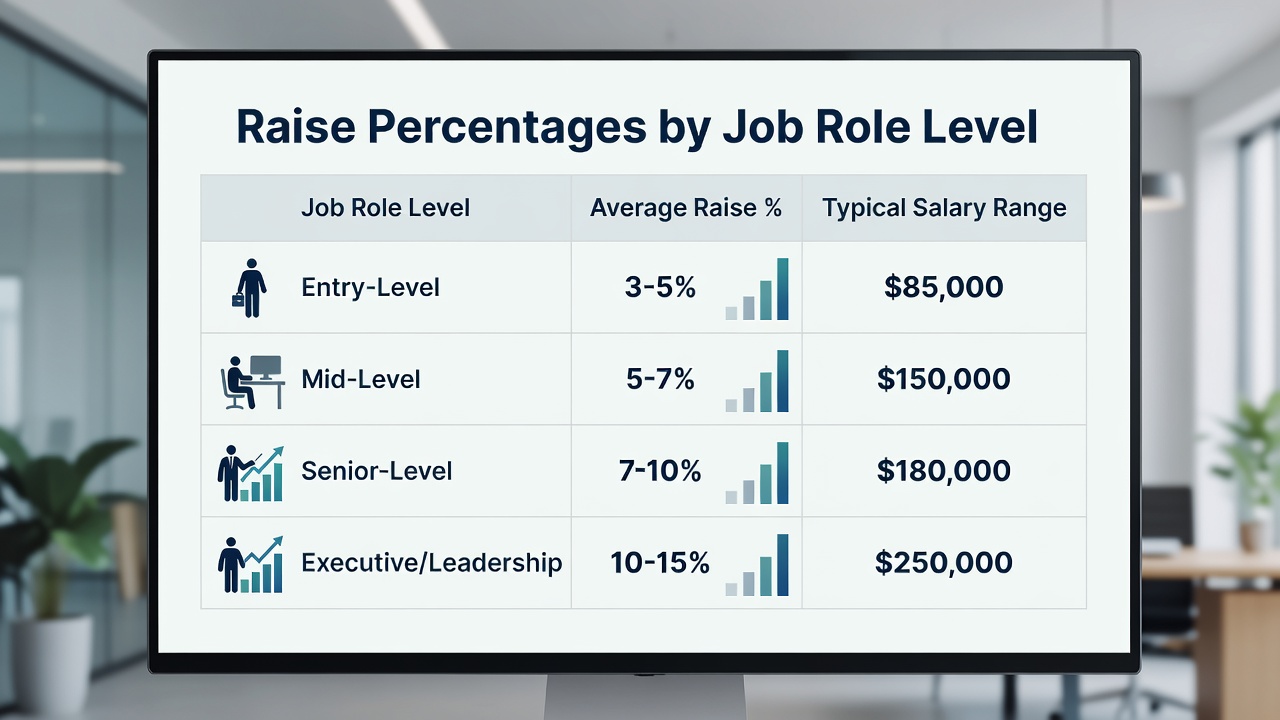
Comparison of Typical Raise Percentages by Role
| Role Level | Typical Raise Range | High-Performer Range | Key Influencing Factors |
|---|---|---|---|
| Entry-Level | 3-5% | 6-8% | Skill acquisition speed, project ownership |
| Mid-Level | 4-7% | 8-12% | Independent impact, mentoring others |
| Senior/Manager | 5-8% | 10-15% | Strategic contributions, team results |
| Executive | 6-10% | 12-20% | Company-wide outcomes, revenue leadership |
Adjusting for Inflation and Market Conditions
Economic factors play a major role in 2026 negotiations. Review the latest consumer price index data and regional cost-of-living changes before finalizing your number. If inflation has risen noticeably, incorporate a modest adjustment while still anchoring the conversation to performance achievements. In high-demand fields such as technology or healthcare, market rates may support larger increases. Conversely, in slower-growth industries, emphasize non-salary elements like additional vacation days or professional development stipends to reach an acceptable total package.
Common Mistakes to Avoid
- Focusing only on personal needs rather than business value delivered
- Using outdated salary data from more than six months ago
- Presenting an ask without supporting documentation or examples
- Threatening to leave without a genuine competing offer
- Ignoring timing such as right after the company closes a strong quarter
Sample Scripts for Manager Discussions
Prepare concise, professional talking points in advance. A strong opener might sound like this: "During the past year my initiatives increased client retention by 22 percent and contributed an estimated $180,000 in recurring revenue. Based on internal performance metrics and current market benchmarks, I am requesting a 7 percent salary adjustment effective at the start of the next quarter." Follow the statement with your achievement log and printed benchmark sources. Practice calm responses to questions about timing or departmental budget constraints.
Handling Pushback: FAQ
What if my manager says the budget is tight?
Explore creative alternatives including a phased increase over two review cycles, additional paid time off, or a performance bonus tied to specific upcoming milestones. Request a follow-up meeting in three months to revisit the conversation.
How do I address inflation concerns?
Politely note that your request already reflects market-adjusted benchmarks and emphasize the measurable return on investment your contributions have generated for the team.
Should I mention competing offers?
Only disclose a real offer and frame the discussion around market value rather than ultimatums. This maintains a collaborative tone while still demonstrating external validation.
Conclusion
A successful 2026 pay raise request combines documented achievements, thorough total compensation analysis, credible market research, and thoughtful negotiation tactics. By following the structured steps outlined above you will build a compelling, evidence-based case that benefits both your career and your employer. Maintain your achievement log on a quarterly basis so you remain prepared for future salary conversations and long-term compensation planning.


No comments yet. Be the first!