 Jobboy

Introduction: Navigating the 2026 Green Job Market
The global transition to a low-carbon economy has accelerated dramatically, creating thousands of new opportunities for professionals who want their careers to contribute to environmental solutions. In 2026, eco-conscious job seekers are positioned to target high-impact roles across renewables, sustainable finance, circular economy practices, and ESG consulting. Employers increasingly seek candidates who combine technical knowledge with genuine passion for sustainability. This comprehensive guide walks through every stage of the process, from identifying promising sectors to optimizing applications, acquiring credentials, networking effectively, and spotting misleading job postings. By following these evidence-based strategies, you can align your job search with real market demand while avoiding common pitfalls that derail many applicants.
Identifying High-Growth Green Sectors
Understanding which industries are expanding fastest helps focus your efforts. Renewable energy remains dominant, with solar, wind, and battery storage projects scaling rapidly due to policy incentives and falling technology costs. ESG consulting firms are hiring analysts to help corporations measure and reduce their environmental footprints, while sustainable agriculture and water management roles grow in response to climate resilience needs. Energy efficiency retrofits for buildings and electric vehicle infrastructure also show strong momentum. The U.S. Bureau of Labor Statistics continues to project above-average growth for environmental specialists and related occupations. Research specific sub-sectors by reviewing industry reports and tracking government funding announcements to pinpoint where hiring budgets are largest in your region.
Optimizing Your Profile and Applications for Eco-Friendly Keywords
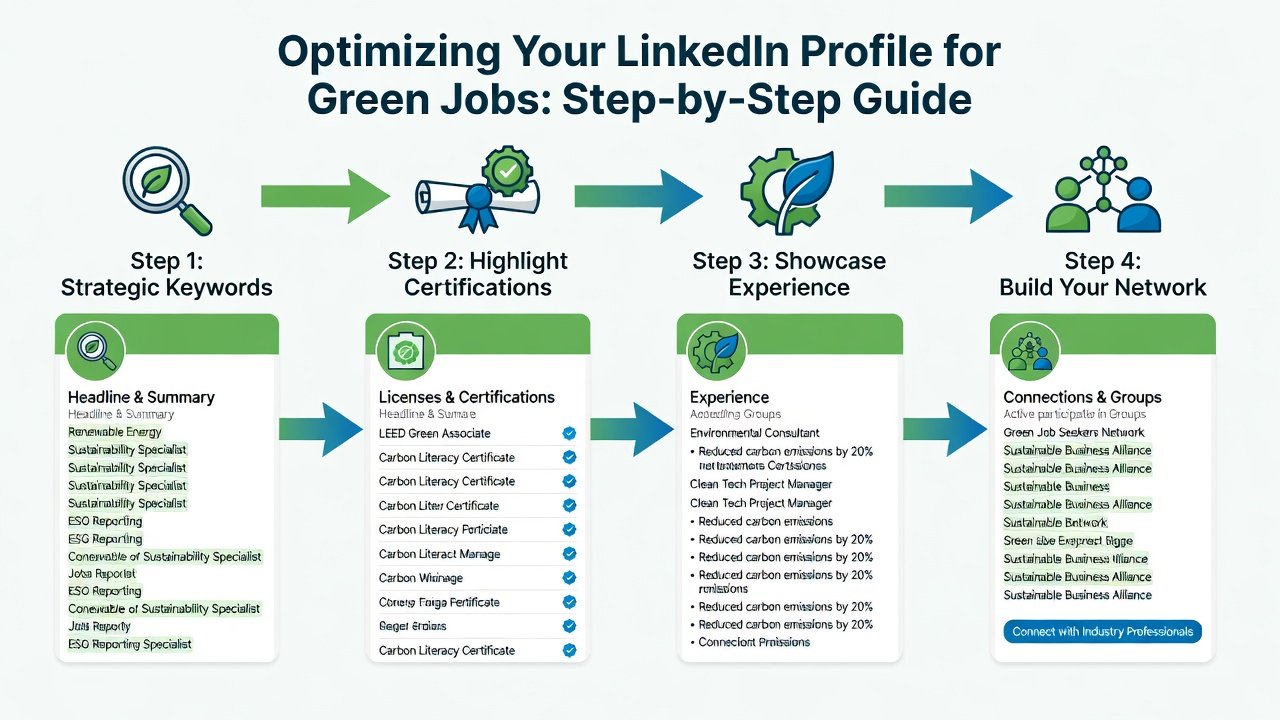
Applicant tracking systems filter resumes before human reviewers see them, so keyword optimization is essential. Incorporate phrases such as "net-zero strategy," "renewable energy integration," "Scope 3 emissions," and "sustainable procurement" throughout your LinkedIn summary, resume bullets, and cover letters. Provide concrete examples: "Developed a carbon accounting framework that tracked 12,000 metric tons of emissions annually" carries more weight than generic statements. Customize every application by mirroring exact language from the job description. Create a master list of 20-30 high-value green keywords and test variations in your documents. This targeted approach dramatically increases the likelihood that your materials reach hiring managers at mission-driven organizations.
Building Targeted Skills Through Certifications
Credentials validate your expertise and demonstrate commitment. The LEED Green Associate certification is widely recognized for building projects, while the GRI Standards Professional Certificate equips you for sustainability reporting. Additional options include the Certified Energy Manager (CEM) for efficiency roles and specialized courses in climate risk assessment. Choose programs that combine online modules with capstone projects you can showcase in a portfolio. Many professionals pair certifications with volunteer work, such as conducting energy audits for local nonprofits, to gain practical experience. Allocate time each week for skill-building and track progress against job requirements listed in target postings.
Using Specialized Job Boards Alongside General Listings
General platforms like LinkedIn and Indeed generate high volume but often bury authentic green roles among unrelated listings. Dedicated boards such as GreenBiz Jobs, Idealist, and EcoJobs surface opportunities at nonprofits, clean-tech startups, and sustainability consultancies. Compare features carefully: niche sites frequently include advanced filters for remote sustainability work and verified employer credentials, while broader sites offer greater reach for hybrid corporate roles. Create saved searches on both types of platforms and set weekly alerts. Cross-reference postings to identify organizations that appear on multiple boards, indicating consistent hiring activity.
Practical Steps for Networking in Green Communities
Networking remains one of the most effective pathways into green roles. Begin by joining professional groups through the Environmental Protection Agency regional networks and organizations like the International Society of Sustainability Professionals. Attend monthly webinars on topics such as regenerative agriculture or climate finance, then follow up with personalized LinkedIn messages that reference a specific insight from the event. Participate in local clean-up initiatives or virtual policy discussions to meet practitioners. Maintain a simple spreadsheet tracking contacts, conversation notes, and follow-up actions. Many successful transitions occur through referrals rather than cold applications, so treat networking as a consistent weekly habit rather than an occasional activity.
Case Studies of Successful Transitions
Consider the journey of a former corporate marketer who pivoted into ESG analysis. After completing a six-week GRI certification and volunteering to produce a sustainability report for a regional nonprofit, she secured an interview at a mid-sized consulting firm by highlighting measurable impact from her volunteer project. Another example involves an operations manager who moved into solar project coordination by attending industry conferences and building relationships with equipment suppliers, eventually leveraging those connections for an internal referral. A third case features a recent graduate who combined an environmental science degree with a part-time role at a community solar cooperative, using the experience to demonstrate both technical knowledge and stakeholder engagement skills. These stories illustrate that deliberate skill acquisition paired with relationship-building produces tangible results.
Common Mistakes to Avoid During the Application Process
Many candidates undermine their chances by submitting generic materials or failing to research the employer thoroughly. Avoid overusing buzzwords without context, and never exaggerate past sustainability achievements. Another frequent error is neglecting to prepare for behavioral questions about environmental values during interviews. Instead, develop specific stories that connect your background to the organization's mission. Finally, do not ignore follow-up etiquette; sending a concise thank-you note within 24 hours of an interview reinforces genuine interest.
Checklist for Avoiding Greenwashing in Job Postings
- Verify company claims against third-party reports from sources like the United Nations Environment Programme.
- Look for specific, measurable commitments rather than vague phrases like "eco-friendly culture."
- Review the employer's most recent sustainability or ESG report for concrete targets and progress updates.
- Examine employee reviews on independent sites for mentions of actual environmental practices versus marketing language.
- Confirm that the role description includes clear responsibilities tied to sustainability outcomes, not just general tasks.
- Research whether the organization has faced recent regulatory scrutiny or public criticism regarding its environmental record.
FAQ on Salary Expectations
What salary ranges exist in green roles? Compensation varies significantly by experience, location, and sector. Entry-level sustainability coordinators often start competitively, while mid-career ESG specialists and renewable energy project managers command higher packages reflecting specialized expertise and market demand.
How do benefits compare across employers? Many mission-driven organizations emphasize work-life balance, professional development allowances, and wellness programs connected to sustainability initiatives, though total compensation structures differ widely between startups and established corporations.
Are remote or hybrid options common? Consulting and analysis positions frequently offer flexibility, whereas roles involving field work in renewables or on-site audits typically require periodic travel or office presence.
How should I negotiate offers? Research comparable positions using salary data tools and emphasize your unique combination of certifications and project experience during discussions.
Conclusion
Landing a meaningful green role in 2026 requires a structured approach that combines market research, targeted skill development, strategic networking, and careful evaluation of opportunities. By implementing the steps outlined above, eco-conscious professionals can position themselves for rewarding careers that advance both personal goals and broader sustainability objectives. Start with one actionable step today and build momentum consistently.

No comments yet. Be the first!