 Jobboy

Introduction
Determining your personal market value is a critical skill for anyone preparing salary discussions in 2026. This comprehensive guide walks beginners through the entire process using reliable compensation data and proven strategies. You will learn how to research industry averages, evaluate the full scope of benefits, adjust for individual circumstances, and present a persuasive case during negotiations. By following these steps you can enter conversations equipped with evidence rather than assumptions, increasing the likelihood of a favorable outcome whether you are seeking a raise or exploring new roles.
Market value reflects what employers are willing to pay for your specific combination of skills, experience, and location. It changes over time due to economic conditions, industry demand, and evolving job requirements. Taking a structured approach ensures your request remains realistic and defensible. Throughout this article you will find practical examples, comparison tables, and checklists that turn abstract concepts into actionable tactics tailored to pay raise requests and salary negotiations.
Step 1: Gathering Compensation Benchmarks
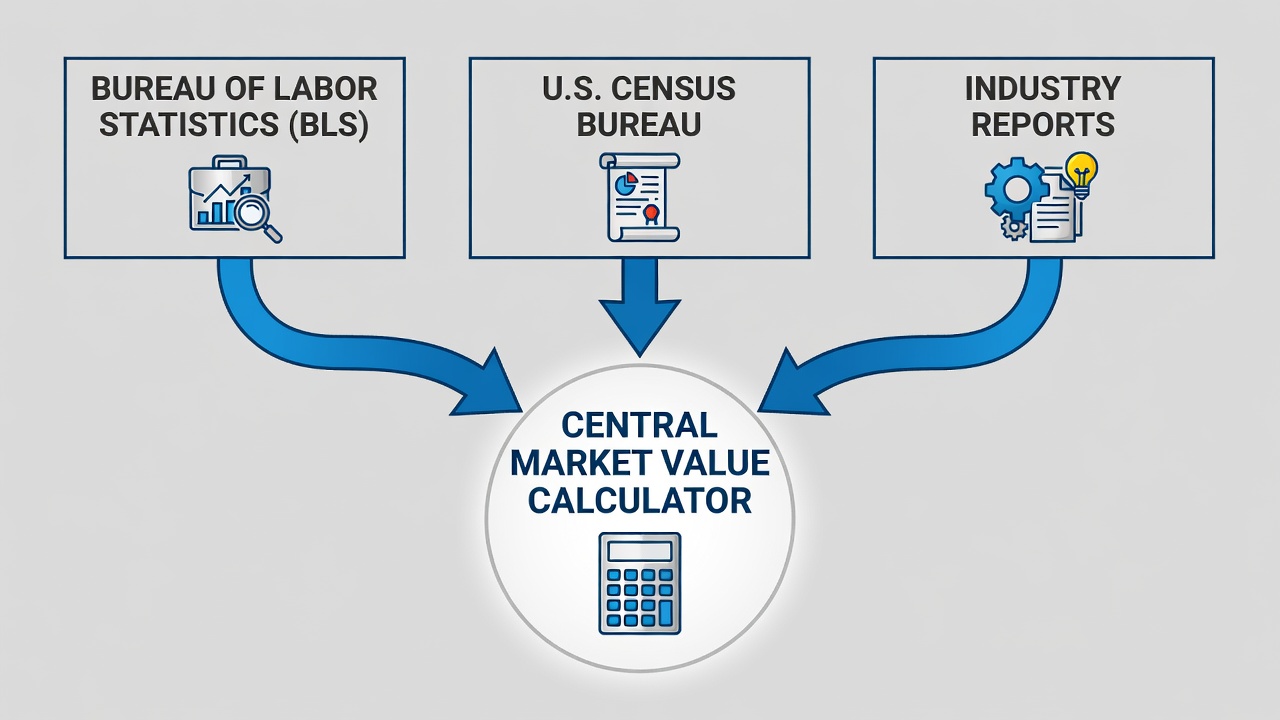
Begin your research by collecting data from multiple authoritative sources. Reliable benchmarks provide the foundation for any market-value calculation. Start with government statistical agencies that publish regularly updated occupational wage information. Supplement these with professional networks and industry reports to gain a well-rounded view. Cross-referencing prevents over-reliance on any single dataset that may contain gaps or biases.
Create a simple spreadsheet to organize findings by job title, experience level, and geographic region. Record both median and range figures so you can identify realistic targets. For example, note the 25th and 75th percentiles to understand the spread of pay across similar positions. This method reveals not only typical compensation but also the potential upside available to top performers. Revisit sources frequently because labor markets shift quickly, and using the most current information available strengthens your position during discussions.
| Source | Strengths | Limitations |
|---|---|---|
| Bureau of Labor Statistics | Comprehensive national data updated regularly with broad occupational coverage | Broad categories that may not capture niche roles |
| U.S. Census Bureau | Detailed demographic and geographic breakdowns for location-specific insights | Less frequent updates on highly specialized positions |
| Industry association reports | Role-specific insights and trends from subject-matter experts | Sometimes limited to members or require paid access |
Visit Bureau of Labor Statistics for occupational employment and wage statistics. Supplement with U.S. Census Bureau data for location-specific adjustments. These resources offer free, trustworthy starting points that require no subscription.
Step 2: Factoring in Benefits and Total Compensation
Base salary represents only one component of overall market value. Benefits packages frequently add substantial worth through health insurance, retirement matching, paid leave, professional development stipends, and equity grants. To calculate true market value, assign approximate monetary equivalents to each benefit using employer summaries or standard industry valuation methods. For instance, an employer contribution to retirement accounts can meaningfully increase annual compensation over time.
Compare total compensation packages rather than isolated salary figures when evaluating offers or preparing requests. A role with slightly lower base pay but generous remote-work support and comprehensive health coverage may exceed a higher-salary position lacking those elements. Document every component in your research notes so you can articulate the complete picture during negotiations. This holistic view prevents undervaluing your current role or accepting an offer that appears attractive on salary alone but falls short overall.
Step 3: Adjusting for Experience, Location, and Other Variables
Baseline benchmarks require personalization based on your unique profile. Experience level, specialized certifications, performance history, and in-demand skills justify upward or downward adjustments. Geographic location also plays a major role because cost of living varies significantly across regions. High-cost metropolitan areas typically support higher compensation ranges than smaller markets for the same responsibilities.
Apply adjustments methodically. Review job descriptions for required versus preferred qualifications and map your background against them. Consider whether your skills address current talent shortages in your field. Location adjustments can be informed by cost-of-living indices published by government sources. Always ground these modifications in verifiable evidence such as performance reviews or market reports rather than subjective feelings. This disciplined approach produces a defensible range rather than an arbitrary number.
Step 4: Building a Data-Backed Salary Ask
Once research is complete, synthesize findings into a clear, evidence-based request. Structure your presentation by first stating your current total compensation, then presenting the researched market range for comparable roles, and finally proposing a specific target supported by your data. Emphasize how meeting this target benefits the employer through improved retention, productivity, or specialized expertise.
Prepare a concise one-page summary that includes key benchmark figures, your adjusted range, and the rationale for your ask. Practice delivering this information confidently, focusing on mutual value rather than personal financial needs. Anticipate common objections such as budget constraints and prepare alternative scenarios, including phased increases or enhanced non-salary benefits. Role-playing these conversations with a trusted colleague can improve delivery and reduce anxiety during the actual meeting.
Tools and Resources for Accurate Calculation
Several free and low-cost tools simplify the process of organizing and analyzing compensation data. Spreadsheet software allows you to build custom models that incorporate multiple variables. Online salary calculators from reputable sites provide quick starting points, though they should always be verified against primary sources. Maintain a living document that you update quarterly so you remain prepared for unexpected opportunities or reviews.
Common Pitfalls and How to Avoid Them
- Relying on a single source can produce skewed results; always triangulate data from at least three origins.
- Ignoring total compensation leads to undervaluing current roles or new offers.
- Using outdated figures weakens credibility; prioritize the most recent reports available as of 2026-06-23.
- Failing to personalize adjustments for experience, location, and skills reduces the strength of your request.
- Presenting requests without supporting evidence invites pushback; prepare concise documentation instead.
- Neglecting to practice delivery can undermine even well-researched arguments.
FAQ
How often should I recalculate my market value?
Review benchmarks at least twice per year or immediately before any scheduled performance review or job search to stay aligned with market shifts.
What if my current pay already exceeds published averages?
Document unique contributions, rare skills, or consistent high performance that support maintaining or increasing your premium positioning.
Can negotiation harm future workplace relationships?
Approaching discussions professionally with data typically builds respect; frame requests around value delivered to the organization rather than personal circumstances.
Should I disclose my current salary during negotiations?
Focus the conversation on market data and your qualifications instead of revealing current pay unless required by local regulations.
How do I handle counteroffers from my current employer?
Evaluate the full compensation package, including any promised changes, against your researched market value before accepting or declining.
Conclusion
Calculating market value transforms salary conversations from uncertain exchanges into informed, data-driven discussions. By systematically gathering benchmarks, evaluating total rewards, adjusting for personal factors, and presenting a well-prepared ask, you position yourself for outcomes that accurately reflect your contributions in the 2026 employment landscape. Consistent application of these methods builds long-term confidence and career advancement.


No comments yet. Be the first!