 Jobboy

Introduction: The Certification-Salary Connection in 2026
In today's competitive job market, professionals constantly seek ways to stand out and increase their earnings. Professional certifications have emerged as a powerful tool for demonstrating expertise and directly impacting compensation levels. Research consistently shows that certified individuals often earn more than their non-certified peers across multiple industries, with the advantage becoming especially pronounced in 2026 as employers prioritize verifiable skills amid rapid technological change.
This comprehensive guide explores the tangible link between certifications and pay raises, providing data-driven insights, practical selection strategies, and actionable steps for building your own certification roadmap. Whether you are a job seeker aiming for a higher starting salary or an employee planning your next career move, understanding how credentials translate into compensation growth is essential for long-term success.
Understanding Average Salary Uplifts by Industry
Certifications deliver measurable returns, though the exact uplift varies significantly by field and experience level. In technology, credentials focused on cloud computing, cybersecurity, or data analytics frequently correlate with higher compensation packages because they address critical skill shortages. Healthcare professionals see notable gains from specialized clinical, compliance, or administrative certifications that improve patient outcomes and operational efficiency.
Project management credentials benefit leaders across virtually every sector by proving the ability to deliver complex initiatives on time and within budget. Manufacturing and finance industries also report consistent premiums for targeted credentials validating regulatory knowledge, lean processes, or advanced technical skills. The key remains choosing certifications aligned with high-demand skills in your specific industry. Authoritative sources such as the Bureau of Labor Statistics regularly highlight how credentialed workers enjoy stronger employment prospects and wage growth in evolving occupations.
Selecting High-ROI Certifications
Not every certification offers equal value. Focus on those widely recognized by employers and directly tied to in-demand technologies or methodologies. Evaluate factors including industry adoption rates, renewal requirements, exam difficulty, and alignment with both your short-term role and long-term career trajectory. Compare options by carefully reviewing current job postings for target positions to identify credentials that appear repeatedly as preferred or required qualifications.
Prioritize programs from established organizations that maintain strong reputations among hiring managers and provide ongoing professional development resources. Consider whether the certification includes practical components such as labs or case studies that allow you to immediately apply new knowledge on the job. High-ROI choices typically combine strong employer demand with reasonable time and cost commitments relative to expected compensation gains.
Real-World Salary Examples Before and After Certification
Consider a mid-level IT professional who pursued a respected cloud certification after noticing repeated mentions in job descriptions. Before earning the credential, compensation aligned with typical industry medians for their experience. Within six months of certification and strategically updating their professional profiles, they successfully negotiated a role transition that resulted in a substantial base salary increase plus improved benefits.
Similarly, a project coordinator who completed an advanced project management certification reported accelerated promotion timelines and stronger performance review outcomes. The credential helped them demonstrate readiness for senior responsibilities, translating into both higher base pay and eligibility for performance bonuses. Another example involves a finance analyst who obtained a specialized compliance certification; this directly supported a lateral move into a regulatory role with greater earning potential and expanded influence within the organization.
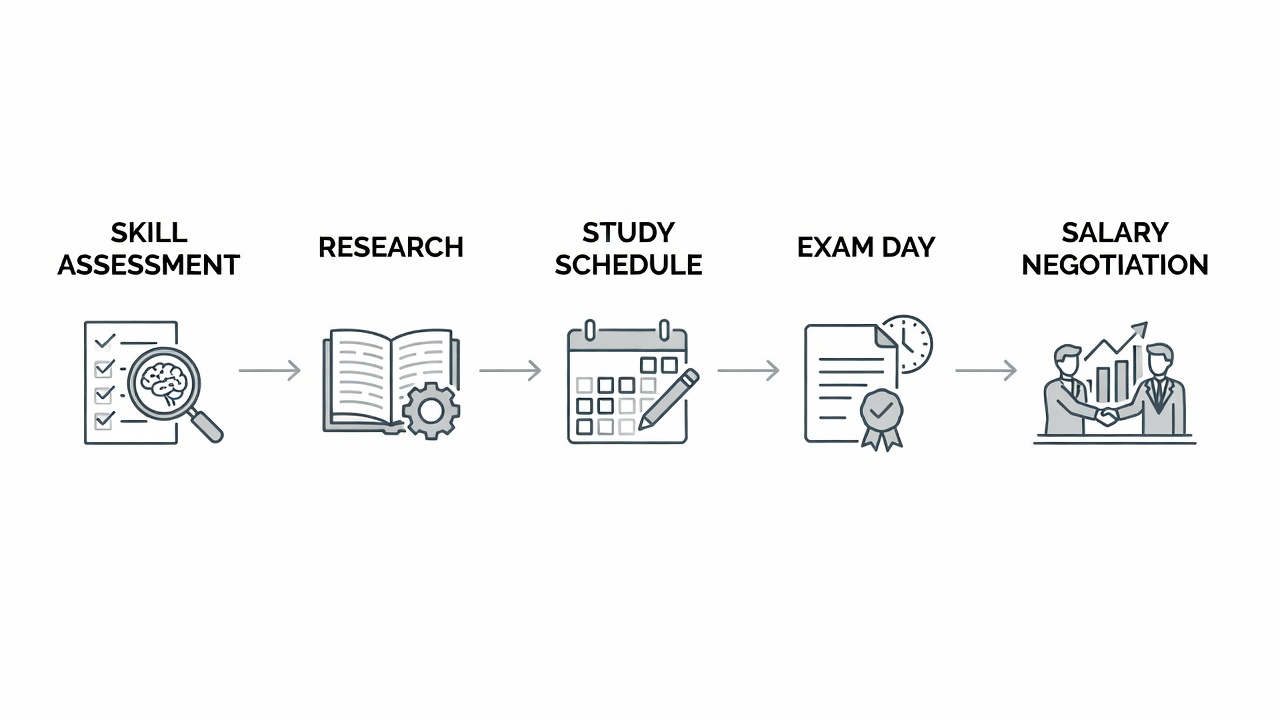
Step-by-Step Guide to Building Your Certification Plan
- Assess your current skills and identify gaps by analyzing job descriptions for desired positions and comparing them against your existing experience.
- Research certifications with proven salary impact in your industry, reading candidate reviews and employer preference data to narrow options.
- Create a realistic timeline that balances study commitments with work and personal responsibilities, allowing adequate preparation without burnout.
- Secure high-quality study resources including official training materials, practice exams, and peer study groups for accountability.
- Prepare thoroughly for the exam while documenting key learnings that you can later reference during performance discussions or interviews.
- Schedule the exam strategically and plan post-certification actions such as updating your resume and LinkedIn profile immediately upon passing.
Timing Certification Requests During Performance Reviews
Strategic timing maximizes the impact of your new credential on compensation discussions. Present certification achievements during annual reviews or when exploring role expansions and new responsibilities. Prepare a concise summary that highlights how the certification addresses specific business needs and supports team or departmental objectives rather than focusing solely on personal advancement.
Frame the conversation around value delivered to the organization. This approach increases the likelihood of employer support, including reimbursement for future credentials. Many professionals also schedule certification completion to coincide with budget planning cycles so managers can more easily approve raises or title changes.
Comparing Costs Versus Long-Term Returns
While certification programs involve upfront investment in time and resources, the long-term compensation benefits typically outweigh initial costs when credentials are well-chosen. Calculate potential returns by examining salary data for certified versus non-certified roles in your field from trusted sources. Many employers offer partial or full reimbursement through professional development budgets, significantly lowering net costs. Track both direct salary changes and indirect benefits such as faster promotions, expanded responsibilities, and improved job security over multiple years.
Tracking Results and Measuring Impact
Maintain detailed records of your certification journey, including exam dates, skills acquired, and any subsequent compensation adjustments or role changes. Use this data during future negotiations and to refine your ongoing professional development strategy. Regularly review industry salary reports and compensation surveys to benchmark your progress and identify additional high-value certifications worth pursuing as your career evolves.
Common Mistakes to Avoid
Many professionals undermine their certification efforts by selecting credentials without clear employer demand or failing to leverage the achievement in salary discussions. Others neglect renewal requirements, allowing certifications to lapse. Avoid spreading efforts across too many unrelated credentials; instead concentrate on a focused set that builds deep expertise aligned with your target career path.
Conclusion
Professional certifications remain one of the most reliable methods for boosting compensation in 2026. By selecting high-ROI credentials, timing achievements strategically, and consistently tracking outcomes, you can create a clear and measurable pathway to higher earnings and meaningful career advancement.
Frequently Asked Questions
How often do certifications require recertification?
Most professional certifications require renewal every two to three years through continuing education credits, re-examination, or active participation in the professional community to ensure skills remain current.
Will my employer reimburse certification costs?
Many organizations offer tuition reimbursement or dedicated professional development budgets. Policies vary widely, so review your employee handbook or discuss options directly with human resources before enrolling in a program.
Can certifications help during economic downturns?
Yes. Credentials that demonstrate specialized, in-demand skills often provide a competitive advantage even when overall hiring activity slows, helping certified professionals maintain or improve their positions.
Should I pursue multiple certifications at once?
It is generally more effective to focus on one or two high-impact certifications at a time to ensure thorough preparation and maximum knowledge retention rather than attempting several simultaneously.
How do I choose between similar certifications from different providers?
Compare provider reputation, employer recognition in your target companies, curriculum relevance, and renewal requirements. Reading recent candidate experiences and checking job posting frequency helps identify the stronger option for your situation.


No comments yet. Be the first!