 Jobboy

Introduction to Equity Refresh Negotiations in 2026
Equity refreshes remain a critical component of total compensation for mid-to-senior tech managers. As companies adjust to evolving market conditions, understanding how to negotiate these grants effectively can significantly boost long-term wealth beyond base salary. This guide explores proven approaches tailored for 2026, focusing on practical steps rather than generic calculators. Managers who treat equity negotiations as strategic conversations rather than simple requests often secure packages that compound over multiple years, creating substantial financial upside through careful planning around valuation, vesting, and taxes.
Understanding RSU Valuation Updates
Restricted stock units (RSUs) form the backbone of most tech equity packages. Valuation updates in 2026 reflect company performance, market volatility, and new grant guidelines. Managers should review the latest 409A valuations and compare them against peer benchmarks from sources like the SEC filings of public competitors. Private firms often use different methodologies, making it essential to request transparent valuation data during discussions. Key factors influencing updates include revenue growth projections, recent funding rounds, and macroeconomic indicators that affect stock volatility. To prepare, gather your current grant details, calculate the potential value at different strike points, and identify gaps between your holdings and target ownership percentages. This preparation turns subjective conversations into data-driven negotiations.
Strategic Timing Around Vesting Cliffs
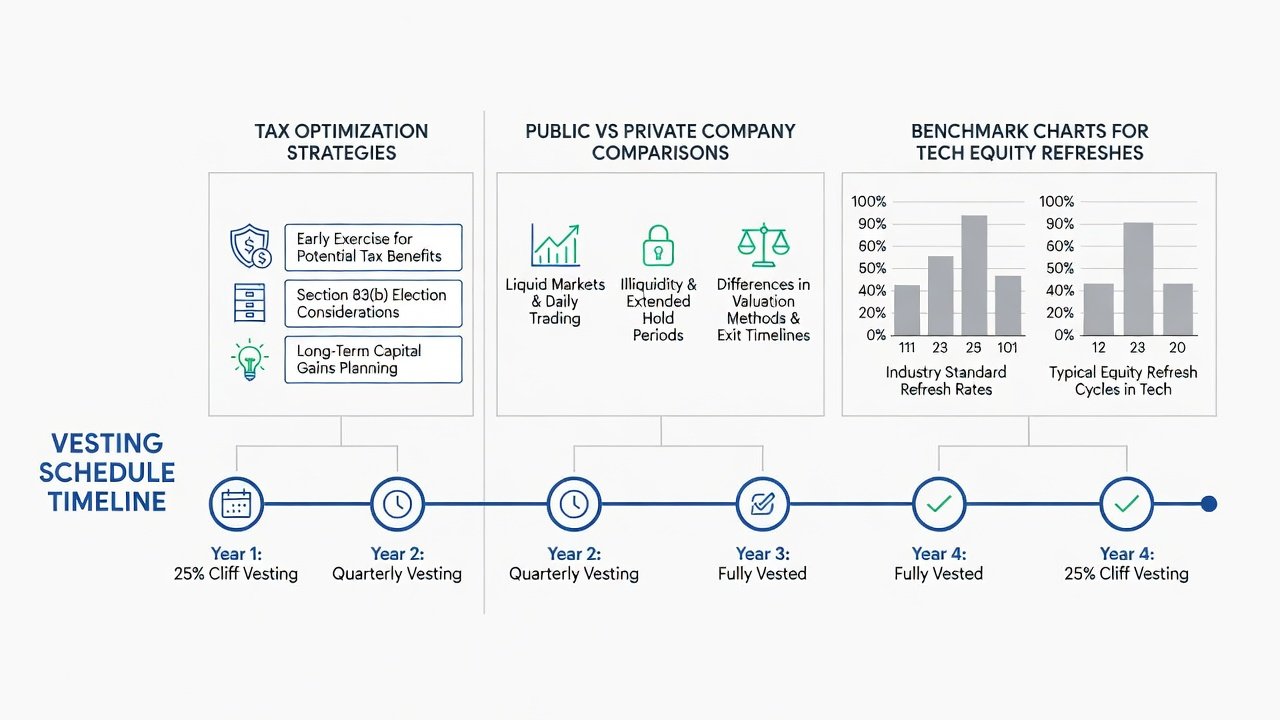
Vesting cliffs can create leverage points. Aligning refresh negotiations just before or after a cliff allows managers to highlight retention value. For example, requesting an accelerated refresh 90 days prior to a major vesting event demonstrates foresight and positions the discussion around ongoing contributions rather than immediate departures. Consider multiple scenarios: if your company is approaching an IPO or acquisition, timing becomes even more critical as liquidity events can dramatically alter perceived value. Document your impact metrics in advance so you can reference specific projects that justify larger grants. Avoid negotiating during company-wide quiet periods when leadership bandwidth is limited.
Tax Optimization Strategies
Tax implications heavily influence net equity value. Strategies include timing exercises with lower-income years and utilizing qualified small business stock exclusions where applicable. Consult resources on the IRS website for current rules on capital gains and AMT considerations. Managers at public companies may also explore 83(b) elections for early tax planning in private-to-public transitions. Additional tactics involve spreading sales across tax years to stay in lower brackets, coordinating with spousal income, and using charitable contributions of appreciated shares. Always model after-tax outcomes for different grant sizes before presenting numbers, as this shows sophisticated preparation that builds credibility with compensation teams.
Benchmarking Against Industry Data
Effective benchmarking requires data from reliable outlets. Compare your target refresh against levels at companies like Google, Meta, and emerging unicorns. Focus on total equity refresh percentages relative to current holdings rather than absolute numbers. This data-driven approach strengthens negotiation positions and reveals gaps in offered packages. Start by collecting anonymized data from peers through trusted networks, then cross-reference with public filings. Create a simple matrix showing your current equity, proposed refresh, and comparable roles at three to five similar-sized organizations. Present this during discussions to anchor expectations and justify requests with external validation.
Public vs Private Firm Refresh Comparisons
Public firms typically offer more predictable liquidity through open-market sales, while private companies provide higher upside potential but with liquidity risks. Managers at public employers can negotiate for performance-based accelerators, whereas private firm negotiations often center on liquidation preferences and anti-dilution protections. Public company refreshes tend to be more standardized with clear band structures, making them easier to benchmark but sometimes less flexible. Private environments reward persistence with customized grants that include ratchets or milestone-based vesting. Weigh these differences against your personal risk tolerance and liquidity needs when deciding which environment suits your long-term goals.
Real-World Examples from Top Tech Employers
At a leading cloud provider in 2025, a senior engineering manager secured a 25% equity uplift by presenting a detailed retention impact analysis that quantified project contributions in revenue terms. Similarly, at a fintech unicorn, negotiation around a post-IPO refresh included a mix of RSUs and performance stock units, resulting in stronger alignment with company goals and an eventual 40% higher payout after two years. Another case at a hardware giant involved a manager who successfully pushed for a refresh that included a one-time signing bonus equivalent to offset perceived dilution from a recent funding round. These examples demonstrate that preparation combined with clear storytelling about personal impact consistently outperforms vague requests.
Step-by-Step Email Templates
Use this template for initial outreach: Subject: Proposal for Equity Refresh Discussion to Support Continued Impact. Body: Open with a summary of recent achievements tied to business outcomes, reference industry benchmarks from the past quarter, and propose specific grant sizes with suggested vesting schedules. Include a polite request for a 30-minute meeting. Follow up with a second email attaching supporting data if no response within seven days, keeping tone collaborative. A third template for follow-up after the meeting should recap agreed points and propose next steps with a clear timeline.
Common Mistakes to Avoid
- Approaching negotiations without recent benchmark data, which weakens your position.
- Focusing only on grant size instead of vesting terms and performance conditions.
- Ignoring tax consequences until after the grant is finalized.
- Comparing yourself only to internal peers rather than external market rates.
FAQs on Dilution Risks
- What is dilution and how does it affect refreshes? Dilution occurs when new shares are issued, reducing ownership percentage. Mitigate by negotiating for anti-dilution clauses or larger refreshes.
- How common are dilution protections in 2026? Many firms include them in senior packages, but they require explicit negotiation and documentation.
- Can I request refreshes to offset dilution? Yes, frame the request around maintaining target ownership levels based on your role scope.
- What happens to unvested equity in a down round? It may be repriced, but managers should negotiate protections in advance.
- Are there tax implications from dilution events? Usually minimal, but consult advisors for complex structures.
Conclusion
Mastering equity refresh negotiations in 2026 empowers tech managers to secure compensation packages that reflect their true impact. By combining valuation knowledge, strategic timing, tax awareness, and structured outreach, professionals can achieve meaningful gains while building lasting career value. Consistent application of these principles turns equity from a passive benefit into a proactive wealth-building tool.
Explore more strategies in our career development resources.

No comments yet. Be the first!