 Jobboy

Introduction to 2027 Remote Salary Trends
As remote work continues to evolve into 2027, professionals in tech and finance face increasingly complex global pay landscapes. Understanding remote salary benchmarks requires moving beyond simple base pay figures to examine total compensation packages. These packages must account for location-based adjustments, cost of living variations, currency fluctuations, and performance incentives in distributed teams. This comprehensive guide delivers practical strategies, real-world examples from industry professionals, and step-by-step methods to help readers research benchmarks effectively, negotiate stronger offers, and maximize earnings while avoiding common pitfalls.
Global Remote Salary Benchmarks by Region
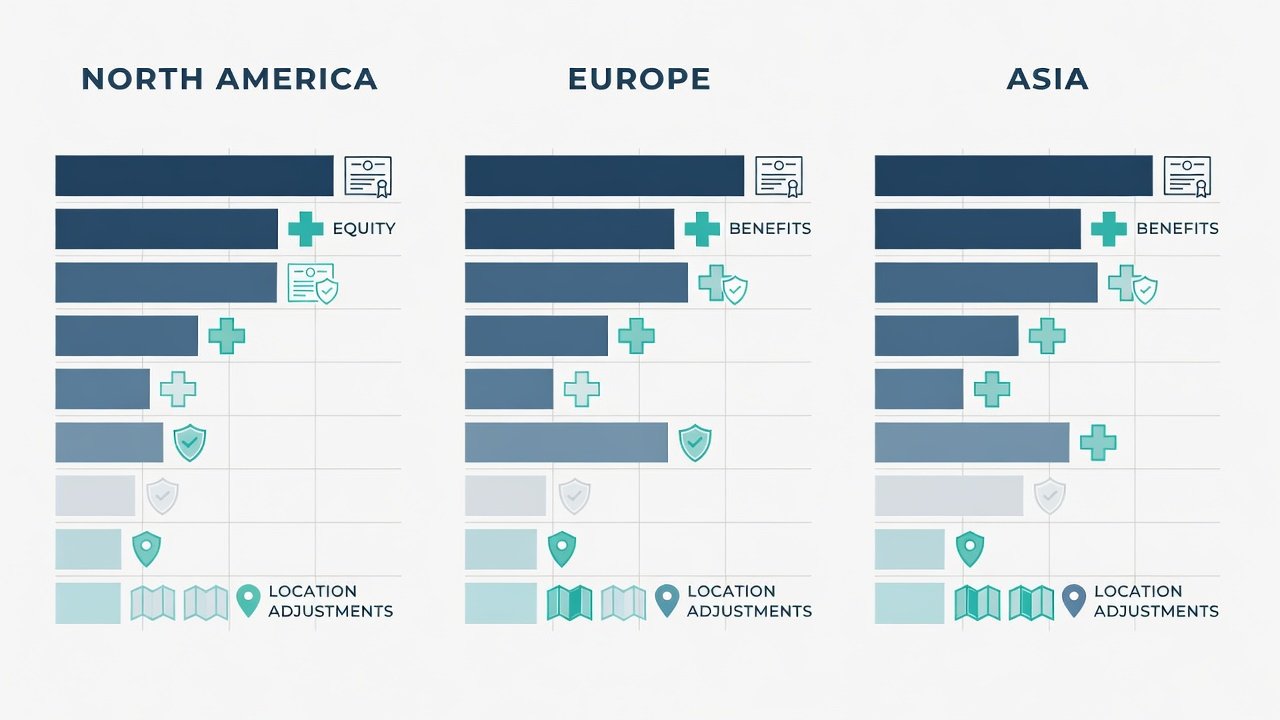
Salary data for fully remote roles reveals pronounced regional differences that companies address through tiered compensation bands. In North America, roles in software engineering and financial analysis typically receive higher base structures compared to similar positions in Europe or Asia-Pacific markets. European employers often prioritize robust benefits such as extended parental leave and pension contributions, while Asian technology hubs incorporate larger equity components to counterbalance local currency volatility. Organizations implement dynamic location multipliers that recalibrate offers quarterly to maintain internal equity and external competitiveness.
Cost of living adjustments remain central to these calculations. Professionals based in high-expense metropolitan areas receive premiums that reflect housing, transportation, and healthcare differentials, even when performing identical duties as colleagues in lower-cost regions. Currency fluctuations further complicate matters, prompting multinational firms to review exchange rates and inflation indices regularly. Real-world cases from distributed finance teams illustrate how a sudden shift in exchange rates can erode effective purchasing power by double-digit percentages within a single quarter if not proactively managed.
Adjusting Total Compensation for Location and Cost of Living
Total compensation encompasses far more than salary alone. It includes performance bonuses, equity grants, health and wellness benefits, retirement matching, and professional development stipends. Employers apply location-specific multipliers or banded ranges to balance fairness across time zones and economies. For example, a senior finance analyst in a distributed team might receive a base salary supplemented by location-adjusted equity that vests over four years, plus outcome-based bonuses tied to project milestones rather than physical office attendance.
To evaluate offers accurately, individuals should compute effective pay by converting nominal figures into local purchasing power equivalents. Authoritative datasets from the U.S. Bureau of Labor Statistics supply regional cost indices and occupational employment statistics that support these comparisons. Additional context from international sources helps professionals model scenarios involving multiple currencies and tax regimes.
Remote Versus Hybrid Role Negotiation Tactics
Fully remote positions frequently provide greater negotiation leverage because organizations realize substantial savings on real estate and commuting subsidies. Hybrid arrangements, by contrast, often anchor compensation more closely to local market rates due to occasional office requirements. Tech professionals have successfully negotiated remote premiums by presenting asynchronous productivity data, while finance specialists emphasize regulatory compliance achievements and risk-management expertise when advocating for location-agnostic packages.
Case studies from 2026 hiring cycles show remote workers in global teams securing enhanced equity refreshes by documenting cross-functional contributions through written updates and recorded presentations. Hybrid candidates, meanwhile, often trade flexibility for stronger local benefits such as commuting allowances or on-site wellness programs.
Step-by-Step Methods to Research Salary Benchmarks
- Define target roles, seniority levels, and primary regions using job postings and industry reports.
- Consult multiple verified data sources, including government labor statistics and compensation surveys from established research firms.
- Incorporate recent currency exchange rates, inflation forecasts, and cost-of-living indices into all calculations.
- Analyze total compensation breakdowns shared by verified peers on professional networks while cross-checking for accuracy.
- Model hypothetical offers across different locations to understand net impact after taxes and benefits.
- Validate findings through informational interviews with current remote employees in comparable roles.
- Update research quarterly to capture market shifts before entering negotiations.
Valuing Equity, Benefits, and Calculating Effective Pay
Equity grants often constitute a significant portion of remote compensation in both technology and finance sectors. Candidates must scrutinize vesting schedules, strike prices, and company growth trajectories before accepting offers. Benefits such as unlimited PTO, mental health resources, or home-office stipends carry tangible monetary value that should be quantified during evaluation. Calculating effective pay involves subtracting estimated taxes, adding the cash equivalent of perks, and then applying location-based cost adjustments to arrive at a true take-home figure.
Common Pitfalls and How to Avoid Them
One frequent error involves undervaluing long-term incentives like stock options or deferred compensation plans. Another occurs when professionals overlook performance-based raises in distributed environments where visibility is reduced. Additional pitfalls include failing to document achievements with measurable outcomes and neglecting to revisit compensation after major life events such as relocation or currency swings. Proactive tracking of contributions and regular calibration against updated benchmarks mitigates these risks.
Scripts for Counteroffers in Remote Negotiations
A strong counteroffer script might read: “After reviewing current 2027 remote salary benchmarks and the total value I deliver through consistent asynchronous results, I propose increasing the base component by an appropriate percentage while refreshing equity grants. This adjustment would align the package with market standards for similar contributions across comparable locations.” Tailor the language with specific data points gathered during research to strengthen the request and demonstrate preparation.
Tax Implications for Distributed Teams
Remote professionals operating across borders must address multi-jurisdictional tax obligations, including potential dual residency issues and withholding requirements. Guidance available from the IRS outlines U.S. filing responsibilities, while equivalent agencies in other countries provide parallel resources. Performance-based raises may trigger distinct tax treatments depending on the team’s geographic distribution, making early consultation with a cross-border tax advisor essential for accurate planning.
Performance-Based Raises in Remote Environments
Distributed teams increasingly tie salary progression to objective key results and peer feedback rather than in-person presence. Managers expect regular self-reported metrics and documented impact. Scheduling quarterly calibration meetings allows individuals to present accomplishments, request adjustments, and align expectations before formal review cycles. Successful remote employees maintain detailed records of contributions that span time zones and time periods.
Conclusion
Navigating 2027 remote salary benchmarks demands thorough research, strategic negotiation, and ongoing attention to taxes, benefits, and currency dynamics. By applying the methods and examples outlined above, professionals in tech and finance can secure compensation packages that reflect their true value in an increasingly global and location-flexible workforce.

No comments yet. Be the first!