 Jobboy
Introduction: Understanding Education's Role in 2026 Compensation
In today's evolving job market, education level remains one of the strongest predictors of earning potential. This guide examines how different degrees influence average salaries and total compensation packages throughout 2026. Whether you're evaluating a career change or preparing for salary negotiations, understanding these dynamics helps you maximize your return on educational investments. Higher education often correlates with greater access to specialized roles, leadership positions, and comprehensive benefits. However, the impact varies significantly by field, experience, and additional credentials like certifications. Professionals who strategically align their education with market demands tend to see stronger long-term outcomes, while those who overlook industry-specific trends may face diminishing returns despite advanced degrees.
Bachelor's vs Master's vs Doctorate: Pay Differences Explained
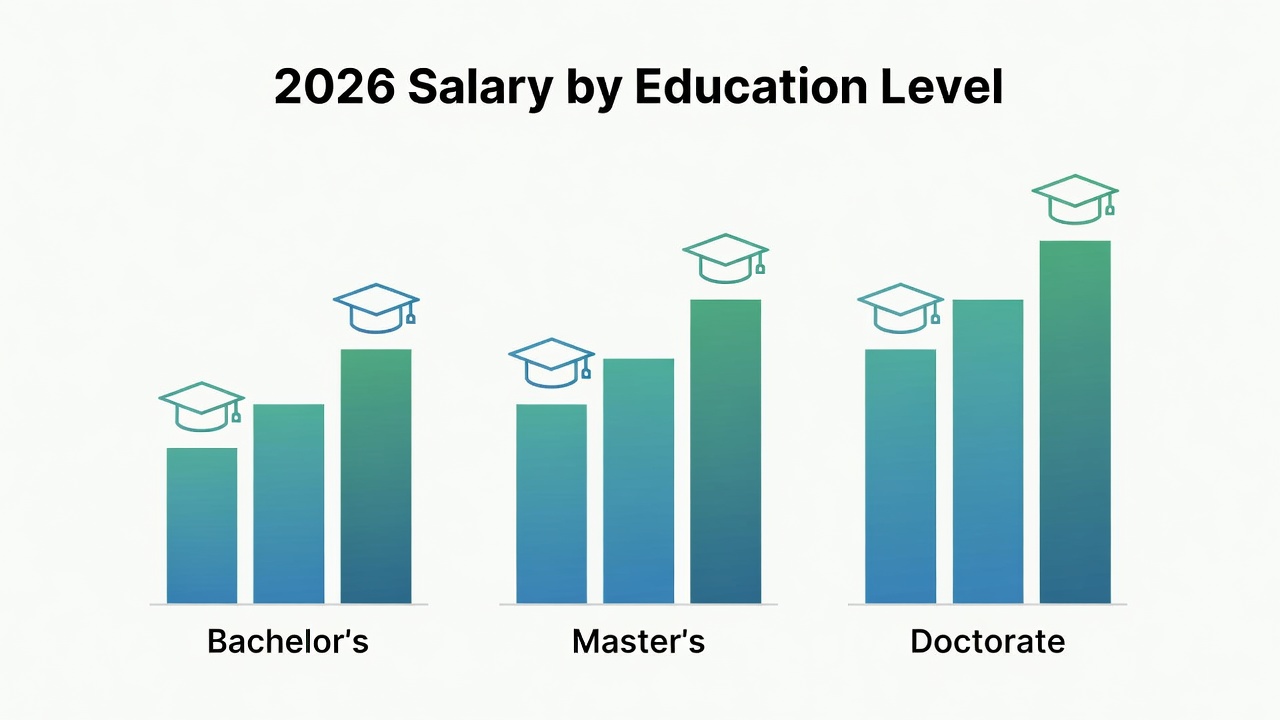
Bachelor's degrees provide a solid foundation for many professional careers across business, technology, education, and healthcare. They typically open doors to entry- and mid-level positions where practical skills and foundational knowledge drive performance. Master's programs usually unlock mid-to-senior level opportunities with greater responsibility, often leading to faster promotions and specialized expertise. Doctorate degrees frequently lead to the highest compensation in research, academia, executive leadership, and highly technical fields such as medicine or engineering. Real-world examples show consistent patterns: professionals holding advanced degrees frequently advance faster and command stronger total compensation. The gap widens in technical and healthcare fields where specialized knowledge directly translates to value. For instance, in corporate settings, a master's holder might lead cross-functional teams while a bachelor's counterpart supports those initiatives, creating visible differences in career velocity over five to ten years.
Salary by Industry Adjusted for Education
Education's salary impact is highly industry-dependent. Technology and finance sectors often reward advanced degrees with premium pay due to complex problem-solving requirements and rapid innovation cycles. Healthcare and engineering consistently show strong returns for master's and doctorate holders because of regulatory requirements and technical complexity. In contrast, education and nonprofit fields may prioritize experience alongside credentials, resulting in more modest differentials. Manufacturing and retail show smaller gaps but still benefit when degrees are paired with targeted certifications. Government and public administration roles often emphasize advanced degrees for policy and leadership tracks, while creative industries value portfolios more than formal education in some cases. Understanding these nuances allows job seekers to target fields where their educational investment yields the highest returns.
The Role of Certifications in Boosting Earnings
Certifications serve as powerful supplements to formal degrees. They demonstrate current, job-specific skills that employers value highly in 2026. Project management certifications enhance bachelor's holders' prospects in operations roles. Industry-specific credentials like those in data analytics or cybersecurity often close pay gaps between degree levels. Combining a master's degree with targeted certifications frequently maximizes total compensation. Common pathways include pairing an MBA with a PMP credential for management advancement or adding a specialized tech certification to an engineering bachelor's for immediate marketability. Employers increasingly view certifications as evidence of ongoing professional development, which can differentiate candidates during hiring and performance reviews.
Practical Steps for Calculating Your Personal Market Value
Follow these steps to determine appropriate salary expectations:
- Research roles matching your education and experience using government labor statistics sites to gather baseline data on similar positions.
- Factor in location, industry, and years of experience, adjusting for regional cost of living and demand fluctuations.
- Review total compensation including benefits, bonuses, and equity rather than focusing solely on base pay.
- Compare against peers with similar qualifications through professional networks and industry associations.
- Adjust for recent market trends and economic conditions by monitoring quarterly reports and economic indicators.
- Document your unique achievements and quantify how your education contributed to past successes.
- Consult career counselors or compensation specialists for personalized modeling when possible.
This systematic approach ensures your ask during negotiations is both competitive and realistic, helping you avoid undervaluing or overreaching based on incomplete information.
Real-World Examples of Education Pay Gaps
Consider two professionals in the same company and role: one with a bachelor's degree and another with a master's. The advanced degree holder often receives faster promotions and higher starting offers. Similar patterns appear across consulting, tech, and scientific industries. In one case, a marketing coordinator with a bachelor's might earn steady but slower increases, while their colleague with a master's in business analytics moves into strategy roles within two years. Another example involves engineers where doctorate holders lead research projects with additional stipends for publications and patents. These examples highlight why many pursue further education strategically rather than universally, weighing personal circumstances against projected career trajectories.
Benefits Packages Tied to Degrees: Comparisons
Beyond base salary, education level frequently influences benefits quality. Advanced degree holders often access better health plans, retirement matching, professional development stipends, and flexible work arrangements. Entry-level bachelor's roles may feature standard packages, while doctorate positions in research institutions commonly include sabbaticals and research funding. Master's holders in corporate environments frequently receive enhanced tuition reimbursement for further study and leadership training programs. Comparing packages side-by-side reveals that total rewards can differ by thousands in equivalent value even when base salaries appear similar. Factors such as parental leave, wellness programs, and stock options also tend to scale with educational attainment in competitive sectors.

How Much to Ask for Based on Qualifications in Negotiations
Effective negotiation starts with data. Present your education level alongside proven results and market benchmarks. Emphasize how your qualifications solve specific employer challenges. Practice framing requests around total compensation rather than salary alone. Be prepared to discuss trade-offs like remote work or professional development opportunities. Role-play scenarios with mentors to refine your delivery and anticipate counteroffers. Timing matters—align discussions with performance reviews or after completing major projects that showcase your expertise. Document everything in writing and follow up promptly to maintain momentum.
Conclusion: Maximizing Education ROI
Education level significantly shapes 2026 salary trajectories and benefits. Strategic choices around degrees and certifications, combined with informed negotiation, help professionals achieve optimal compensation outcomes. Continuous evaluation of market conditions ensures that educational investments continue to deliver strong returns throughout your career.
FAQs on Maximizing Returns from Higher Education
Does a master's always guarantee higher pay than a bachelor's?
Not automatically, but it substantially increases opportunities in most industries when paired with relevant experience and demonstrated results.
How do certifications compare to advanced degrees?
Certifications often provide faster, targeted boosts to employability and pay, while degrees offer broader long-term advancement potential across organizations and sectors.
What resources help track current salary data?
Authoritative sources include the Bureau of Labor Statistics and U.S. Census Bureau for reliable labor market insights and occupational statistics.
Should I pursue a doctorate for maximum earnings?
Only if your career path in research, academia, or specialized technical leadership aligns with doctorate-level requirements, as the time and cost investment must be weighed carefully against projected returns.
How can I offset the cost of higher education?
Explore employer tuition assistance programs, scholarships, assistantships, and income-driven repayment plans while selecting programs with strong placement records in your target field.


No comments yet. Be the first!