 Jobboy

Introduction to 2026 Remote Salary Benchmarks
Remote work continues to reshape compensation strategies in 2026, with experience level playing a pivotal role in determining total pay packages. This guide examines how junior, mid-level, and senior professionals navigate salary structures that incorporate global cost-of-living adjustments, equity, and benefits across borders. Understanding these benchmarks helps professionals and employers align expectations in a distributed workforce where talent can be sourced from anywhere.
Key factors include sourcing accurate data from reliable platforms, valuing non-salary components such as equity and wellness perks, and tailoring negotiations to each career tier. Real-world examples from tech and finance illustrate practical applications, while comparisons between remote and hybrid models highlight structural differences that affect long-term career planning. By the end of this guide, readers will have actionable frameworks for evaluating and negotiating offers that reflect true market value.
Sourcing Reliable Salary Benchmarks in 2026
Accurate benchmarks start with trusted sources that aggregate anonymized data from global companies. Professionals should cross-reference multiple platforms while accounting for currency fluctuations and regional economic shifts. Government labor statistics provide foundational context for base pay trends and help establish realistic expectations across industries. Bureau of Labor Statistics offers comprehensive datasets that can be filtered by occupation and location.
Step-by-step, begin by identifying role-specific data from industry reports updated within the past month. Next, layer in cost-of-living indices from authoritative economic organizations to adjust for geographic differences. Finally, adjust for experience by reviewing progression curves that show typical jumps between levels, ensuring the data reflects recent market conditions as of 2026-10-20.
How Experience Levels Influence Remote Pay Structures
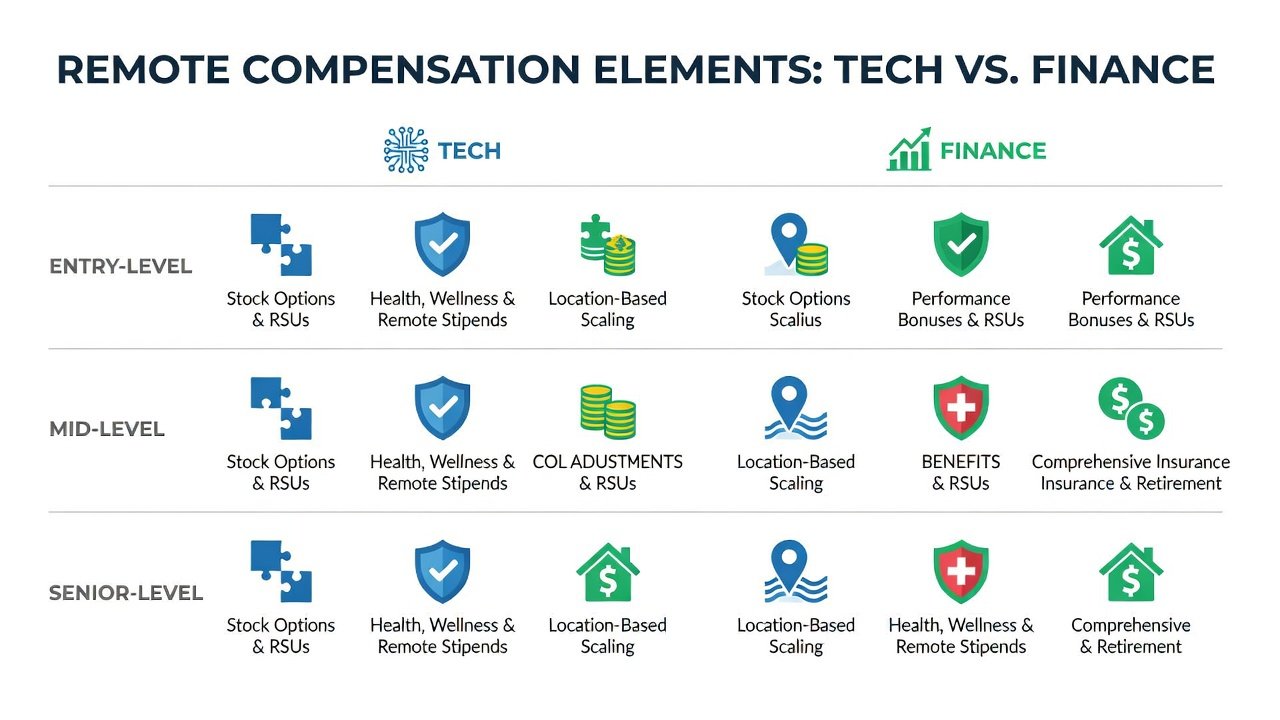
Experience level directly impacts not only base salary but also the composition of the entire compensation package. Junior roles often prioritize learning opportunities and stability, while senior positions emphasize wealth-building through equity and specialized benefits. Mid-level professionals sit in the middle, balancing growth potential with immediate financial security. Remote arrangements amplify these differences because companies can tap into global talent pools, leading to more nuanced COL adjustments.
Understanding these shifts requires analyzing both quantitative data and qualitative factors like career trajectory and risk tolerance. For instance, juniors may accept lower immediate pay in exchange for rapid skill development, whereas seniors negotiate for protections against inflation and currency volatility.
Junior-Level Remote Compensation Packages
Entry-level remote roles emphasize base salary supplemented by learning stipends and basic health benefits. Equity grants are often modest but vest over four years, providing long-term upside. Global COL adjustments can increase pay for candidates in high-cost regions, helping companies attract diverse talent without inflating fixed costs. Practical valuation involves calculating the present value of equity using current strike prices and expected growth rates. Benefits like unlimited PTO add intangible value that should factor into total compensation discussions.
Additional considerations for juniors include mentorship programs and professional development allowances, which can accelerate career progression. Real examples show that many entry-level remote workers in software development receive packages that include home office stipends to support productivity in fully distributed environments.
Mid-Level Remote Salary Structures
Mid-career remote workers typically see base pay increases over juniors, with larger equity allocations that reflect proven impact. Benefits expand to include retirement matching and professional development budgets. Cross-border packages often include tax equalization support to simplify compliance for employees working across multiple jurisdictions.
- Base salary focus with performance bonuses tied to measurable outcomes
- Equity vesting schedules of three to four years with clear milestone reviews
- Enhanced health and wellness perks including mental health resources
- Flexible COL adjustments based on location tiers and family needs
- Access to stock options or restricted stock units that align personal success with company growth
These elements combine to create competitive offers that retain talent in competitive fields like engineering and product management.
Senior-Level Total Compensation Insights
Senior remote roles command premium packages that blend high base salaries, substantial equity, and executive benefits like deferred compensation. Inflation adjustments are commonly reviewed annually to maintain purchasing power, with many firms applying increases tied to economic indicators as of late 2026. Valuation methods here require modeling multiple scenarios for equity liquidity events and comparing against hybrid alternatives that may offer location-based premiums.
Senior professionals also frequently negotiate for severance protections and accelerated vesting clauses, especially in volatile industries. This level demands a holistic view of compensation that accounts for long-term financial planning and family considerations.
Step-by-Step Methods to Value Compensation Packages
1. Calculate base salary against local market rates using recent data from trusted aggregators.
2. Assign monetary value to equity based on company valuation multiples and historical performance.
3. Quantify benefits using average market costs for similar coverage and add them to the total.
4. Apply COL multipliers from global indices for international roles to ensure fairness.
5. Discount future cash flows for vesting timelines and potential tax implications.
6. Compare the resulting figure against personal financial goals and cost of living in the target location.
Negotiation Scripts Tailored to Experience Tiers
For juniors: "Based on benchmarks as of 2026-10-20, I'm targeting a total package that includes competitive equity to support long-term growth and skill development opportunities."
Mid-level example: "My contributions in the past role align with mid-tier benchmarks; could we discuss adjusting the COL component for my location while exploring additional professional development resources?"
Senior script: "To reflect senior-level impact and leadership responsibilities, I'd like to explore inflation-protected adjustments alongside enhanced benefits such as deferred compensation plans."
Case Studies from Tech and Finance
In tech, a junior developer at a distributed startup received a COL uplift after relocating to a European hub, boosting total comp significantly while maintaining equity grants that later appreciated. A finance mid-level analyst negotiated hybrid-remote flexibility with matched retirement contributions, resulting in higher effective pay over three years.
Senior finance roles often include deferred bonuses, as seen in cases where professionals secured packages with equity components vesting over time and inflation safeguards. These examples demonstrate how tailored approaches lead to mutually beneficial outcomes for both employees and organizations.
Remote vs Hybrid Structure Comparisons
Remote structures prioritize flexibility and global talent pools but may reduce certain office perks. Hybrid models often provide location allowances that offset commuting costs while maintaining some in-person collaboration benefits. Data shows remote packages frequently emphasize equity to attract top talent across borders, whereas hybrid arrangements can include more traditional benefits like on-site wellness facilities. Professionals should weigh lifestyle preferences against compensation trade-offs when choosing between the two models.
Common Mistakes to Avoid When Evaluating Offers
Many candidates overlook the full value of benefits or fail to account for tax implications in cross-border roles. Another frequent error is accepting equity without understanding vesting schedules or company liquidity timelines. Always request detailed breakdowns and consult financial advisors before finalizing agreements.
Conclusion
Mastering 2026 remote salary benchmarks requires ongoing attention to experience-driven shifts and total compensation elements. By applying structured valuation and negotiation approaches, professionals can secure packages that reflect their true value in the evolving remote economy.
FAQs on Taxes, Vesting, and Inflation Adjustments
How do taxes affect cross-border remote pay? Many companies offer tax equalization; consult local authorities like the Internal Revenue Service for guidance on reporting requirements.
What are typical vesting schedules? Four-year schedules with one-year cliffs remain standard across levels, though some firms offer accelerated options for seniors.
How are inflation adjustments handled? Annual reviews tied to economic data ensure packages stay competitive, often referenced as of 2026-10-20 benchmarks and updated regularly.
Can I negotiate equity in junior roles? Yes, though grants are smaller; focus on demonstrating potential for larger allocations at the mid-level transition.

No comments yet. Be the first!