 Jobboy

Introduction to Remote Equity Compensation in 2026
Remote work has transformed how professionals negotiate compensation packages, especially when equity is involved across multiple countries. In 2026, understanding the nuances of stock options, RSUs, and other equity instruments is essential for candidates and employees spanning borders. This guide explores advanced tactics for valuation, tax implications, vesting schedules, and more to help you secure optimal deals. As companies continue to hire globally, equity compensation has become a critical component of total rewards, often representing 30 to 70 percent of a senior role's value depending on the industry and stage of the company. Professionals must now master cross-border considerations that were less prominent in traditional on-site roles.
Comparing Common Equity Types: RSUs vs. Stock Options
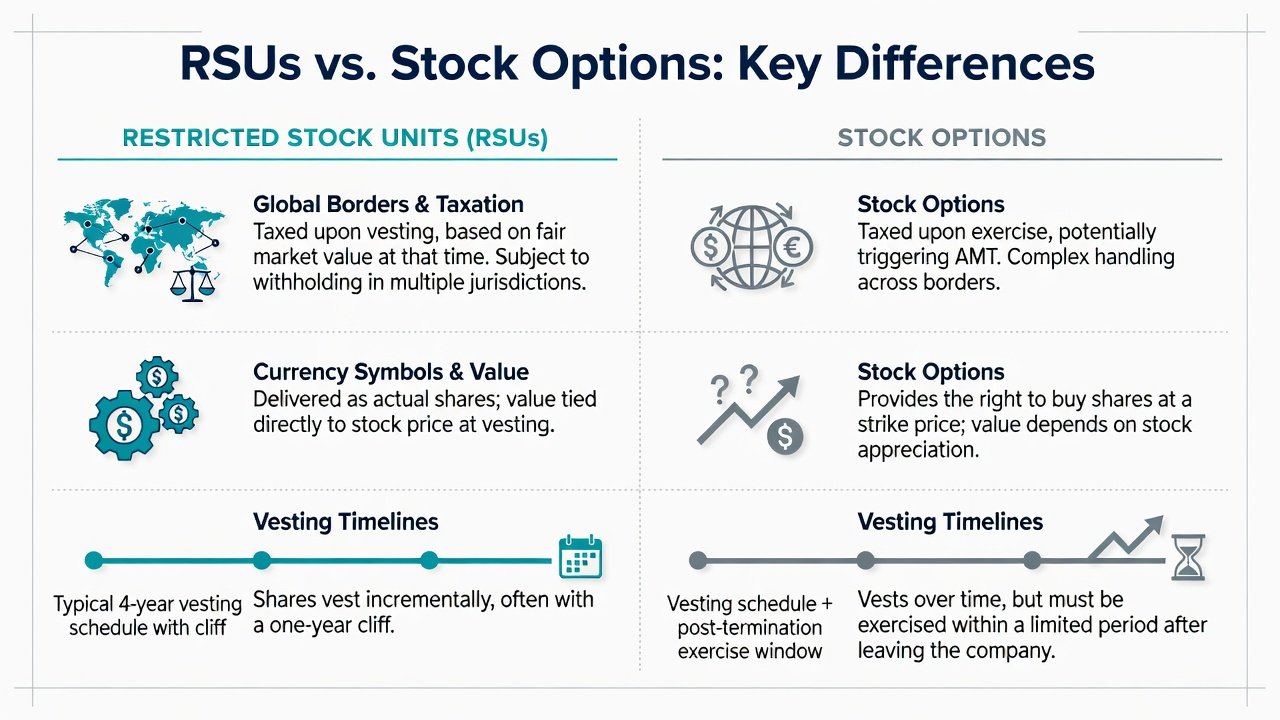
Restricted Stock Units (RSUs) and stock options remain the most prevalent forms of equity compensation. RSUs grant shares upon vesting without requiring purchase, offering more predictable value but potentially higher immediate tax burdens. Stock options, by contrast, provide the right to buy shares at a predetermined strike price, which can yield greater upside if the company grows significantly. For remote roles across borders, options often require careful consideration of local securities laws that may treat them differently than RSUs. In practice, early-stage startups favor options for their tax advantages in certain jurisdictions, while mature tech firms lean toward RSUs for simplicity. A detailed comparison reveals that RSUs reduce risk for employees but cap upside potential, whereas options introduce leverage that rewards long-term commitment. When negotiating internationally, candidates should evaluate which instrument aligns better with their personal risk tolerance and the regulatory environment of their home country.
Advanced Valuation Methods for 2026
Valuing equity in international contexts demands sophisticated approaches beyond simple Black-Scholes models. Professionals should incorporate 409A valuations, peer company multiples, and scenario-based projections that account for market volatility. Leveraging total compensation data from sources like public filings helps benchmark offers accurately during negotiations. Begin by requesting the company's latest 409A report, then cross-reference it with comparable public companies using revenue multiples and growth rates. Adjust for illiquidity discounts common in private firms and factor in expected time to liquidity event. This multi-layered method prevents undervaluation during talks and provides concrete data to support counteroffers.
Navigating Tax Implications Across Borders
Tax treatment varies widely by jurisdiction. In the US, for instance, consult official resources from the IRS for guidance on qualified small business stock and deferral options. European countries may impose social security contributions on equity at grant or vesting. Always model after-tax outcomes using jurisdiction-specific rates and double-taxation treaties to avoid surprises. For example, an employee in Germany might face immediate taxation on RSU vesting at marginal rates exceeding 40 percent, while a counterpart in Singapore could benefit from more favorable capital gains treatment. Professionals should also consider exit taxes when changing residency and plan liquidity events accordingly. Engaging a cross-border tax advisor early prevents costly missteps and ensures compliance with reporting requirements such as FBAR or CRS disclosures.
Optimizing Vesting Schedules and Adjustments
Standard four-year vesting with a one-year cliff is common, but remote international roles benefit from accelerated schedules or performance-based triggers. Negotiate protections against currency fluctuations by indexing strike prices or including adjustment clauses. This ensures equity retains value regardless of exchange rate shifts between the company's base currency and your local one. Additional provisions might include pro-rata acceleration upon termination without cause or milestone-based vesting tied to project deliverables rather than calendar time. In 2026, forward-thinking candidates are also requesting quarterly vesting reviews to adapt to changing economic conditions in their region.
Understanding Currency Fluctuations and Adjustments
Currency volatility can dramatically impact the real value of equity grants. A 15 percent swing in exchange rates over a vesting period may erase gains or create unexpected windfalls. To mitigate this, negotiate contracts that reference a stable benchmark currency or include automatic adjustment mechanisms reviewed semi-annually. Practical examples include linking strike prices to a basket of major currencies or providing supplemental cash payments when fluctuations exceed predefined thresholds. This level of detail demonstrates sophistication during negotiations and protects long-term purchasing power.
Researching Global Benchmarks Effectively
Use authoritative data from organizations such as the OECD for cross-country compensation comparisons. Supplement with industry reports on total rewards in tech and finance sectors. Focus on roles with similar responsibilities, adjusting for cost-of-living differences and remote work premiums. A step-by-step process includes gathering data from at least three independent sources, normalizing for equity refreshers, and modeling three-year total compensation scenarios. This evidence-based approach strengthens your position and reveals hidden gaps in initial offers.
Step-by-Step Negotiation Frameworks
- Research your market value using multiple data points and prepare a one-page summary.
- Quantify total compensation including equity at current and projected valuations, showing best-case and conservative scenarios.
- Present a counteroffer with specific adjustments for taxes, currency, and vesting flexibility.
- Secure written commitments on vesting acceleration triggers and change-of-control protections.
- Review local regulatory compliance with legal counsel before signing.
- Request a 30-day review period to consult advisors and run detailed tax models.
Real-World Case Examples from Tech and Finance
A senior engineer at a US tech firm relocating to Singapore negotiated RSUs with a 20 percent uplift to offset local taxes, using global benchmark data. In finance, a London-based analyst secured options with quarterly vesting adjustments tied to GBP/USD fluctuations, preserving value amid volatility. Another case involved a product manager in Brazil who obtained phantom stock alternatives after standard options triggered complex local securities filings. These examples illustrate how tailored strategies convert potential obstacles into negotiated advantages and highlight the value of preparation.
Addressing Pitfalls Like Local Regulations
Common mistakes include overlooking securities registration requirements in the employee's country or ignoring phantom income taxation. Always verify compliance with bodies like the SEC for US issuers. Additional pitfalls involve failing to account for social security contributions, miscalculating capital gains holding periods, or neglecting to update beneficiary designations after relocation. A proactive review checklist reduces these risks substantially.
Phantom Stock Alternatives Explored
Phantom stock mimics equity economics through contractual payments based on company valuation increases. This structure avoids many cross-border securities hurdles while delivering similar upside. Evaluate it when standard options or RSUs trigger excessive compliance costs or restrictions. Companies in highly regulated industries often prefer phantom plans because they simplify administration and reduce legal exposure for both parties.
Frequently Asked Questions
How do currency fluctuations affect equity value?
They can erode gains unless contracts include explicit adjustment mechanisms tied to exchange rates and periodic reviews.
What is the best way to benchmark international equity offers?
Combine public company disclosures with OECD economic data and specialized compensation surveys while normalizing for remote work factors.
Are RSUs always preferable to options in remote setups?
Not necessarily—options may provide higher potential returns, but RSUs offer more stability for tax planning across borders.
How should I handle tax residency changes mid-vesting?
Consult a cross-border tax specialist to model exit taxes and potentially accelerate vesting before relocation.
Can I negotiate equity refreshers in international contracts?
Yes, many companies now include annual equity top-ups as standard practice in global remote roles.
Checklist for Maximizing Long-Term Value
- Obtain independent 409A valuation reports and update them annually.
- Model after-tax scenarios for each jurisdiction involved in the role.
- Negotiate currency-hedged vesting terms with clear adjustment triggers.
- Secure acceleration clauses for change of control and termination without cause.
- Consult cross-border tax and securities experts before final acceptance.
- Document all agreements in writing with clear enforcement paths and governing law clauses.
- Plan liquidity strategies aligned with personal financial goals and residency status.
By applying these strategies, professionals can confidently navigate the complexities of 2026 remote equity compensation across borders and build substantial long-term wealth through informed negotiation and ongoing management of their equity portfolio.
No comments yet. Be the first!