 Jobboy
Introduction to Your 2026 10-Year Earnings Roadmap
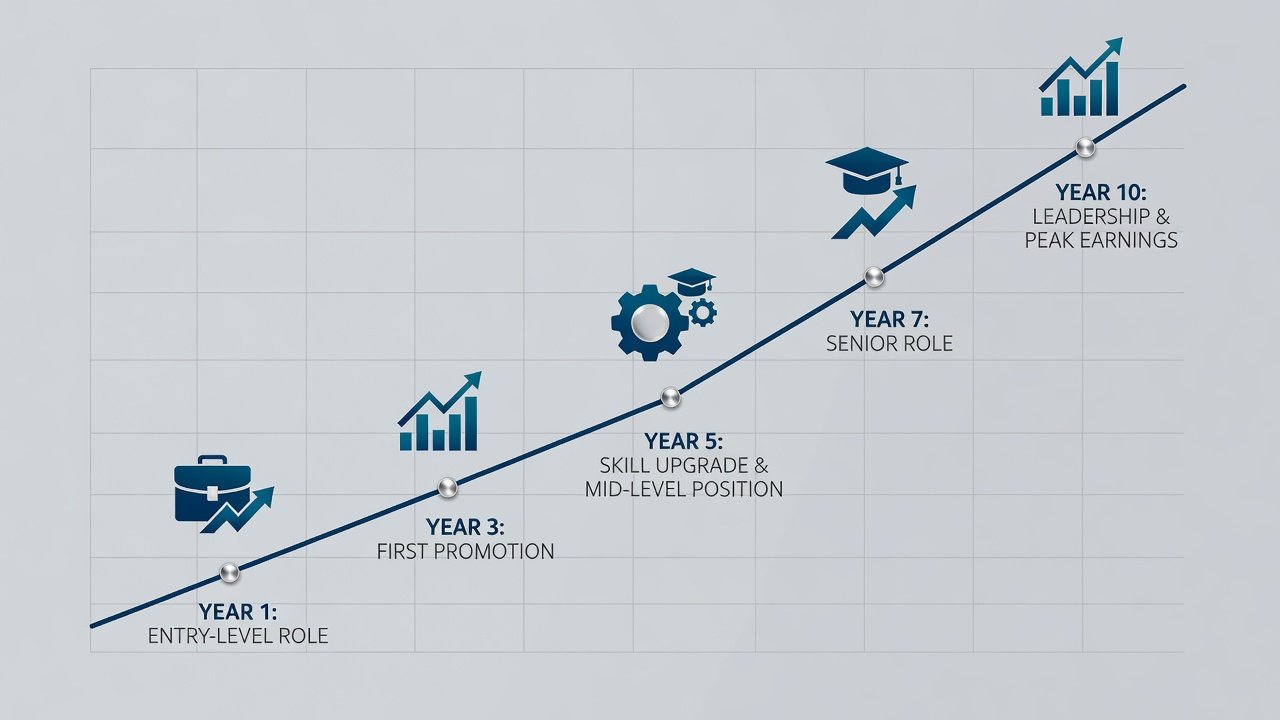
Planning compensation over a decade requires aligning personal milestones with market realities. This roadmap helps 2026 professionals set clear targets at the 2-year, 5-year, and 10-year marks while factoring in promotions, skill development, and major life events. A structured approach turns vague career aspirations into measurable financial progress. In today’s dynamic economy, professionals who proactively map their earnings trajectory gain a significant advantage, especially when navigating rapid technological changes and evolving industry demands. By breaking down long-term goals into actionable phases, individuals can better anticipate opportunities for advancement and mitigate risks associated with economic downturns or unexpected personal circumstances.
Defining Milestone Compensation Targets
Break your earnings journey into three key phases. The 2-year target focuses on immediate role upgrades and foundational skill certifications. The 5-year target incorporates mid-career promotions and expanded responsibilities. The 10-year target emphasizes leadership positions and diversified income streams. Each phase should be customized based on your starting point, industry, and personal aspirations to ensure the targets remain both ambitious and attainable.
2-Year Milestones
The initial two years serve as the foundation for accelerated growth. Focus on securing one promotion or lateral move with at least 15% total compensation uplift. Complete two high-impact skill certifications tied to your industry, such as advanced data analytics or leadership training programs. Adjust for a major life event such as relocation or family expansion by incorporating flexible work arrangements into your compensation discussions. Real-world application often involves creating a personal development plan that includes quarterly reviews with mentors to track incremental achievements.
5-Year Milestones
At the midpoint, shift emphasis toward sustained advancement and portfolio diversification. Achieve senior-level status or equivalent with equity components that provide long-term upside. Build a side income stream or pursue an advanced degree that boosts market value, such as an MBA or specialized certification in emerging fields like artificial intelligence ethics. Rebalance total rewards after economic or personal shifts by reassessing benefits like health savings accounts and stock options to maintain alignment with evolving life priorities.
10-Year Milestones
The decade-long horizon centers on legacy and stability. Reach executive or principal roles with long-term incentive plans that include performance-based equity grants. Optimize for retirement contributions and wealth accumulation through vehicles like deferred compensation. Establish legacy planning that accounts for inflation and market cycles by consulting financial advisors periodically to refine investment strategies tied to your career earnings.
Step-by-Step Framework for Valuing Total Rewards
Total rewards extend beyond base salary. Begin by listing base pay, bonuses, equity, benefits, and perks. Next, assign monetary values using current market data from authoritative sources. Bureau of Labor Statistics provides reliable occupational wage benchmarks updated regularly. Then factor in non-cash elements such as health coverage, retirement matching, and professional development stipends. Create a weighted score for each reward category to compare offers objectively. Finally, conduct an annual audit of your total package to identify gaps and opportunities for enhancement, ensuring your valuation stays current with industry standards.
Adjusting Targets for Inflation and Market Shifts
Economic conditions evolve, so build flexibility into your plan. Review inflation trends annually using government data from sources like the Department of Labor. Reassess targets if market demand for your skills rises or falls due to automation or globalization. Incorporate buffers for recessions by maintaining an emergency compensation reserve equivalent to six months of living expenses. Revisit your roadmap every 12 months and adjust 2-year, 5-year, and 10-year figures accordingly. Practical examples include modeling three scenarios: optimistic growth, baseline stability, and conservative contraction to prepare for multiple outcomes.
Tracking Progress with Sample Dashboards
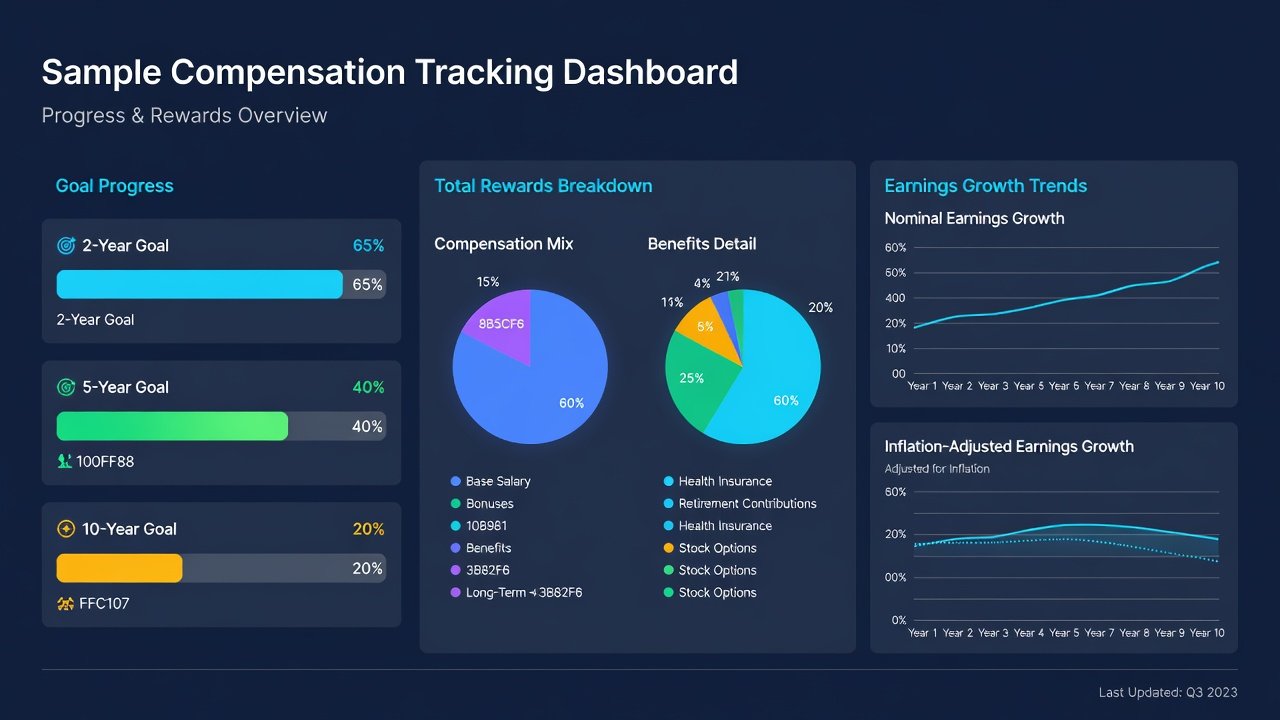
A simple dashboard visualizes advancement. Include columns for target date, expected compensation, actual compensation, variance, and action items. Use color coding: green for on-track, yellow for minor adjustments needed, and red for significant recalibration. Update the dashboard quarterly with real payroll and benefits statements. Tools like spreadsheets or dedicated career apps keep data centralized and easy to share with mentors. For deeper insight, incorporate metrics such as skill acquisition timelines and networking events attended to correlate activities with compensation growth.
Building Your Personal Dashboard: Detailed Example
Start with a basic spreadsheet template divided into tabs for each milestone period. Populate rows with specific metrics like current base salary, bonus percentage, equity valuation, and benefits cost savings. Add conditional formatting rules to highlight variances exceeding 10%. Review examples from peers in similar roles to benchmark your entries, ensuring the dashboard serves as both a tracking tool and a motivational visual aid throughout your 10-year journey.
Real-World Case Studies
Tech Professional Case Study
A software engineer in 2026 started with a 2-year goal of moving from mid-level to senior engineer. By completing cloud architecture certifications and negotiating equity refreshers, she exceeded her target by 22%. At the 5-year mark she transitioned into a staff role at a fintech firm, incorporating performance bonuses that scaled with company growth. Her 10-year outlook now includes advisory board positions that diversify income while leveraging her expertise in scalable systems.
Finance Professional Case Study
A financial analyst set a 10-year target of director-level compensation in investment banking. She achieved her 5-year milestone through an MBA and two strategic moves that added private equity exposure. Her 10-year plan now includes deferred compensation vehicles to manage tax implications during market volatility, demonstrating how phased planning can compound earnings effectively over time.
Negotiation Scripts at Each Milestone
At the 2-year mark: “Based on my recent certification and project impact, market data shows senior roles in our sector command an additional 18% in total rewards. I propose adjusting my package to align with that benchmark while contributing to upcoming initiatives.”
At the 5-year mark: “My expanded portfolio has driven measurable revenue growth. I would like to discuss a title elevation and long-term incentive alignment that reflects current industry standards.”
At the 10-year mark: “As we plan succession and strategic direction, my contributions position me for an executive track. Let’s explore compensation structures that include equity participation and deferred benefits.”
Common Mistakes to Avoid in Milestone Planning
Many professionals overlook the importance of documenting every achievement, leading to weaker negotiation positions. Another frequent error is ignoring non-monetary factors like work-life balance when valuing total rewards. Avoid setting rigid targets without built-in review periods, as this can result in discouragement during economic shifts. Instead, maintain a journal of accomplishments and consult trusted advisors regularly to refine your approach.
Practical Steps for Implementation
- Conduct a baseline assessment of your current compensation and skills within the first month.
- Identify three potential mentors or sponsors who can provide guidance on industry trends.
- Schedule quarterly self-reviews to measure progress against each milestone.
- Research and enroll in at least one relevant certification program annually.
- Practice negotiation scenarios with a peer or coach before key discussions.
FAQs on Recalibrating Plans During Economic Changes
How often should I update my roadmap?
Review annually and after any major life or market event. This keeps targets realistic without constant disruption.
What if inflation outpaces my salary growth?
Prioritize roles with performance-tied bonuses and equity that historically outpace inflation. Diversify income sources where possible.
Can I include side income in my official targets?
Yes, but separate it into a distinct category so core employment targets remain clear and achievable.
How do I handle unexpected job loss mid-roadmap?
Immediately reassess your 2-year and 5-year targets, focusing first on securing bridge employment while preserving long-term equity and retirement plans.
Conclusion
A disciplined 10-year earnings roadmap converts career ambitions into concrete financial outcomes. By setting phased targets, valuing total rewards accurately, and maintaining flexible dashboards, professionals can navigate 2026 and beyond with confidence. Regular reviews and targeted negotiations ensure continued alignment with both personal goals and market opportunities.

No comments yet. Be the first!