 Jobboy

Introduction to Equity Refresh Negotiations in 2026
Mid-career professionals often find themselves at a critical juncture where base salary growth plateaus while equity becomes the primary driver of long-term wealth. This playbook provides a structured approach to negotiating equity refreshes, focusing on RSUs and stock options. It draws from real-world practices in tech and finance to help you maximize total compensation without risking your current role. Equity compensation has evolved significantly, and understanding how refreshes fit into broader career trajectories is essential for those with five to ten years of experience who have already proven their value but seek to accelerate financial growth.
Equity refreshes typically occur annually or during performance reviews. Understanding their value relative to salary increases requires careful analysis of grant size, vesting, and market conditions. As companies adapt to evolving compensation landscapes, mid-career employees hold strong leverage if they demonstrate consistent impact. This guide expands on proven concepts with fresh mid-career focus, practical scripts, and decision frameworks that address both immediate negotiations and long-term wealth planning.
Valuation Methods for RSUs and Options
Accurate valuation starts with distinguishing between RSUs and options. RSUs represent actual shares granted at no cost upon vesting, while options require purchasing shares at a strike price. Use the 30-day average stock price for RSU estimates and apply the Black-Scholes model for options, factoring in volatility and time to expiration. Mid-career candidates should also consider company-specific metrics such as revenue growth, competitive positioning, and recent funding rounds when projecting future value.
Compare equity value directly to salary by calculating annualized grant worth. For instance, modeling different appreciation scenarios helps reveal whether equity or cash provides superior outcomes over a three- to five-year horizon. Factor in company performance and dilution risks from future funding or employee grants. Mid-career roles in established firms benefit from focusing on RSU refreshes rather than new option grants due to lower risk. Additional considerations include liquidity events, secondary market availability, and how refreshes interact with existing unvested awards. Professionals should run multiple sensitivity analyses using conservative, base, and optimistic stock price assumptions to prepare for discussions with managers or compensation committees.
IRS guidelines provide foundational tax rules that influence these valuations, while broader market context can be found through official regulatory resources.
Timing Your Refresh Requests During Performance Reviews
Align refresh discussions with mid-year or annual reviews for maximum impact. Prepare data on your contributions three months in advance, including project outcomes and team metrics. Schedule a dedicated compensation conversation separate from the review itself to keep the focus on results rather than general feedback.
Ideal timing windows include post-earnings calls when stock prices stabilize or during budget planning cycles in Q4. Avoid requesting refreshes immediately after company-wide layoffs or during market downturns. Document your request in writing to create a paper trail that supports future conversations. Consider external factors such as industry hiring cycles, peer departures, or announced acquisitions that may increase your leverage. In practice, many successful negotiations occur two to four weeks after a strong performance review when goodwill is high but formal compensation cycles have not yet closed.
Tax Implications of Equity Refreshes
RSU vesting triggers ordinary income tax at the fair market value on the vest date. Options may qualify for capital gains treatment if held long enough after exercise. Plan around tax events by coordinating vest dates with other income sources and potential deductions. Mid-career professionals should consult tax advisors on strategies like tax-loss harvesting or deferral elections where available. State taxes add complexity for those in high-tax jurisdictions. Always model after-tax net value when comparing offers or deciding between competing opportunities.
Additional considerations include Medicare surtaxes on investment income, alternative minimum tax exposure for incentive stock options, and the impact of large vest events on your overall tax bracket. Creating a multi-year tax projection helps avoid surprises and allows you to time liquidity needs more effectively. Professionals in dual-income households should also evaluate how equity income affects spousal tax situations or eligibility for certain credits.
Equity vs. Base Salary Increases: Key Comparisons
Equity offers upside potential but carries volatility, while salary provides predictable cash flow. For mid-career roles, equity refreshes often deliver greater long-term impact when modeled over multiple years, especially at high-growth companies. Calculate break-even points assuming different stock performance scenarios to understand risk tolerance. Negotiate hybrid packages when possible, blending modest salary gains with larger equity grants. Finance sector roles tend to favor salary stability, while tech leans heavily on equity. Decision frameworks should include personal cash flow needs, risk tolerance, and time horizon until potential liquidity events.
Another layer of comparison involves benefits such as 401(k) matching, health coverage, and bonus structures that may scale with base salary. Mid-career employees should weigh these holistically rather than focusing solely on headline grant sizes. Scenario planning that includes both equity appreciation and potential downside protection strategies provides a more complete picture.
Step-by-Step Negotiation Framework
- Research comparable grants using public benchmarks and internal data sources.
- Quantify your achievements with specific metrics and business outcomes.
- Submit a written proposal outlining desired grant size, vesting terms, and rationale.
- Follow up with a meeting to discuss and counter any initial offers using data.
- Secure the agreement in your offer letter or addendum with clear documentation.
- Revisit the package annually to account for market shifts and continued contributions.
Real-World Examples from Tech and Finance
At a major tech firm, a mid-career engineer secured a substantial RSU refresh by presenting retention risk data and peer compensation benchmarks during a Q3 review. In finance, an analyst negotiated accelerated vesting by highlighting client acquisition results, resulting in a shortened schedule. These cases show the value of preparation and data-backed asks. Tailor your approach to industry norms while emphasizing unique contributions that differentiate you from peers. Additional examples include product managers who tied refreshes to successful feature launches and finance professionals who leveraged regulatory expertise during compliance-heavy periods.
Common Pitfalls to Avoid
- Accepting the first offer without countering or providing supporting data.
- Ignoring vesting schedule details that delay liquidity and financial flexibility.
- Failing to account for tax withholding on large vest events that can create cash shortfalls.
- Overlooking non-compete clauses tied to equity grants that limit future opportunities.
- Neglecting to model dilution from future company funding rounds or employee grants.
Actionable Email Templates
Subject: Follow-Up on Compensation Discussion
Dear [Manager], Following our recent performance review, I wanted to propose an equity refresh to align with my contributions over the past year. Based on [specific achievements and metrics], I believe a grant aligned with current market benchmarks would support retention and continued impact. I have prepared supporting documentation and am happy to discuss at your earliest convenience. Thank you for considering this request.
FAQ on Vesting Schedules
What is a typical vesting schedule for refreshes?
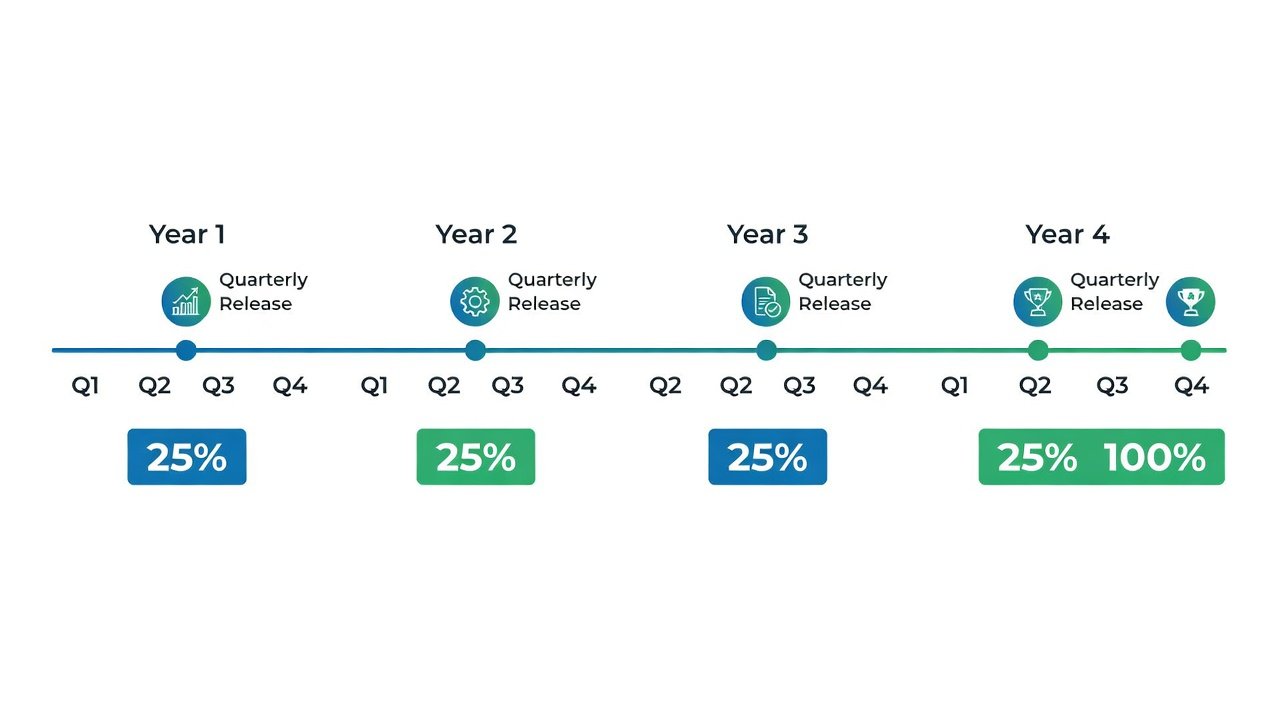
Most companies use four-year vesting with a one-year cliff, followed by monthly or quarterly vesting to balance retention and employee liquidity needs.
Can I negotiate accelerated vesting?
Yes, especially if you have competing offers or critical institutional knowledge that justifies faster release of shares.
How do refreshes interact with existing unvested equity?
New grants usually stack on top of prior awards without resetting the clock, preserving the original vesting timeline for earlier equity.
What happens if I leave before full vesting?
Unvested shares are typically forfeited, though some companies offer partial acceleration in cases of termination without cause or change of control.
Conclusion
Mastering equity refresh negotiations positions mid-career professionals for stronger financial outcomes in 2026. Apply these frameworks consistently, track results, and refine your approach with each cycle. The combination of timing, valuation knowledge, and clear communication turns equity into a reliable wealth-building tool that complements salary and benefits over the long term.

No comments yet. Be the first!