 Jobboy

Introduction
Internal talent marketplaces have become essential tools for forward-thinking organizations seeking to optimize workforce mobility and retention. In 2026, HR leaders must demonstrate clear return on investment (ROI) by leveraging data from applicant tracking systems (ATS) and human resource information systems (HRIS). This article explores practical strategies to measure success, including mobility rates, turnover reduction, time-to-fill metrics, and engagement scores. By establishing baselines and building robust dashboards, teams can align marketplace initiatives with broader retention goals while avoiding common pitfalls like data silos. Organizations that effectively track these elements often see improved employee satisfaction and reduced external hiring costs over time.
The rise of internal talent marketplaces reflects a shift toward employee-centric talent management. Companies use these platforms to match internal candidates with open roles, projects, or development opportunities. To justify continued investment, HR professionals need concrete evidence of value. Data from ATS and HRIS platforms provides the foundation for this analysis, allowing teams to quantify impact through measurable outcomes rather than anecdotal feedback.
Key Metrics for Tracking ROI
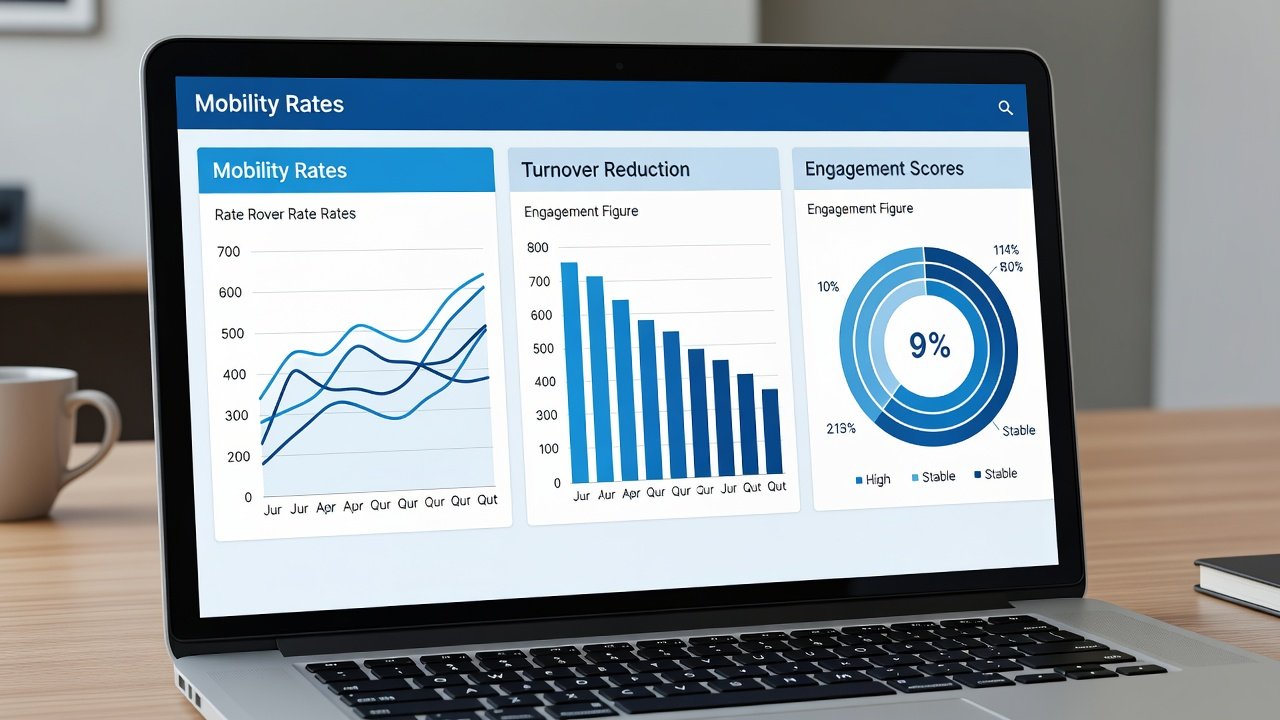
Effective ROI measurement starts with identifying the right performance indicators. Focus on these core metrics drawn from ATS and HRIS platforms. Mobility rates represent the percentage of employees who transition into new internal roles within a given period. High mobility indicates that the marketplace is successfully surfacing opportunities and encouraging internal movement. For example, a manufacturing firm might track how many factory workers move into supervisory positions after using the platform to express interest and complete skill assessments.
Turnover reduction measures the decline in voluntary exits following marketplace implementation. This metric directly ties to cost savings because replacing an employee can involve significant recruitment and onboarding expenses. Time-to-fill for internal roles compares the average number of days required to staff positions through the marketplace versus traditional external channels. Faster internal fills demonstrate efficiency gains. Engagement scores, derived from pulse surveys and HRIS sentiment data, reveal whether employees feel more connected to the organization when they have visibility into career paths. Real-world examples from large enterprises show mobility rates increasing by 15-25% within the first year of marketplace adoption when paired with targeted promotion campaigns. Another case involved a technology company that reduced voluntary turnover by focusing marketplace efforts on high-potential employees identified through HRIS analytics.
Additional supporting metrics include internal application volume, role acceptance rates, and skill gap closure percentages. These provide a fuller picture of marketplace health and help HR teams identify areas for improvement.
Setting Baselines and Building Dashboards
Begin by capturing a 90-day baseline using historical ATS exports. Pull data on prior mobility, turnover, and fill times to create a benchmark. This baseline serves as the reference point for all future comparisons. Ensure data consistency by standardizing definitions across departments, such as what constitutes an internal move or a completed fill.
Next, integrate HRIS feeds into a centralized dashboard using tools that support API connections. Step-by-step guidance includes defining data fields consistently across systems, automating weekly data pulls to maintain freshness, visualizing trends with interactive charts for mobility and engagement, and setting automated alerts for metric deviations that require immediate attention. A well-designed dashboard might feature color-coded indicators showing whether mobility rates are trending upward or if engagement scores have dipped in specific business units.
Running Quarterly Reviews
Conduct structured quarterly reviews to refine marketplace performance. Compare current metrics against baselines and adjust strategies accordingly. Include cross-functional stakeholders from talent acquisition and business units to ensure alignment with retention objectives. During each review, examine root causes behind any metric changes, such as seasonal hiring patterns or organizational restructuring. Document action items and assign owners to maintain accountability.
Addressing Common Pitfalls
Data silos remain a frequent challenge, often arising when ATS and HRIS operate independently. Overcome this by establishing shared data governance policies and regular integration audits. Align marketplace success directly with retention goals by linking mobility metrics to overall employee lifecycle analytics. Another common issue is incomplete data capture, where not all internal applications are logged properly. Address this through user training and system prompts that encourage complete submissions. Finally, avoid over-reliance on single metrics by creating balanced scorecards that consider both quantitative and qualitative inputs.
Free Versus Paid Analytics Tools Comparison
Organizations can choose from free options like basic spreadsheet templates or open-source visualization libraries for initial tracking. These approaches suit smaller teams with limited data volumes and allow quick experimentation without financial commitment. Paid platforms offer advanced automation, predictive modeling, and seamless ATS/HRIS integrations that scale with enterprise needs. They typically provide better support for complex reporting and compliance features. Evaluate based on data volume, required customization, and reporting frequency rather than upfront costs alone. Many teams start with free tools to prove concept before migrating to more robust solutions.
FAQ on Compliance Considerations
How do privacy regulations affect data collection? Ensure all metrics comply with GDPR and CCPA by anonymizing personal identifiers where possible and obtaining necessary consents from employees.
What audit trails are necessary? Maintain logs of data access and changes to demonstrate transparency during reviews and potential regulatory inquiries.
Can metrics be shared across borders? Consult legal teams to verify cross-jurisdictional data transfer rules before dashboard deployment, especially in multinational organizations.
How should sensitive performance data be handled? Implement role-based access controls so that only authorized personnel can view individual-level information.
Conclusion
Measuring the ROI of internal talent marketplaces requires disciplined use of ATS and HRIS data combined with ongoing refinement. By focusing on actionable metrics, robust dashboards, and proactive pitfall mitigation, HR teams can build compelling business cases that support long-term workforce strategies. For additional HR best practices, visit SHRM and explore resources at Harvard Business Review.

No comments yet. Be the first!