 Jobboy

Resume Strategies for Mid-Career Industry Pivots in 2026
Professionals with over a decade of experience often face unique challenges when switching industries. In 2026, AI-driven applicant tracking systems dominate hiring, making it essential to craft resumes that highlight transferable value while navigating automated screens. This guide delivers practical frameworks tailored for mid-career pivots, including reframing employment gaps, mapping skills across sectors, and formatting for both human readers and AI tools. The focus remains on demonstrating adaptability through concrete achievements rather than simply listing past duties.
2026 Hiring Trends Shaping Resume Strategy
AI screening tools now analyze resumes for semantic relevance and quantifiable impact rather than simple keyword matches. Recruiters at major firms report prioritizing hybrid resumes that balance narrative storytelling with data-driven achievements. Mid-career professionals must emphasize adaptability, as industries evolve rapidly with automation and remote collaboration tools. According to labor market insights from the U.S. Bureau of Labor Statistics, cross-industry mobility continues to rise, with many roles requiring proof of results in dynamic environments.
Key trends include increased use of natural language processing in ATS platforms and a focus on results from cross-functional projects. Professionals should avoid listing every past role chronologically and instead curate content that directly supports the target industry. Understanding these shifts helps candidates stand out in a competitive landscape where algorithms filter the majority of applications before human review begins.
Reframing Employment Gaps for Career Pivots
Employment gaps are common during industry transitions but require strategic presentation. Instead of hiding periods of transition, frame them as intentional skill-building phases. For example, a gap spent consulting or completing certifications can be positioned as targeted preparation for the new field. Detail any freelance work, volunteer leadership, or online courses completed during the gap to show continuous professional development.
Use language that focuses on outcomes: “Leveraged six-month transition period to master industry-standard analytics platforms, completing three client projects that reduced operational costs by 18%.” This approach turns potential red flags into evidence of proactive growth. Provide context around the gap without over-explaining personal circumstances, keeping the emphasis on how the time enhanced your readiness for the pivot.
Mapping Transferable Skills to New Industries
Identify core competencies from your current career and translate them into the language of the target sector. A project manager in manufacturing might highlight stakeholder coordination, risk mitigation, and process optimization when applying to healthcare operations roles. Break down each skill into its fundamental components, then rebuild it using terminology common in job descriptions for the desired field.
Create a skills matrix: list 5-7 key abilities, note the original context, then rewrite each for the new industry. This mapping ensures your resume passes AI semantic analysis while resonating with hiring managers. Resources such as CareerOneStop offer free tools to explore how skills align across occupations, helping refine your matrix with official occupational data.
ATS-Friendly Formatting for Pivot Resumes
Structure resumes with clean headings, standard fonts, and section labels that ATS software recognizes. Include a professional summary at the top that explicitly states your pivot goal and 2-3 core value propositions. Use bullet points starting with action verbs and incorporating metrics. Incorporate exact phrases from target job postings naturally throughout the document to improve semantic matching.
Avoid tables, graphics, or columns that confuse parsers. Stick to one-page or two-page formats depending on experience depth, and save files as .docx or PDF with embedded text. Test the final document by copying it into a plain text editor to verify that all critical information remains intact and readable by machines.
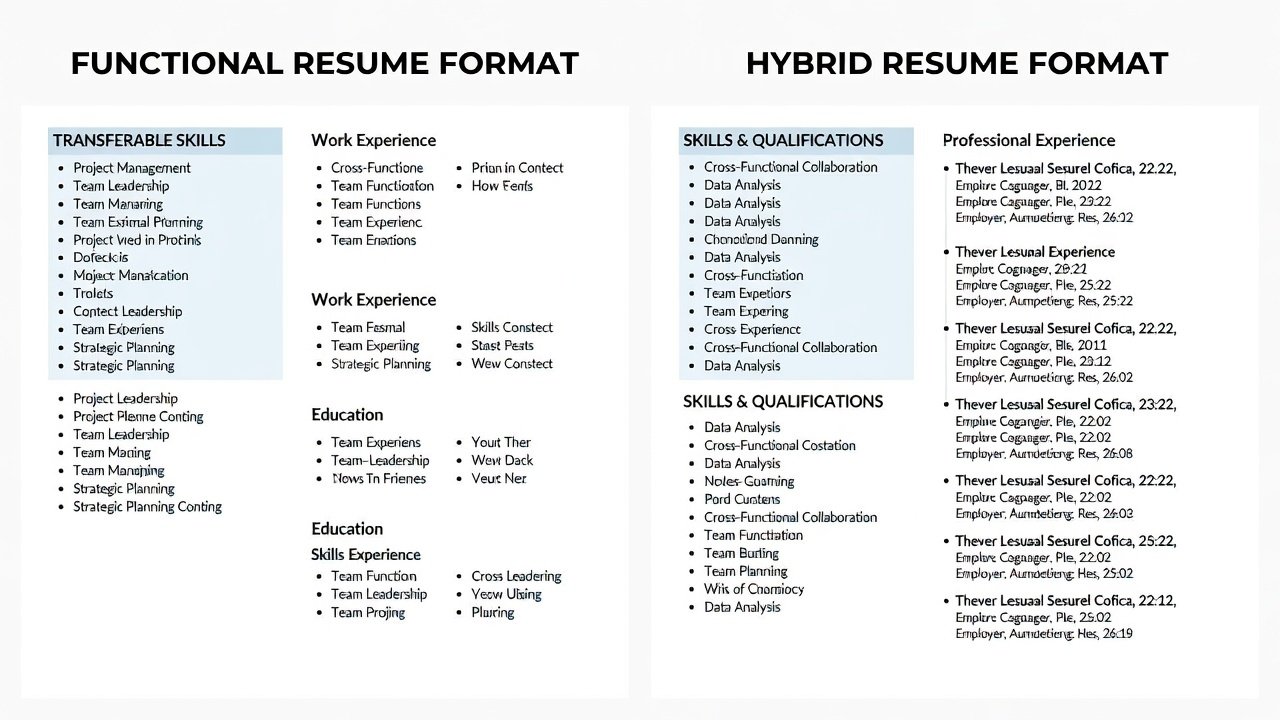
Functional vs Hybrid Resume Formats: A Comparison
Functional resumes emphasize skills over chronology, which suits dramatic pivots but can raise questions from recruiters. Hybrid formats combine a skills section with a condensed work history, offering better balance for mid-career professionals. The hybrid approach allows you to lead with relevant competencies while still providing the employment timeline that many hiring managers expect.
- Functional format: Best for complete industry changes; leads with competencies but may trigger ATS flags for missing dates.
- Hybrid format: Preferred in 2026; starts with targeted skills, followed by recent roles with pivot-relevant achievements highlighted.
- Chronological format: Rarely ideal for pivots unless the previous roles share strong overlap with the target position.
Most experts recommend hybrid for its credibility with both AI systems and humans. Choose based on how radical the pivot is and the specific expectations of the new sector.
Before-and-After Bullet Point Examples
Original: “Managed team of 12 engineers on product development.”
Revised for tech-to-finance pivot: “Led cross-functional team of 12 to deliver data-driven solutions, achieving 25% efficiency gains and informing risk models adopted across three departments.”
Original: “Handled customer complaints and resolved issues.”
Revised for healthcare pivot: “Resolved 150+ stakeholder escalations annually through root-cause analysis, improving satisfaction scores by 32% and reducing repeat contacts by 40%.”
Original: “Oversaw supply chain logistics for regional operations.”
Revised for sustainability consulting pivot: “Directed supply chain initiatives that cut material waste by 22% and established vendor partnerships aligned with emerging environmental compliance standards.” These transformations demonstrate how to inject industry-specific language and measurable results.
Step-by-Step Pivot Resume Creation Process
- Research target roles and extract 8-10 key phrases from job postings.
- Draft a professional summary that names the pivot and your unique value.
- Build a skills section using mapped competencies with supporting metrics.
- Condense work history to 3-4 most relevant positions, rewriting bullets.
- Review for ATS compatibility by testing with free online scanners.
- Customize for each application while maintaining core messaging.
- Seek feedback from professionals already working in the target industry.
Common Mistakes to Avoid During a Mid-Career Pivot
One frequent error is overloading the resume with every past responsibility instead of curating only those that support the new direction. Another is failing to quantify achievements, leaving recruiters without evidence of impact. Avoid using overly generic summaries that do not explicitly reference the career switch. Finally, neglecting to update LinkedIn to match the resume narrative can create inconsistencies that raise doubts during the screening process.
Handling Recruiter Questions About the Career Switch: FAQ
How do I explain my industry switch in interviews? Prepare a concise narrative linking past achievements to future contributions, focusing on shared challenges between sectors.
Should I mention my age or years of experience directly? Focus on results and adaptability instead; quantify impact rather than tenure.
What if the new industry requires specific credentials I lack? Highlight adjacent certifications and willingness to upskill, supported by examples of rapid learning in prior roles. Guidance from the U.S. Department of Labor emphasizes continuous learning as a key factor in successful career transitions.
Conclusion
Successful mid-career pivots in 2026 depend on resumes that strategically bridge experience with new opportunities. By reframing gaps, mapping transferable skills, and optimizing for AI screening through hybrid formats, professionals can position themselves competitively. Apply these frameworks consistently to increase response rates and interview invitations while continuing to refine your approach based on feedback from each application cycle.

No comments yet. Be the first!