 Jobboy

Introduction: Why Transferable Skills Matter in 2026 Career Transitions
Mid-career professionals pivoting industries face a common challenge: how to present past experience in a way that resonates with new employers. In 2026, hiring managers prioritize adaptability, and resumes that effectively showcase transferable skills stand out. This guide provides fresh, example-driven strategies to map your core competencies to target roles, reframe achievements, and optimize for applicant tracking systems (ATS). Whether shifting from education to corporate training or healthcare to tech project management, the right resume structure can boost interview rates significantly. We'll cover identification of skills, before-and-after examples, common pitfalls, and more. The focus remains on delivering concrete, actionable advice that helps you translate years of experience into compelling narratives for entirely new fields.
Understanding the current job market dynamics is essential. Many industries now value versatile professionals who can bring proven problem-solving abilities from unrelated sectors. By emphasizing transferable skills such as leadership, analytical thinking, and stakeholder management, you position yourself as an asset rather than an outsider. This approach not only improves ATS compatibility but also captures recruiter attention during the initial six-second scan that most resumes receive.
Step-by-Step: Identifying Your Core Transferable Competencies
Start by auditing your professional history. List daily responsibilities and achievements from the past 5–10 years. Categorize them into universal skill areas such as leadership, data analysis, stakeholder communication, process improvement, and project coordination. Tools like skills inventories from government career sites can help validate these mappings. For example, visit O*NET Online to explore detailed occupational profiles and identify overlapping competencies across industries.
Next, research target job descriptions. Note recurring keywords and match them to your background. For instance, a former teacher’s classroom management experience translates directly to team leadership in sales or operations roles. Break this process into actionable phases: first, extract 10–15 key phrases from five to ten ideal job postings; second, cross-reference each phrase against your work history; third, select the strongest three to five matches for prominent placement on your resume. This methodical approach ensures your document speaks the language of the new industry while remaining authentic to your achievements.
Reframing Past Achievements with Action Verbs and Metrics
Replace vague statements with powerful action verbs like “orchestrated,” “streamlined,” and “negotiated.” Always quantify results where possible. Instead of “managed a team,” write “orchestrated a 12-person cross-functional team that delivered projects 25% ahead of schedule.” This approach demonstrates impact rather than duties, making your background compelling to new industries. Expand each bullet by including context about the challenge faced, the actions taken, and the measurable outcome achieved. Over the next several paragraphs we will explore specific techniques for different career paths.
When reframing, consider the perspective of the hiring manager in your target field. They want to see how your past results solve their current problems. Incorporate industry-neutral metrics such as percentage improvements, dollar amounts saved, or time efficiencies gained. If exact numbers are unavailable, use reasonable estimates supported by context, such as “approximately doubled engagement rates through targeted outreach initiatives.”
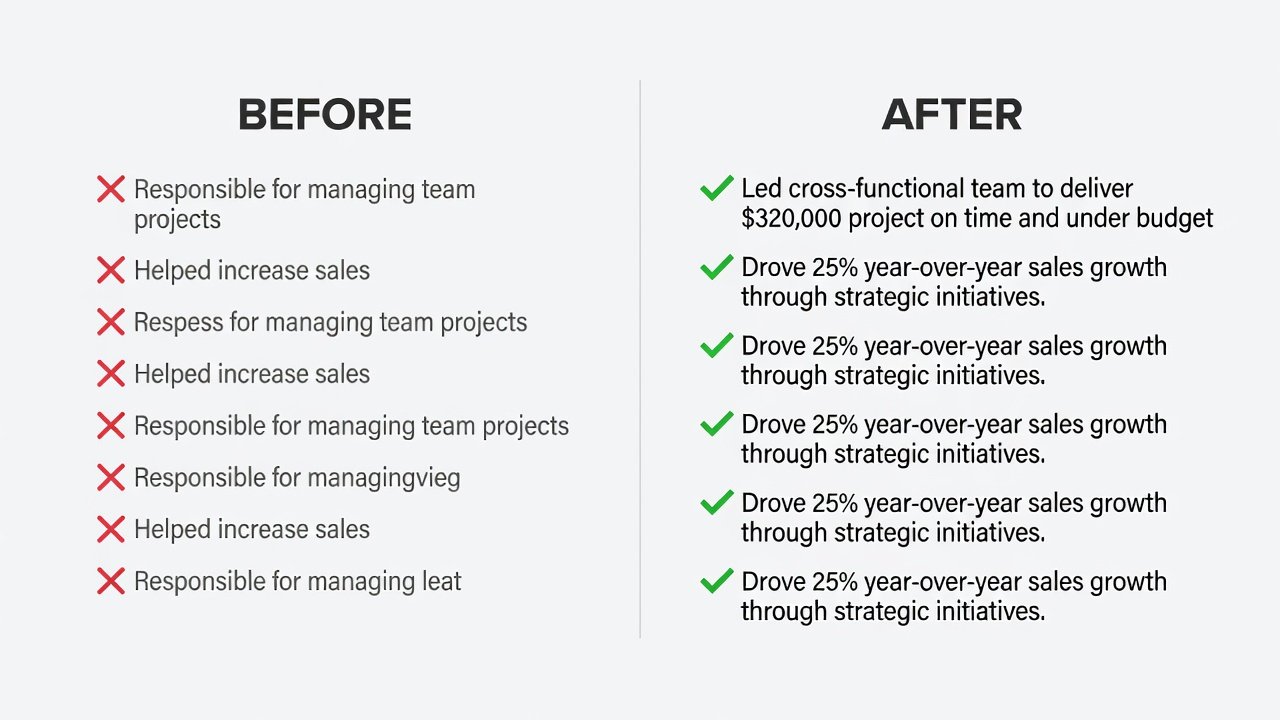
Side-by-Side Resume Bullet Point Examples
Here are concrete before-and-after transformations for a professional moving from retail management to supply chain coordination:
- Before: Responsible for inventory and staff scheduling.
- After: Optimized inventory forecasting models that reduced stockouts by 18% while managing schedules for 45 employees across three locations, resulting in a 12% reduction in overtime costs.
Another example for a marketing professional entering nonprofit development:
- Before: Created social media campaigns.
- After: Designed multi-channel campaigns that increased donor engagement by 42% and secured $320,000 in new funding commitments over an 18-month period.
A third transformation for someone moving from healthcare administration to corporate operations:
- Before: Coordinated patient scheduling and billing processes.
- After: Streamlined scheduling workflows and billing reconciliation procedures that improved on-time payment rates by 31% and reduced administrative backlogs from six weeks to ten days.
ATS Optimization Techniques for 2026
Modern ATS platforms favor clean formatting and keyword alignment. Use standard section headings such as “Professional Experience” and “Skills.” Incorporate exact phrases from job postings naturally. Avoid tables, graphics, or unusual fonts that parsing software may reject. Test your resume with free ATS simulators before submission. Additional best practices include saving the file as a .docx or PDF (depending on the employer’s preference), using 10–12 point fonts, and ensuring contact information appears at the top in a standard layout. Resources such as CareerOneStop offer free resume builders and keyword tools tailored to current market needs.
Common Pitfalls in Skill Translation and How to Avoid Them
Many candidates overstate or understate transferable skills. Avoid industry jargon from your old field that new employers won’t recognize. Another frequent error is listing skills without context—always tie them to measurable outcomes. Finally, neglecting gaps in employment can raise red flags; briefly address them in your cover letter with a forward-looking statement. Additional pitfalls include using generic objective statements instead of a targeted professional summary, failing to customize each resume for the specific role, and overloading the document with every past responsibility rather than prioritizing relevance. To avoid these issues, have a trusted colleague from your target industry review your draft and provide feedback on clarity and impact.
Integrating Your Resume with Targeted Cover Letters
A strong cover letter bridges the gap between your past and the new role. Open with a clear career pivot statement, then dedicate one paragraph to three key transferable skills supported by resume examples. Close with enthusiasm for the target industry. This combination increases response rates when paired with an optimized resume. Expand the letter to two or three paragraphs that directly reference specific achievements from your resume, demonstrating how those accomplishments will translate to success in the new position. Always address the letter to a named hiring manager when possible.
Industry-Specific Case Studies
Case Study 1: Education to Corporate L&D – A former high school principal highlighted curriculum design and staff training, landing a senior learning and development role at a Fortune 500 company. The resume emphasized facilitation of professional development workshops attended by over 200 educators annually.
Case Study 2: Hospitality to SaaS Customer Success – A hotel manager reframed guest relations and conflict resolution into client retention metrics, securing interviews at three tech startups. Key bullets focused on achieving 94% guest satisfaction scores through proactive service recovery protocols.
Case Study 3: Manufacturing to Data Analytics – A production supervisor translated process improvement experience into data-driven decision making, resulting in a junior analyst position after completing targeted online certifications and showcasing dashboard projects in the resume portfolio section.
Practical Steps to Update Your Resume in 2026
Begin with a master document containing every role and achievement. Then create role-specific versions by selecting the most relevant 10–12 bullet points. Update your LinkedIn profile to mirror the resume language. Schedule informational interviews with professionals in your target field to refine terminology. Finally, track application outcomes in a simple spreadsheet so you can iterate quickly on what resonates with recruiters.
Frequently Asked Questions
How do I explain employment gaps? Frame gaps as periods of skill development, such as freelance projects or online certifications relevant to your new field.
Should I include a skills section? Yes—create a dedicated “Core Competencies” section at the top that lists 8–12 transferable skills matched to the job description.
How long should my resume be? Keep it to two pages maximum, focusing on the most recent and relevant 10–15 years of experience.
Is it okay to use a functional resume format? Hybrid formats that combine skills summaries with chronological experience tend to perform best for career changers in 2026.
Conclusion
Successfully showcasing transferable skills requires deliberate reframing, strong metrics, and ATS-friendly formatting. By applying the examples and techniques above, 2026 career changers can position themselves as strong contenders in new industries. Download professional templates from reputable career resources and tailor each application for maximum impact. Consistent application of these strategies, combined with targeted networking, significantly improves your chances of securing interviews and ultimately landing the role you want.

No comments yet. Be the first!