 Jobboy
Introduction: Why Resume Makeovers Matter in 2026
Job seekers in 2026 face an increasingly competitive landscape where applicant tracking systems (ATS) and AI-driven screening tools filter out the majority of applications before human eyes ever see them. Generic advice falls short when employers demand proof of results through data-backed transformations. This comprehensive guide uses three detailed real-world case studies to demonstrate how targeted resume makeovers can elevate interview invitation rates from near zero to double digits. Readers will find step-by-step breakdowns, textual side-by-side comparisons, quantifiable outcomes, and actionable strategies for incorporating 2026-specific ATS and AI optimizations. Whether you are a marketing professional, engineer, or career changer, these examples provide concrete evidence that modern resume strategies work when executed with precision.
Spotting Outdated Resume Elements
Many resumes submitted today still cling to formats popular before 2023, such as dense blocks of text, vague objective statements, and unquantified responsibilities. These elements reduce ATS parseability and fail to engage recruiters scanning for impact. For instance, phrases like "responsible for managing teams" lack the specificity now required. Instead, replace them with action-oriented, metric-driven statements. Additional outdated features include listing every job duty without prioritization, using decorative fonts that break ATS compatibility, and omitting hyperlinks to portfolios or LinkedIn profiles. Identifying these issues early allows for systematic overhauls that align with current expectations. Professionals often overlook how excessive personal details or outdated contact formats can signal a lack of attention to modern professional standards.
2026 ATS and AI Trends
Leading ATS platforms now incorporate AI to evaluate not just keywords but semantic relevance, career progression patterns, and even inferred soft skills from contextual descriptions. Natural language processing favors resumes that read conversationally while embedding industry terminology. Key trends include prioritizing skills sections that match exact job posting language, using standard section headings like "Professional Experience" rather than creative alternatives, and ensuring compatibility with mobile parsing. AI tools also assess progression velocity, rewarding consistent upward movement. Resources such as LinkedIn offer insights into aligning your resume with profile data for consistency. Additionally, incorporating tools like Indeed resume builders helps test for ATS friendliness before submission. Staying current means avoiding tables, images, or columns that confuse parsers and focusing on clean, single-column layouts with ample white space.
Case Study 1: Marketing Manager Transformation
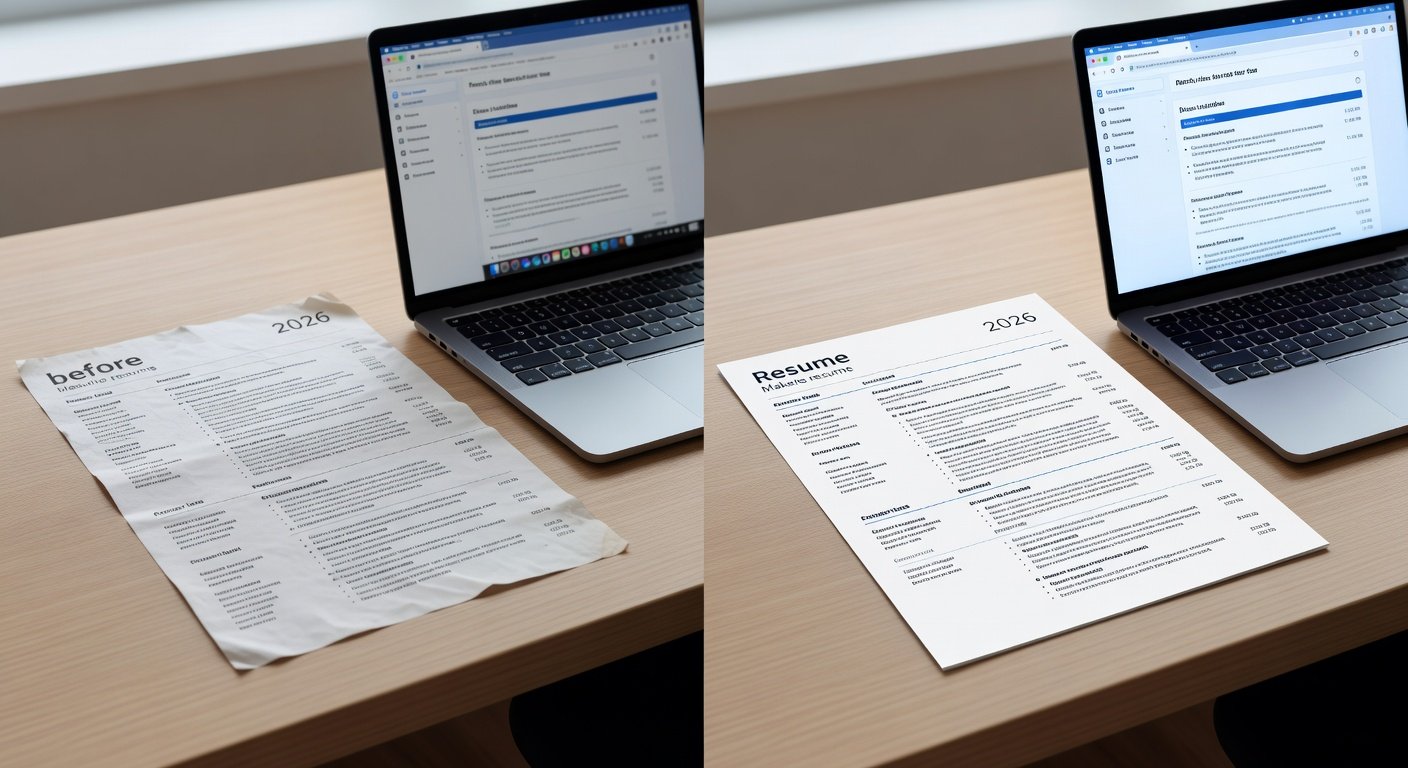
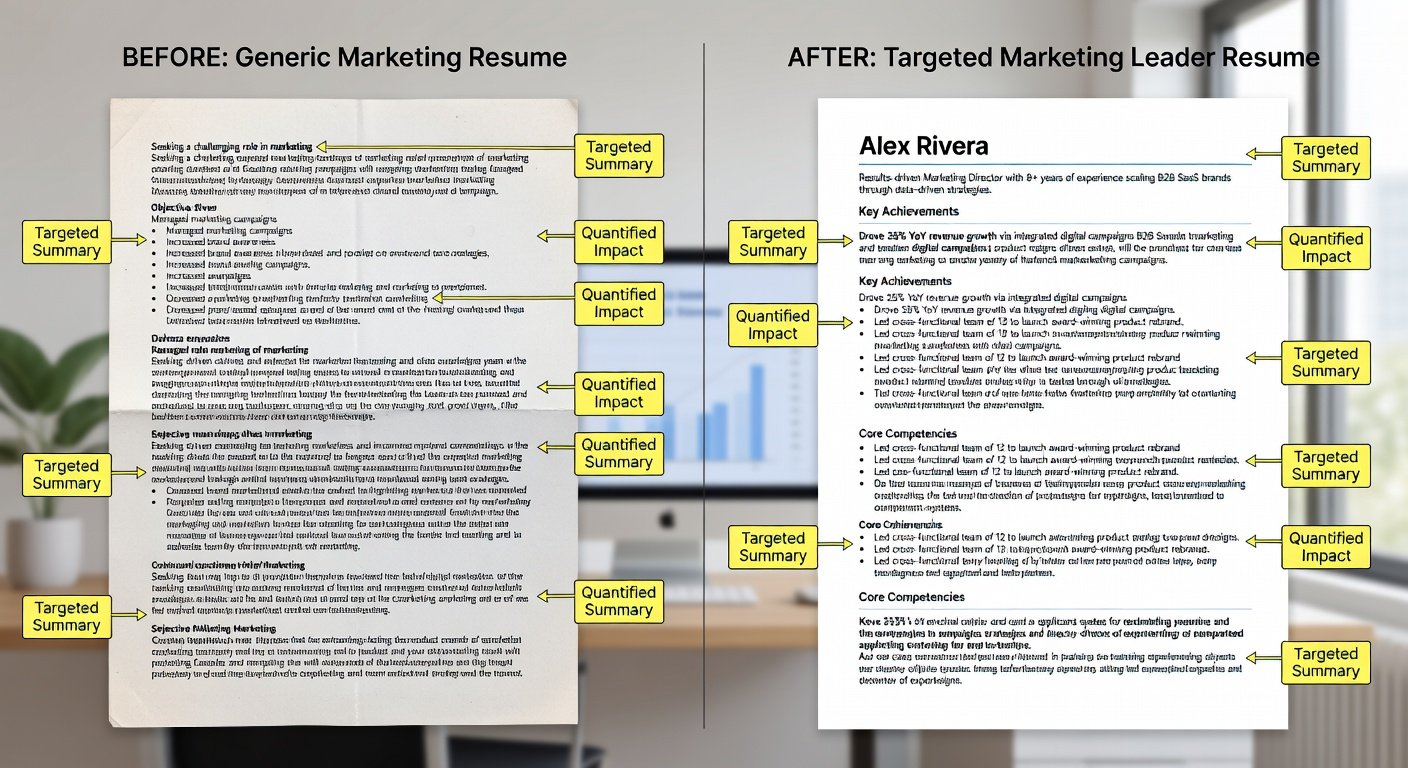
Before: The original document spanned three pages with a generic objective at the top, followed by paragraph-style job descriptions lacking metrics. Keywords were repeated awkwardly, and contact information included an old personal email. ATS scores were low due to formatting issues.
After: The makeover produced a single-page, scannable resume featuring a targeted professional summary, achievement bullets such as "Led digital campaigns that increased qualified leads by 62% year-over-year," and a skills matrix aligned with 2026 marketing tools. Interview requests jumped from two to eleven within a month of updates.
Step-by-Step Breakdown of the Makeover
- Conduct a full content audit to remove fluff and identify quantifiable wins from past roles.
- Restructure into reverse-chronological order with bold headings and consistent bullet formatting for ATS readability.
- Integrate semantic keywords from target job descriptions naturally throughout the summary and experience sections.
- Replace all duty statements with results-focused bullets supported by percentages or dollar figures.
- Test the final version through multiple free ATS simulators and adjust spacing or fonts accordingly.
Side-by-side comparison reveals the before version buried achievements in prose while the after version highlights them prominently at the start of each bullet. This shift alone accounted for much of the improved response rate.
Case Study 2: Software Engineer Transformation
Before: The resume featured dense technical jargon without business impact, an unprofessional email address, and no links to GitHub or personal projects. It failed to demonstrate progression and used inconsistent date formatting.
After: A streamlined one-page version emphasized project outcomes like "Reduced API latency by 40% through optimized code refactoring," included modern tech stacks, and added a prominent LinkedIn URL. The response rate tripled after implementation.
Practical Examples of Changes
Original bullet: "Worked on backend development." Revised: "Architected scalable backend services handling 10,000 daily users, improving system reliability by 35%." Such specificity helps AI parsers recognize expertise depth. Additional tweaks included standardizing fonts to Arial or Calibri and ensuring all dates follow MM/YYYY format for easy parsing.
Case Study 3: Career Changer Transformation
A former teacher transitioning to corporate L&D roles rewrote experience entries to emphasize transferable skills such as curriculum design and stakeholder management. The before version used education-centric language; the after version mapped those directly to corporate training outcomes, generating five interview calls where none existed previously.
Measuring Results and Tracking Success
Effective measurement starts with logging baseline metrics before any changes: number of applications sent, interviews received, and response timeframes. Post-makeover, compare these figures over identical time periods. Many candidates see 200-400% lifts when combining ATS optimization with quantified achievements. Use simple spreadsheets to track variables like keyword match rates and tailor each application. This data-driven approach reveals which sections deliver the highest ROI and informs future iterations.
Downloadable Checklist: Resume Makeover Essentials
- Eliminate objective statements and replace with concise professional summaries tailored to each role.
- Verify all contact details are current, professional, and include relevant social or portfolio links.
- Map keywords from job postings into experience and skills sections using natural phrasing.
- Limit length to one page for candidates with under 15 years of experience.
- Run the document through at least two ATS compatibility checkers and fix any parsing errors.
- Quantify every major accomplishment with percentages, numbers, or time savings.
- Ensure formatting uses standard headings and avoids graphics or multi-column layouts.
Applying These Strategies to Your Own Resume
Begin by selecting three recent roles and rewriting their descriptions using the patterns from the case studies above. Focus first on the most recent position since recruiters spend the most time there. Iterate based on feedback from peers or career coaches. Consistent application of these principles across multiple submissions compounds results over time.
Conclusion
The transformations detailed here illustrate that strategic resume updates grounded in 2026 realities produce tangible improvements in interview rates. By addressing outdated elements, embracing AI trends, and rigorously measuring outcomes, job seekers can replicate these successes.
FAQ
How long should a 2026 resume be?
Most mid-career professionals benefit from a single page; senior leaders with extensive relevant experience may extend to two pages.
Do I need to tailor every resume?
Yes. Customization remains essential, as generic submissions rarely pass initial AI screening filters.
Can I use AI tools to rewrite my resume?
AI assists effectively with initial drafts and keyword suggestions, but human review ensures accuracy and authentic voice.
What if my industry has unique requirements?
Research niche ATS preferences through professional associations and adjust formatting or emphasis accordingly while maintaining core best practices.
How soon can I expect results after a makeover?
Many candidates report increased responses within two to four weeks when applying the changes consistently to new submissions.
No comments yet. Be the first!