 Jobboy
Introduction: Why Resume Length Still Matters in 2026
Mid-career professionals often receive conflicting advice about resume length, especially in the ATS era. Hiring data from 2026 shows that recruiters spend an average of 7.4 seconds on initial scans, making strategic length decisions critical for both human readability and automated scoring. This guide debunks the top five myths with real examples, recruiter perspectives, and actionable steps to condense content without losing impact. Understanding these nuances helps candidates present their career stories effectively while navigating automated screening tools that dominate modern hiring processes.
Many job seekers struggle because outdated rules from previous decades clash with current practices. For instance, while some hiring managers still cling to one-page mandates, data indicates flexibility based on experience level and industry. By focusing on relevance and impact, professionals can create resumes that pass both algorithmic checks and human reviews. Throughout this article we will explore practical before-and-after transformations and incorporate guidance drawn from leading career resources such as Indeed and LinkedIn.
Myth 1: One Page Is Always Required
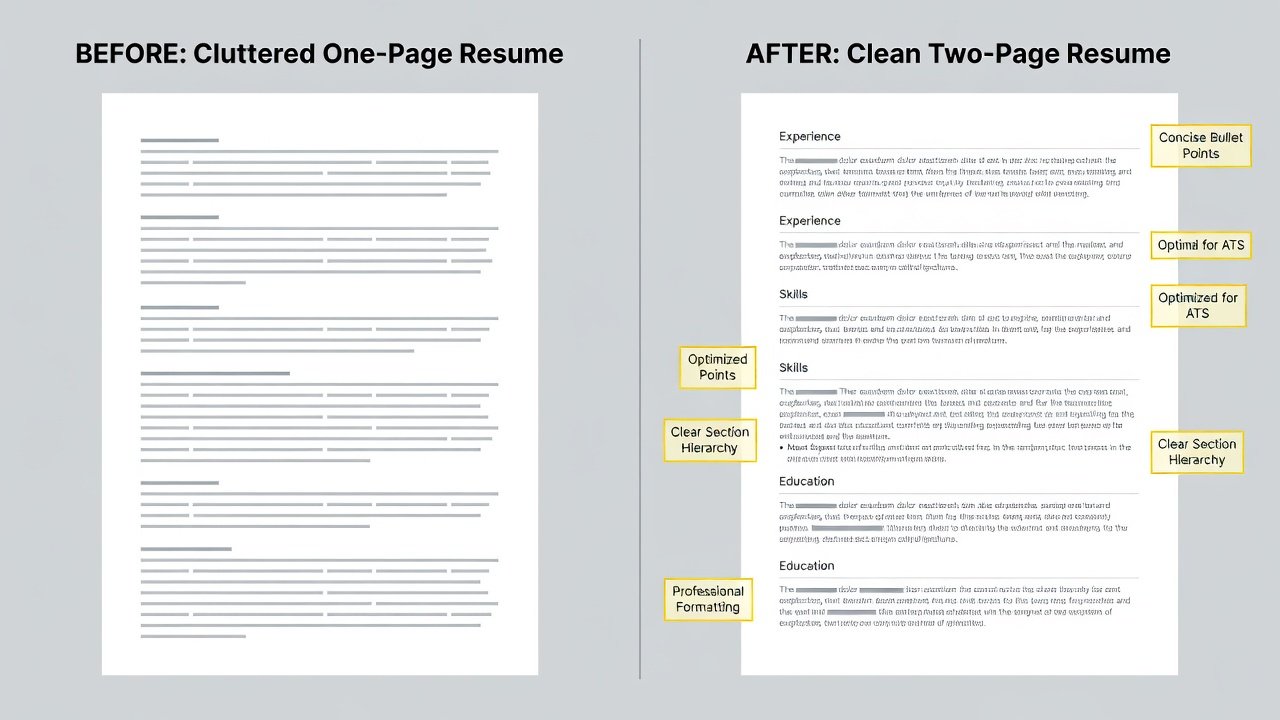
Many applicants still believe a single page is mandatory. In reality, 2026 recruiter surveys indicate that 68% prefer two pages for candidates with 10+ years of experience when the content demonstrates clear value. Before: A cluttered one-page resume listing every role since 2008 with tiny fonts and crammed bullets that made it hard to read. After: A two-page version that expands achievements in the last decade while summarizing earlier roles in a concise "Earlier Experience" section. This approach allows space for quantifiable results like revenue growth or team leadership without sacrificing clarity. Recruiter quote: "We value substance over arbitrary limits," says Sarah Kline, senior talent acquisition lead at a Fortune 500 firm. Another hiring manager noted that forcing everything onto one page often leads to omitted accomplishments that could differentiate a candidate.
Myth 2: ATS Systems Penalize Longer Resumes
Modern ATS platforms parse two-page documents effectively when formatting is clean. Problems arise from tables, graphics, or excessive keywords rather than length itself. Use standard fonts like Arial or Calibri at 10-12pt and standard margins of 0.7 inches to maintain high scan scores. In 2026, major ATS providers have improved their algorithms to handle multi-page submissions from experienced professionals, provided the document uses simple structures. Test your resume by uploading it to free online parsers recommended on career sites. Avoid headers, footers, or columns that can confuse the system and lower your match rate.
Myth 3: Every Job Needs Equal Space
Focus on relevance. Allocate more real estate to positions from the past 10-15 years. Earlier roles can be condensed to title, company, and one bullet highlighting transferable skills. For example, a marketing manager with 18 years experience might detail the most recent three roles across one full page while summarizing the first decade in three short lines. This strategy emphasizes progression and recent impact, which recruiters prioritize during quick scans. Practical tip: review each bullet and ask whether it supports the target job description directly.
Myth 4: Quantifiable Achievements Require Extra Lines
Strong metrics can be powerful in one or two lines. Example transformation: "Managed team of 12 and increased revenue by 34% year-over-year through strategic process improvements" stays impactful without filler. Another before-and-after: Original bullet read "Led multiple projects and handled client communications daily." Revised version: "Directed 8 cross-functional projects resulting in 22% client retention improvement within six months." The key is selecting the strongest data points and eliminating weak verbs or vague descriptions that dilute your message.
Myth 5: Industry Norms Never Change
Tech and creative fields often favor concise one-page resumes, while academia, government, and executive roles accept three pages. Always research the target sector by reviewing sample resumes on professional networks. In 2026, hybrid roles blending technical and leadership skills increasingly accept two-page formats when candidates show both depth and breadth. Staying updated through resources like SHRM ensures your length choice aligns with evolving expectations.
Step-by-Step Guide to Condensing Your Resume
- Audit every bullet: Ask if it proves impact or merely describes duties. Remove any that repeat information from previous roles.
- Combine similar roles: Merge overlapping responsibilities into stronger statements that showcase cumulative achievements across positions.
- Use strong action verbs and remove redundant phrases like "responsible for" or "duties included." Replace with direct verbs such as "spearheaded" or "optimized."
- Limit education details to degree, institution, and graduation year unless recent or highly relevant. Add certifications only if they directly support the role.
- Move ancillary sections like references or hobbies to a separate document or LinkedIn profile. Keep the resume focused on professional accomplishments.
- Trim contact information to essentials: name, phone, email, LinkedIn URL, and location. Avoid full addresses that consume valuable space.
ATS-Friendly Formatting Tips
- Stick to one-column layouts without text boxes or images that can break parsing.
- Incorporate keywords naturally from the job description rather than stuffing them unnaturally.
- Save as .docx or PDF; test both for parsing accuracy using free tools available on major job boards.
- Include standard section headers: Professional Summary, Experience, Skills, Education. Use consistent formatting throughout.
- Ensure sufficient white space between sections so the document remains scannable for both humans and software.
Common Mistakes to Avoid
One frequent error is cramming too much information into narrow margins, which reduces readability. Another is failing to customize length per application, leading to generic submissions that score poorly. Professionals sometimes overlook industry-specific preferences, such as longer CVs in research fields versus concise versions in startups. Always proofread after condensing to catch any loss of critical details that could strengthen your candidacy.
Quick Checklist for Resume Length Decisions
- Under 10 years experience? Start with one page and expand only if achievements warrant more space.
- 10-15 years with relevant progression? Consider two pages to fully showcase recent accomplishments.
- Executive or academic roles? Two to three pages acceptable when including publications or major projects.
- Review for white space: Too much suggests insufficient content; too little reduces readability and scan scores.
- Run through an ATS simulator before submitting and adjust based on feedback.
- Seek peer review from mentors in your target industry for length appropriateness.
FAQ: One-Page vs Two-Page Debates
How many pages should a mid-career professional use?
Two pages work best when achievements from the past decade justify the space. One page suffices if experience is narrower or the target role emphasizes brevity. Evaluate based on the number of strong, relevant accomplishments you can highlight.
Does a two-page resume reduce interview chances?
Not when content is relevant. Recruiters report higher callback rates for well-structured two-page documents that tell a clear career story. The deciding factor remains quality over quantity.
What if the job posting specifies "one page only"?
Follow the instruction strictly. Customize aggressively by removing older or less relevant roles and focusing solely on the most recent and applicable experience.
Can older professionals use three pages?
Yes in fields like academia or government contracting where detailed project histories add value. For corporate roles, two pages remain the safer maximum unless the posting indicates otherwise.
Conclusion
Resume length in 2026 is about strategic clarity rather than rigid rules. By debunking these myths and applying the practical steps above, mid-career professionals can create documents that satisfy both ATS algorithms and human recruiters. Focus on impact, relevance, and clean formatting to maximize opportunities and stand out in competitive applicant pools.
No comments yet. Be the first!