 Jobboy
Introduction: Why Quantifying Transferable Skills Matters in 2026
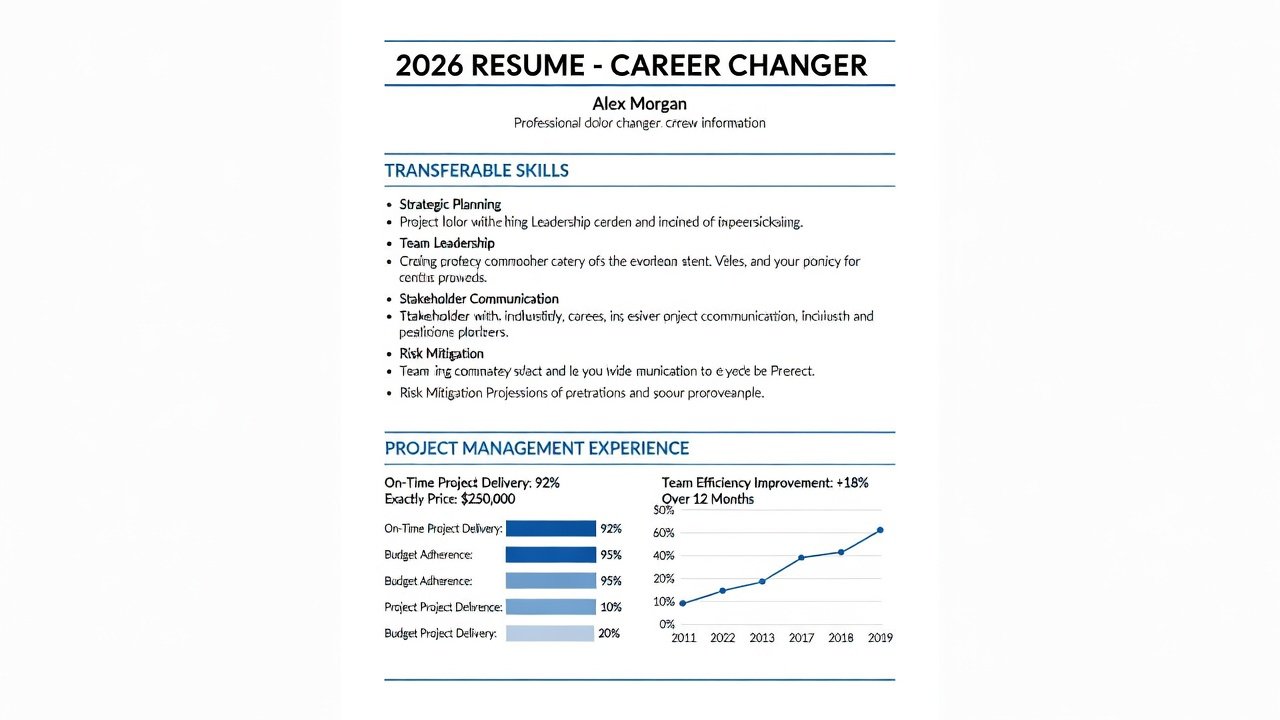
Career changers in 2026 face a competitive job market where recruiters scan resumes in seconds. Highlighting transferable skills such as project management or client relations becomes powerful only when backed by numbers. This approach transforms vague statements into compelling evidence of value, helping mid-career professionals pivot successfully into new industries. In today's evolving economy, employers seek candidates who can demonstrate immediate impact rather than simply listing past duties.
Quantification demonstrates impact rather than duties. It aligns prior experience with new roles, improves ATS compatibility, and captures recruiter attention. The following sections provide practical techniques, examples, and templates tailored for 2026 resumes. Whether you are moving from education to corporate training or from retail management to operations, these strategies help bridge the gap effectively.
Reframing Techniques for Transferable Skills
Reframing starts by identifying core competencies from your previous field and mapping them to target job requirements. For example, a teacher transitioning to corporate training can reframe classroom management as project coordination. Focus on outcomes: instead of "managed a team," write "led cross-functional teams to deliver projects 20% ahead of schedule." This method requires analyzing job postings in your target field to extract key phrases and responsibilities.
Use industry language from the new sector. Review job descriptions for keywords like "stakeholder engagement" or "process optimization," then adapt your history accordingly. This technique bridges gaps without fabricating experience. Additional reframing involves categorizing skills into buckets such as leadership, communication, and analytical abilities. A sales professional pivoting to project management might highlight client negotiations as stakeholder management, complete with metrics on deal closures or satisfaction improvements. Practicing this reframing through multiple drafts ensures the resume feels authentic and targeted.
ATS Optimization with Metrics
Applicant Tracking Systems prioritize resumes containing measurable achievements and relevant keywords. Incorporate numbers such as percentages, dollar amounts, or time savings. Place metrics near the top of bullet points for maximum visibility. Tools like standard fonts and standard section headings further boost parsing accuracy. Research from labor statistics indicates that resumes with embedded metrics pass initial screening more often than those relying on qualitative descriptions alone.
Studies from labor market resources show that quantified resumes receive more interview requests. Spread keywords naturally throughout experience sections while maintaining readability for human reviewers. Consider integrating tools like keyword analyzers to match your content against specific postings. In 2026, many ATS platforms have advanced to evaluate context around numbers, so pairing metrics with strong action verbs enhances both machine and human evaluation.
STAR-Based Bullet Points with Before-and-After Examples
The STAR method (Situation, Task, Action, Result) structures powerful bullets. Always end with a quantifiable result. This framework helps career changers present stories that resonate across industries.
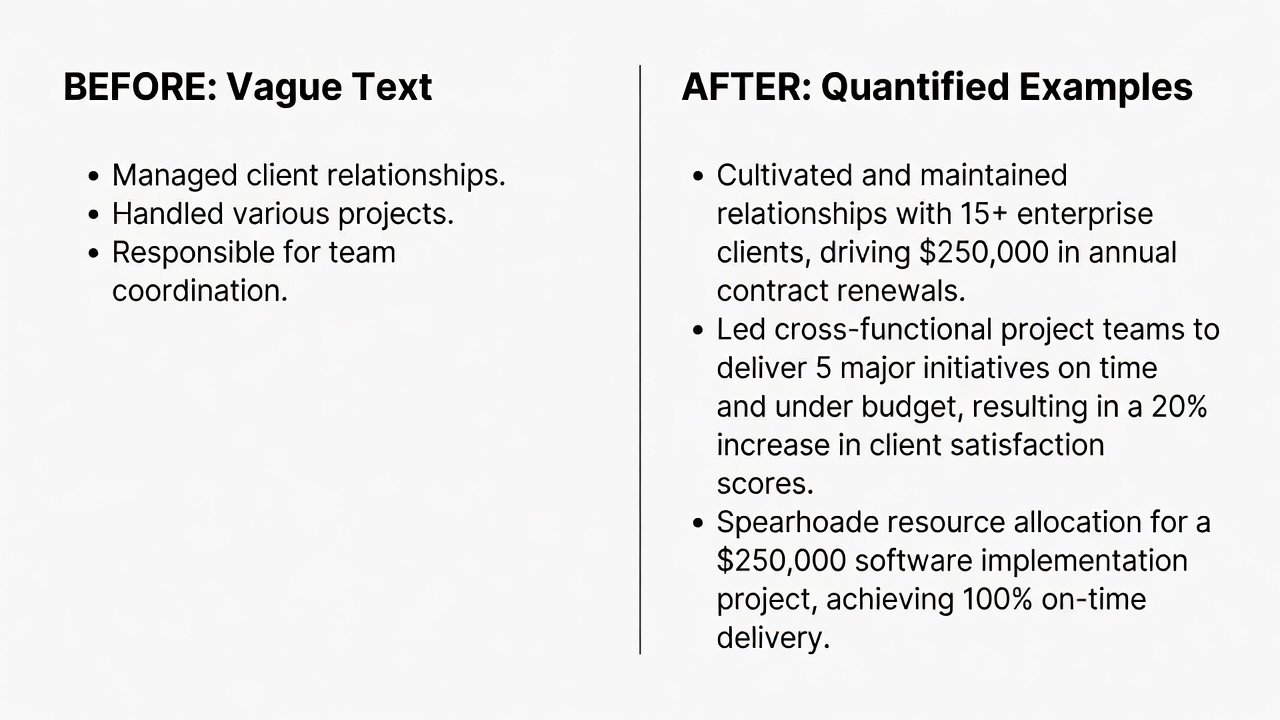
Before: Managed client accounts and handled relations.
After: Managed 15 enterprise client accounts, resolving 95% of issues within 48 hours and increasing retention by 30% through proactive outreach strategies.
Before: Oversaw projects in education sector.
After: Directed 8 concurrent projects with budgets totaling $250,000, delivering all on time and achieving 40% cost reduction via streamlined workflows.
Additional examples include a hospitality manager shifting to event planning: Before - Coordinated events. After - Orchestrated 25+ events annually serving 1,200 attendees, boosting repeat bookings by 45% through enhanced feedback loops. Apply this to project management and client relations examples across industries for maximum relevance.
Step-by-Step Quantification Checklist
- Identify 3-5 key achievements from each role by reviewing performance reviews and project logs.
- Attach numbers: revenue generated, time saved, team size led, or error rates reduced, using data from past records.
- Convert duties into results using action verbs such as "accelerated," "optimized," or "streamlined."
- Align metrics to target role keywords found in job descriptions.
- Verify data accuracy with past performance records or supervisor confirmations.
- Test for ATS by running the resume through free online scanners available on major career platforms.
- Iterate by seeking feedback from mentors in the target industry.
Recruiter Insights on Measurable Impact
Recruiters emphasize that numbers create instant credibility. They report scanning for specific outcomes like "increased sales by 25%" over generic responsibilities. For career changers, linking past metrics to future goals signals adaptability. Focus on the last 5-10 years of experience to keep resumes concise yet impactful. Insights from hiring professionals highlight that mid-career pivots succeed when candidates show how previous results translate, such as using client retention data to prove relationship-building prowess in a new sector. Bureau of Labor Statistics data underscores the value of demonstrated results in competitive fields.
Common Pitfalls to Avoid
- Using percentages without context or baseline comparisons, which can confuse readers.
- Overloading bullets with too many metrics, diluting focus and readability.
- Ignoring employment gaps instead of framing them with skill-building activities that produced results.
- Failing to customize for each application, leading to generic content that ATS systems flag.
- Relying solely on internal company metrics without translating them to industry standards.
Templates for Mid-Career Pivots
Professional Summary Template: "Results-driven professional with 12 years in [prior field], specializing in [transferable skill]. Proven track record of [quantified achievement], now seeking to leverage expertise in [new industry] to drive [specific outcome]."
Experience Section Template: "[Job Title] | Company | Dates
• Led [action] resulting in [metric] improvement for [stakeholder group]
• Collaborated with [stakeholders] to achieve [specific outcome] while managing [resource constraint]"
Additional templates cover skills sections where you list quantified versions like "Project Management: Delivered 12 initiatives with average 22% efficiency gains."
Handling Employment Gaps with Measurable Results
Employment gaps require strategic framing. Instead of omitting periods, highlight freelance work, volunteering, or certifications that generated tangible outcomes. For instance, during a gap, "Developed online community initiative generating 500 new engagements and 15% referral growth." This keeps the focus on results. Combine this with skills gained through online courses or personal projects that align with the target role.
Conclusion
Quantifying transferable skills equips 2026 career changers with resumes that stand out. By applying reframing, STAR methods, and the checklist above, professionals demonstrate clear value and accelerate their pivots. Consistent practice with these techniques leads to stronger applications and better interview outcomes.
FAQs
How do I handle employment gaps while emphasizing results?
Frame gaps with freelance projects, volunteering, or upskilling that produced measurable outcomes, such as "Developed community initiative generating 500 new engagements and improved local participation rates."
What metrics work best for client relations?
Focus on retention rates, satisfaction scores, revenue influenced, or resolution times, always tying them to business goals.
Can I use the same quantified examples across applications?
Customize metrics to match each job's priorities for stronger relevance and ATS alignment, adjusting emphasis based on the role.
Which tools help with quantification?
Free resources from government career sites and Department of Labor portals offer templates and data benchmarks for accurate metric selection.

No comments yet. Be the first!