 Jobboy
Why Listing Publications Matters on Resumes in 2026
Publications demonstrate expertise, research skills, and thought leadership. In 2026, recruiters and hiring managers in academia, tech, consulting, and scientific fields scan resumes for evidence of original contributions. Strategic placement and formatting can boost visibility in applicant tracking systems (ATS) while impressing human readers. Publications signal that you have produced work that has been vetted by peers or industry experts, which can differentiate you in competitive job markets. For roles in research-heavy industries, they provide tangible proof of your ability to contribute to knowledge advancement. Employers increasingly value candidates who can translate complex ideas into published outputs, especially as remote and hybrid work models emphasize written communication skills.
Step-by-Step Guide to Listing Publications
Follow these steps to add publications effectively. First, gather all your publications and sort them by date. Second, select the most relevant ones for the target role. Third, choose a citation style matching your field. Fourth, format each entry with consistent elements: author names, title, publication venue, date, and identifier. Fifth, decide on placement. Sixth, proofread for accuracy and ATS compatibility. Seventh, tailor the list for each application by emphasizing works aligned with the job description.
Placement Options: Dedicated Section vs Integration into Experience
Choose placement based on your career stage and role. A dedicated "Publications" section works well when you have multiple relevant works. Integrate publications into your experience section when they directly tie to job responsibilities, such as a research project completed at a company. For early-career professionals, a short dedicated section at the bottom often suffices. Senior professionals may intersperse publications within achievement bullets to highlight impact. Consider a hybrid approach: use a dedicated section for academic applications and integrate for corporate ones. Pros of a dedicated section include easy scanning and emphasis on scholarly output. Cons include taking up valuable space if you have few entries. Integration keeps the resume concise but may bury important details.
ATS-Friendly Formatting and Citation Styles
ATS software parses text best when resumes use standard fonts like Arial or Calibri, size 10-12, and avoid tables or graphics. Use consistent citation styles: APA for social sciences, MLA for humanities, or Chicago for history. Always list entries in reverse chronological order. Include the full title, journal or publisher name, publication date, and DOI or URL when space allows. Example APA entry: Smith, J. A., & Lee, K. (2025). Machine learning applications in healthcare. Journal of Data Science, 42(3), 112-128. https://doi.org/10.1234/jds.2025.003. Avoid abbreviations that ATS might misread and use full journal names where possible. Test your resume by copying text into a plain document to verify parseability.
Learn APA guidelines from the official APA Style site. Review MLA formatting rules on the MLA website. Explore citation resources at Purdue OWL.
Real Examples Across Academia and Industry Roles
Academia Example (Dedicated Section):
Publications
Johnson, M. R. (2025). Climate policy impacts on urban development. Environmental Studies Quarterly, 18(2), 45-67.
Patel, S., & Johnson, M. R. (2024). Sustainable city planning models. Urban Affairs Review, 29(4), 201-225.
Industry Example (Integrated into Experience):
Research Scientist, TechCorp (2023–Present)
• Led team that published findings on AI ethics in IEEE Transactions on AI (2025), resulting in 3 new product features adopted company-wide.
Consulting Example: White paper on supply chain optimization published in Harvard Business Review (2025), cited in three client proposals that secured $2M in contracts.
Early-Career Example: List 1-3 peer-reviewed items plus conference posters under a "Selected Publications" heading. Include your thesis if it aligns with the role.
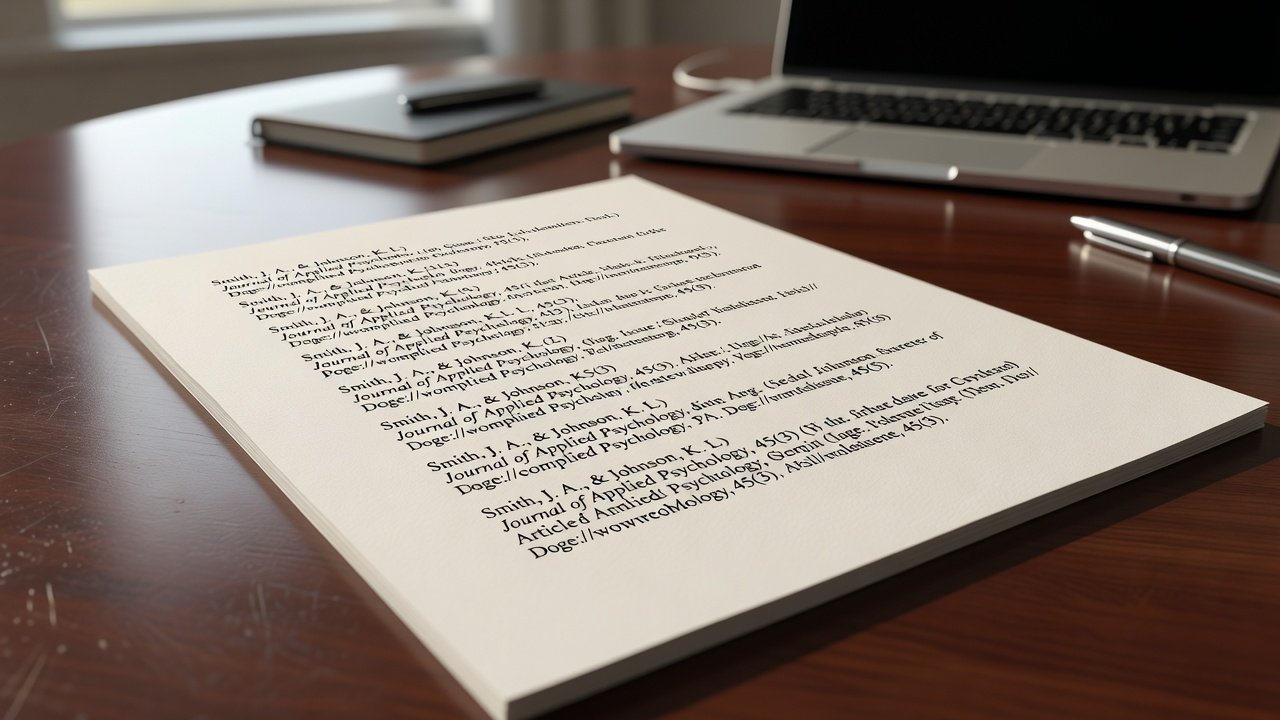
Healthcare Example: Clinical researcher listing PubMed-indexed articles with impact factors noted in parentheses for context.
Quantifying Impact and Handling Multiple Authors
Quantify where possible: "Publication cited 150 times (Google Scholar, as of October 2026)" or "Featured in top 10% of downloads for the journal." For multiple authors, list your name in bold or use "et al." after the first three names if space is limited. Always maintain consistency. If you are the corresponding author, note that explicitly. In team publications, clarify your contribution percentage or role in a parenthetical note when appropriate for the audience. This approach helps recruiters understand your specific input without ambiguity.
Access PubMed and citation tools via NCBI.
Early-Career vs Senior Professionals Comparison
- Early-Career: Prioritize quality over quantity. Focus on peer-reviewed journals and thesis work. Keep the section concise (3-5 entries). Highlight any student awards tied to publications.
- Senior Professionals: Emphasize high-impact journals, books, and invited chapters. Integrate into leadership achievements and consider a separate "Selected Publications" page for academic CVs. Include metrics like h-index or total citations to demonstrate sustained influence.
Common Pitfalls That Lower ATS Scores
- Using special characters or columns that ATS cannot parse.
- Inconsistent date formats (use Month Year or Year only).
- Omitting key details like journal name or DOI.
- Listing non-peer-reviewed blog posts without clear labeling.
- Exaggerating authorship roles.
- Overloading the resume with every publication instead of curating relevant ones.
- Using non-standard section headers that ATS may skip.
Quick Compliance Checklist
- Reverse chronological order
- Consistent citation style
- ATS-readable fonts and layout
- Quantified impact statements
- Clear author role indication
- Links to DOIs where possible
- Proofread for typos in titles
- Tailored to job description keywords
- Verified accuracy of all citations
Tools and Resources for Managing Citations
Use reference managers like Zotero or EndNote to export formatted entries directly. These tools help maintain consistency across multiple applications. Cross-check all entries against the original publication to avoid errors that could damage credibility during interviews.
FAQs
Should I include peer-reviewed journals only?
Prioritize peer-reviewed work for academic and research roles. For industry positions, include high-quality conference papers and white papers if they demonstrate relevant expertise.
How do I list online articles or blog posts?
Label them clearly under a separate "Online Publications" or "Thought Leadership" heading and focus on those with measurable reach, such as 10,000+ views.
What about pending submissions?
List as "Under Review" with the journal name and submission date. Never claim acceptance until confirmed.
Can I include publications from previous jobs?
Yes, but attribute them accurately and focus on those that showcase transferable skills relevant to the new position.
Conclusion
Strategic publication listing strengthens your resume in 2026 by showcasing credibility and results. Follow ATS best practices, choose the right placement, and quantify impact to stand out. Use the checklist above before submitting applications to ensure maximum effectiveness.
No comments yet. Be the first!