 Jobboy
Introduction: Why Publications Matter on Modern Resumes
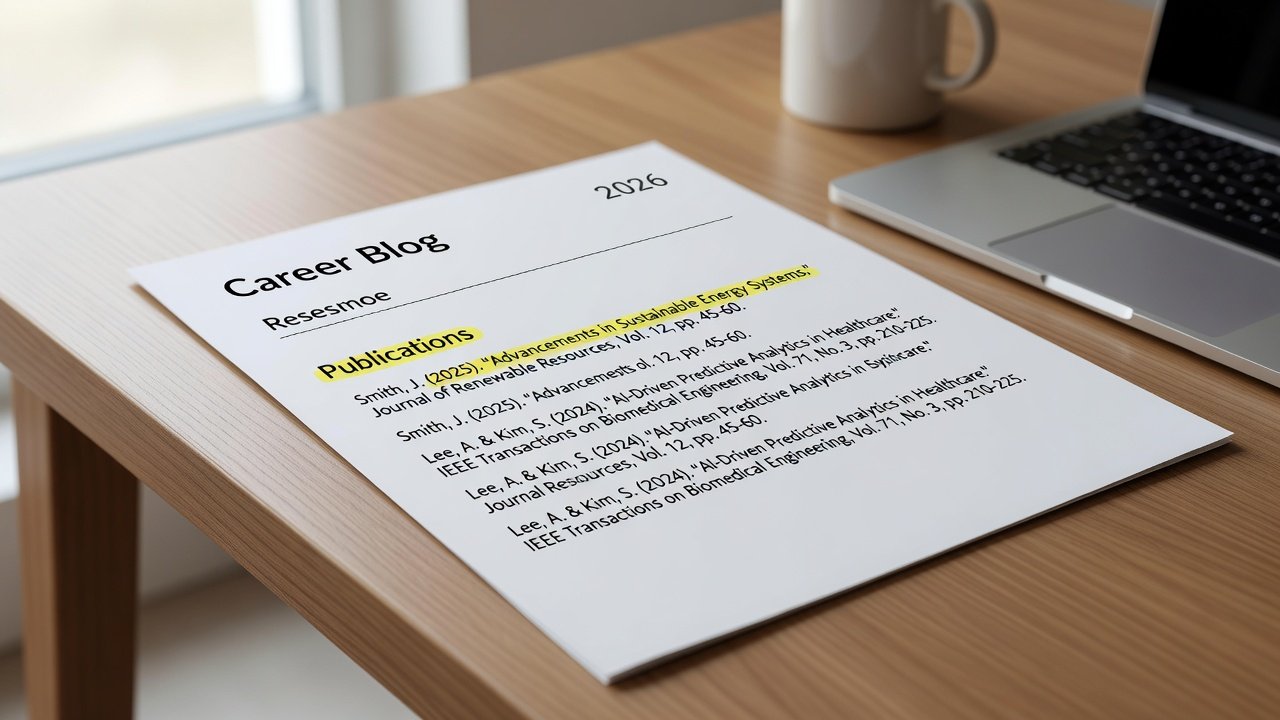
In 2026, mid-career professionals in academia, biotech, engineering, consulting, and technology fields face increasing competition. Research publications serve as powerful differentiators that highlight expertise, analytical skills, and contributions to knowledge. Recruiters and hiring managers often scan for evidence of thought leadership beyond standard job duties. Publications demonstrate the ability to conduct rigorous inquiry, collaborate across teams, and communicate complex findings effectively. For those transitioning between academia and industry or advancing within research-intensive roles, properly showcasing these outputs can significantly boost visibility. This comprehensive guide explores ATS optimization techniques, citation best practices, placement strategies tailored to different resume formats, impact quantification methods, and actionable examples drawn from real hiring scenarios in 2026.
ATS-Friendly Formatting Rules for Publications
Applicant Tracking Systems remain a critical gatekeeper in the 2026 job market. These platforms parse resumes for keywords, structure, and readability before human eyes review them. To optimize, use plain text formatting with standard headings such as "Publications" or "Selected Research Outputs." Avoid embedding publications in tables, text boxes, or multi-column layouts that many ATS cannot interpret correctly. Each entry should follow a consistent pattern: list authors in the order they appear on the publication, followed by the full title, journal or conference name, publication year, volume and issue if applicable, and a DOI or stable URL when available. Incorporate job-description keywords organically, such as "peer-reviewed journal article" or "industry white paper on machine learning applications." Limit the section to the three to five most relevant works unless the target role is purely research-focused. Use standard fonts like Arial or Calibri at 10-12 point size and ensure no special characters disrupt parsing. Test your resume by copying the text into a plain text editor to verify clean extraction.
Recommended Citation Styles in 2026
Choosing the right citation style depends on your industry and target employer. APA style continues to dominate social sciences, business, and psychology fields, emphasizing author-date formatting. IEEE style is preferred in engineering and computer science, using numbered references. MLA remains common in humanities and education. Always verify the preferred style through the job posting or company website. An example APA entry reads: Smith, J. A., & Lee, M. T. (2025). Ethical frameworks for AI in clinical settings. Journal of Medical Ethics, 42(3), 112-128. https://doi.org/10.1136/medethics-2025-012345. For IEEE: [1] J. A. Smith and M. T. Lee, "Ethical frameworks for AI in clinical settings," J. Med. Ethics, vol. 42, no. 3, pp. 112-128, 2025. Maintain consistency throughout the entire resume and update entries with the latest publication details as of 2026.
Strategic Placement Options on Your Resume
Placement decisions hinge on career stage and role type. For industry positions emphasizing practical impact, position the Publications section after Professional Experience. Academic or research scientist applications benefit from placing it immediately after Education or even near the top if outputs are highly prestigious. On single-page resumes, integrate one or two standout publications directly into Experience bullet points to conserve space. Two-page formats allow a dedicated section with brief impact summaries. Consider a hybrid approach: create a "Key Publications" subsection under Experience for the most relevant work and a fuller list at the end. Always prioritize relevance over quantity, ensuring every listed item reinforces the narrative of your career progression.
Impact Quantification Examples Using 2026 Data
Recruiters in 2026 consistently favor quantified achievements over vague descriptions. Transform generic statements into compelling evidence of value. Instead of simply noting a publication title, describe outcomes: "Co-authored peer-reviewed study on sustainable supply chains that informed corporate policy changes adopted by three Fortune 500 companies." Link research to tangible results such as patents granted, processes improved, or funding secured. Use metrics like citation counts, download numbers, or downstream applications when accurate and verifiable. For white papers, highlight downloads or implementation rates. Always ground claims in verifiable facts to maintain credibility during background checks.
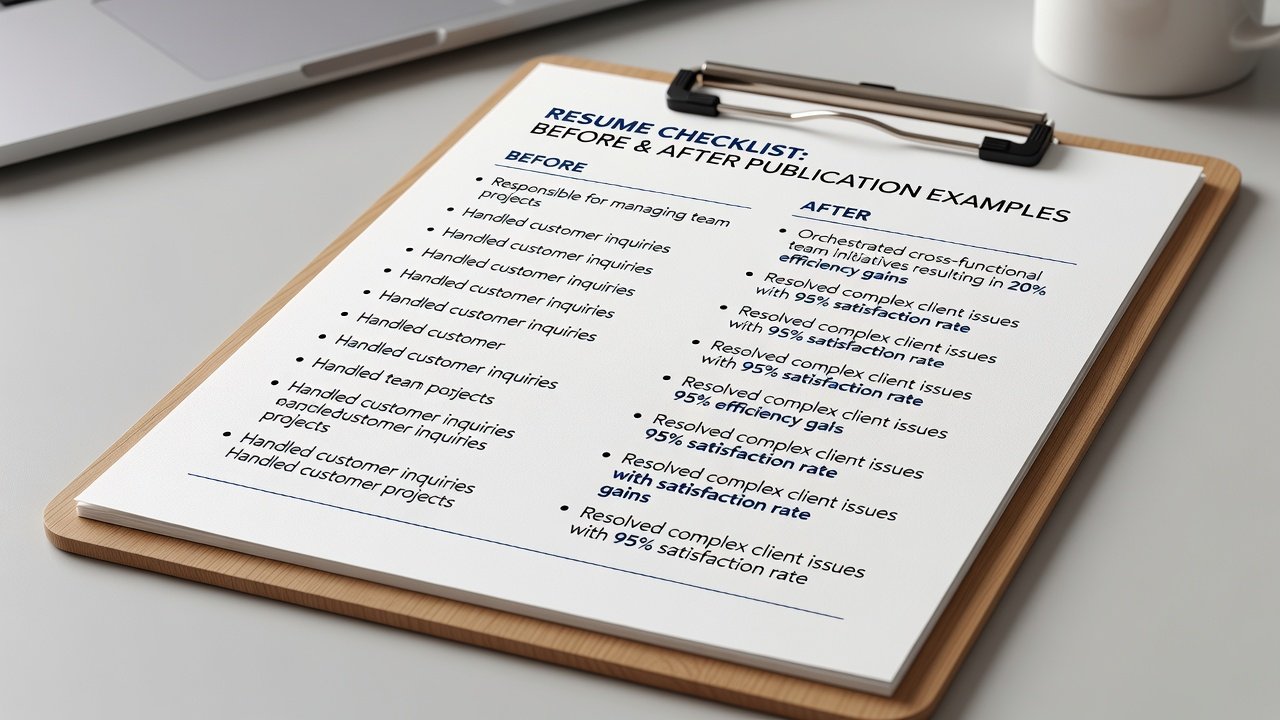
Before-and-After Bullet Points
- Before: Published multiple papers on data analytics.
- After: "Published five peer-reviewed articles on predictive analytics; one 2025 paper cited 62 times and directly influenced a new client analytics platform generating measurable efficiency gains."
- Before: Wrote white paper on cybersecurity trends.
- After: "Authored industry white paper on zero-trust architecture adopted internally, resulting in enhanced security protocols across five departments."
Peer-Reviewed Papers vs. White Papers
Peer-reviewed papers carry substantial academic weight and should include complete bibliographic details plus any available metrics such as journal impact factor or citation count. Format them formally with full author lists and DOIs. White papers target industry audiences and allow more flexibility; include the issuing organization, date, and a one-sentence summary of key findings or recommendations. Both types strengthen a resume when presented honestly. For collaborative work, clarify your specific contributions, such as "Lead author on methodology section" to provide context for recruiters evaluating team versus individual achievements.
Common Pitfalls to Avoid
Many candidates undermine their applications through avoidable errors. Common mistakes include listing every publication from graduate school regardless of relevance, using inconsistent citation formatting, omitting DOIs or links, exaggerating authorship roles, and failing to tailor the list to the specific job. Another frequent issue is neglecting to update older entries with new citation data or impact information. Always proofread for typos in titles and author names, as these signal carelessness. Finally, avoid burying high-impact publications at the bottom of a long list; lead with the most impressive and relevant works.
Step-by-Step Checklist for Different Resume Formats
- Review the target job description and extract relevant keywords related to research and publications.
- Select three to seven publications that best align with the role's requirements and your career narrative.
- Verify citation accuracy and choose an industry-appropriate style such as APA or IEEE.
- Quantify impact using recent, verifiable metrics and prepare concise descriptions.
- Decide placement based on resume length and format: chronological resumes favor post-experience placement, while functional resumes integrate publications under skills or achievements.
- Incorporate one or two publications into Experience bullets where they demonstrate applied skills.
- Run the full resume through an ATS checker tool and a plain-text conversion test.
- Seek feedback from a mentor or career coach familiar with your industry before final submission.
Recruiter Insights for 2026
Experienced recruiters emphasize that publications should form a coherent thread within the broader career story rather than appear as isolated accomplishments. Authenticity matters more than volume. National Institutes of Health resources highlight the importance of clear attribution in multi-author papers. Similarly, IEEE guidelines recommend transparent listing of contributions. Many hiring professionals appreciate when candidates cross-reference publications within experience descriptions, showing direct application of research findings to business challenges.
FAQs
How many publications should I list on a mid-career resume?
Three to seven relevant items typically suffice for industry roles. Pure research positions may warrant a longer dedicated list or even a separate CV attachment.
Should I include works still in progress or under review?
Yes, under a clearly labeled "Works in Progress" subsection that notes the expected publication year and current status such as "under peer review."
How do I handle publications with many co-authors?
List all authors if the total is small; otherwise use "et al." after the first few names while ensuring your position in the author order remains visible.
Can publications be integrated with other achievements like awards or patents?
Absolutely. Cross-reference them in the Experience or Achievements section to illustrate real-world application and reinforce your overall professional impact.
What if my publications are behind paywalls?
Provide the DOI or title and note "Available upon request" if needed. Many employers value the credential itself even without immediate access.
Conclusion
Effectively listing research publications on resumes in 2026 demands careful attention to ATS compatibility, precise citation, strategic placement, and meaningful quantification. By following the detailed guidance, checklists, and examples provided, mid-career professionals can transform their research outputs into compelling evidence of expertise that resonates with both automated systems and human decision-makers. Implement these practices to present a polished, results-oriented resume that advances your career goals.
No comments yet. Be the first!