 Jobboy

Introduction to AI Bias Detection in Interviews
Preparing for AI bias detection questions is essential for candidates targeting ethical AI roles in 2026. Employers increasingly probe candidates on identifying, measuring, and mitigating bias to ensure responsible AI deployment. This guide covers common bias types, regulatory frameworks like the EU AI Act, practical tools, and proven response techniques using the STAR method. With data-driven insights, you will learn how to answer interview questions effectively by demonstrating both technical depth and ethical awareness. Candidates who excel in these discussions often highlight measurable outcomes from past projects, showing how bias mitigation improved model fairness without sacrificing performance.
Common Types of Bias in AI Systems
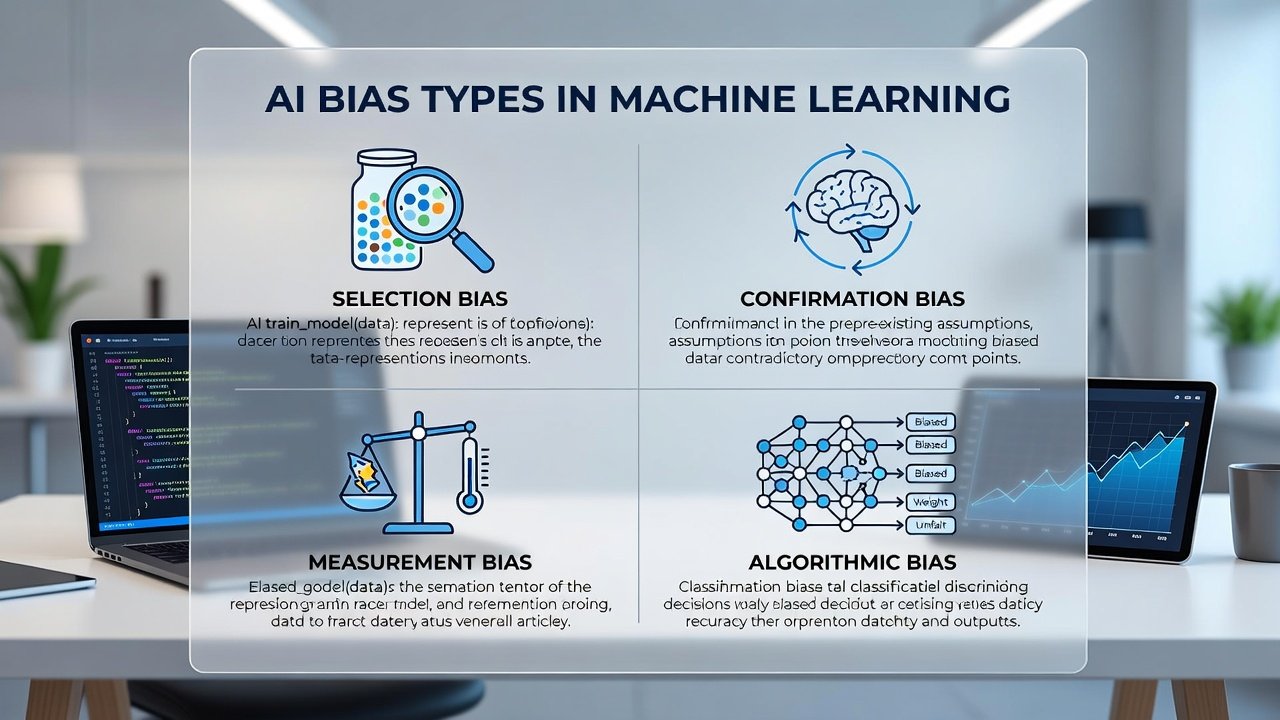
Understanding bias categories helps candidates demonstrate expertise during interviews. Selection bias occurs when training data does not represent the real-world population, leading to skewed predictions for underrepresented groups. Confirmation bias arises when models reinforce existing assumptions through iterative training loops. Measurement bias stems from flawed data collection processes, such as inconsistent labeling across demographics. Algorithmic bias emerges during model training and optimization when objective functions prioritize accuracy over equity. Candidates should reference these with concrete examples from recent deployments in hiring algorithms or credit scoring systems. For instance, a facial recognition model trained primarily on lighter skin tones exhibited higher error rates on darker skin, illustrating intersectional bias that combines race and gender factors. Interviewers may ask you to differentiate between these biases and propose detection methods like fairness metrics including demographic parity and equal opportunity difference.
Regulatory Updates: EU AI Act and Global Impacts
The European Commission continues to enforce the EU AI Act, which classifies high-risk AI systems and mandates bias audits. As of late 2026, companies must document fairness metrics and conduct impact assessments before deployment. Interviewers often ask how candidates would comply with these rules in product development, including requirements for transparency reports and human oversight mechanisms. Beyond Europe, similar frameworks are emerging in other regions, pushing organizations to adopt proactive bias detection practices. Candidates should prepare to discuss how they would integrate regulatory compliance into ML workflows, such as embedding audit trails during model development cycles.
Key Tools and Frameworks for Bias Detection
Leading frameworks include IBM's AI Fairness 360 and Google's What-If Tool. These open-source libraries allow testing for disparate impact and equalized odds across protected attributes. Candidates should explain how to integrate these into ML pipelines during interviews, including code-level examples like loading a dataset, computing fairness metrics, and visualizing disparities. Additional tools such as Microsoft's Fairlearn provide mitigation algorithms that can be applied at different stages of the pipeline. In a 2026 interview setting, expect questions on selecting the right tool based on use case, such as using Aequitas for auditing public sector models.
Crafting STAR Responses with Ethical Examples
Use the STAR method (Situation, Task, Action, Result) to structure answers to bias-related interview questions. For bias questions, describe a past project where you detected skewed data, the steps taken to rebalance datasets, and measurable fairness improvements. A strong response might detail analyzing a hiring model that disadvantaged certain age groups, applying re-sampling techniques, and achieving improved parity scores while maintaining precision above 85 percent. Always tie results back to business impact, such as reduced legal risk or enhanced user trust.
Weak vs. Strong Answer Comparison
Weak answers lack specificity and metrics: "I think bias is bad and we should avoid it by being careful with data." Strong answers incorporate data-driven insights: "In a credit scoring model, I identified selection bias via demographic parity checks using the AI Fairness 360 toolkit, retrained with stratified sampling, and reduced disparate impact by 40 percent while maintaining accuracy, as validated in our quarterly fairness report." This approach directly addresses how to answer interview questions with evidence.
Researching Companies via ESG Reports
Review ESG reports to align answers with company values before interviews. Look for commitments to AI ethics, diversity in datasets, and third-party audits. This preparation shows genuine interest in their responsible AI practices and allows you to reference specific initiatives, such as a company's pledge to conduct annual bias assessments. Many leading firms publish these reports on investor pages, revealing priorities around algorithmic accountability that you can weave into your responses.
Step-by-Step Bias Mitigation Strategies
Follow these detailed steps to demonstrate practical knowledge in interviews. First, audit datasets for representation gaps by calculating distribution statistics across sensitive attributes. Second, apply preprocessing techniques like reweighting samples or synthetic data generation to balance classes. Third, implement in-processing constraints during training using libraries that enforce fairness regularizers. Fourth, conduct post-processing fairness adjustments such as threshold calibration for different groups. Fifth, monitor models continuously in production with automated alerts for drift in fairness metrics. Each step should be illustrated with an example, such as applying these to a loan approval system to ensure equitable outcomes across income levels.
Real-World Case Studies
In the tech sector, a major social media platform addressed recommendation bias by diversifying training data sources and introducing fairness constraints, resulting in more balanced content exposure across user demographics. In finance, a leading bank used fairness toolkits to correct loan approval disparities across demographic groups, improving compliance and trust while reducing false positive rates for minority applicants. These cases highlight the importance of combining technical mitigation with stakeholder communication to achieve sustainable ethical AI deployment.
FAQs on Handling Follow-Up Probes
How do you measure bias quantitatively? Use metrics such as statistical parity difference and equalized odds, benchmarked against industry standards. What if stakeholders resist mitigation efforts? Present business cases showing risk reduction, regulatory alignment, and potential ROI from improved fairness. How do you stay updated on evolving standards? Follow NIST guidelines at NIST and participate in forums like the Partnership on AI. Additional probes may cover handling conflicting fairness definitions or scaling mitigation across global teams.
Data-Driven Insights for Interview Success
Incorporate quantitative examples whenever possible. For instance, reference studies showing that models with proactive bias checks experience 25-30 percent fewer complaints related to discriminatory outcomes. Discuss trade-offs between fairness and accuracy, citing scenarios where slight accuracy reductions led to significantly higher equity scores. This level of detail sets you apart when answering how to answer interview questions on AI ethics.
Mistakes to Avoid in Bias Discussions
Common pitfalls include over-relying on a single fairness metric without justification, ignoring intersectionality, or failing to discuss ongoing monitoring. Always acknowledge limitations of current tools and propose hybrid human-AI review processes for high-stakes decisions.
Conclusion
Mastering AI bias detection interview questions positions candidates as forward-thinking professionals ready for 2026 challenges. Combine technical knowledge with ethical reasoning, company-specific research, and structured STAR responses for standout answers that resonate with hiring teams focused on responsible innovation.

No comments yet. Be the first!