 Jobboy
Introduction: Tailoring Resumes for a Global Workforce in 2026
Securing international roles as a mid-career professional requires more than a strong domestic resume. In 2026, employers across borders prioritize cultural adaptability, clear international experience, and ATS-friendly formatting that works for multinational systems. This guide provides step-by-step strategies to customize your resume for overseas opportunities while addressing visa status, language skills, and format differences. Global hiring has evolved with remote and hybrid models, making ATS compatibility essential for companies using tools from LinkedIn and Workday. Focus on quantifiable achievements and localized keywords to stand out in competitive applicant pools.
Many professionals overlook how regional hiring practices affect resume success rates. Understanding these differences early prevents wasted applications and increases interview callbacks. Whether targeting roles in Europe, Asia, or Latin America, customization is key to demonstrating value to hiring managers who may review hundreds of submissions weekly.
Understanding Cultural Nuances in International Resumes
Resume expectations vary widely by region. US resumes emphasize achievements and brevity, while European versions often include personal details and photos. Asian markets may prioritize education and hierarchy. Research the target country’s norms to avoid immediate rejection. For example, in Germany, including your photo and date of birth remains common, whereas US employers view this as discriminatory. Always verify local labor laws before adding personal data. In the United Kingdom, a one-page CV is preferred for most roles, but academic or senior positions allow more length. In Japan, resumes are often submitted in a specific format called rirekisho that includes sections for personal history and family background. Latin American countries like Brazil may expect more narrative-style summaries highlighting soft skills and networking connections.
Cultural sensitivity extends to language tone as well. Direct, results-focused language works well in North America but can appear arrogant in collectivist cultures where team contributions are emphasized more heavily.
Comparing US, EU, and Asian Resume Formats
Format differences can determine whether your application passes initial screening. Here’s a breakdown:
- US Format: 1-2 pages, no photo, focus on skills and results. Reverse chronological order. Bullet points highlight metrics and outcomes.
- EU Format (Europass): Structured templates, often 2+ pages, may include photo and personal info. Emphasizes language levels with CEFR scales. Common in Germany, France, and the Netherlands.
- Asian Formats: In Japan and South Korea, include a professional photo and detailed education section. Chinese resumes often highlight guanxi (relationships) indirectly through affiliations. Singaporean employers blend Western and Asian expectations, favoring concise yet detailed documents.
Use a hybrid approach for multinational companies: start with a clean, ATS-optimized core and customize per region. Adding or removing sections like “Personal Interests” or “References” based on location improves relevance.
Framing International Experience Effectively
Highlight overseas work with specific metrics. Instead of “Managed team in Asia,” write “Led 12-person cross-cultural team in Singapore, increasing regional sales by 35% over 18 months.” Include context like local regulations or market entry strategies. Before-and-after example: Before: “Worked in Europe on projects.” After: “Directed EU market expansion project in Frankfurt (2023-2025), securing €2.4M in contracts while navigating GDPR compliance.” Another example involves a project manager who reframed experience from “Coordinated with suppliers abroad” to “Managed supply chain partnerships across five countries, reducing lead times by 22% through localized vendor negotiations in Vietnam and Poland.” Always translate achievements into universal business impact while preserving cultural context that shows adaptability.
Handling Visa Status and Work Authorization
Address visa questions proactively without oversharing. Add a brief line under your header: “Authorized to work in the EU under skilled worker visa sponsorship eligibility.” Research sponsorship trends on official sites like USCIS for US roles or gov.uk for UK opportunities. Never fabricate status. Mid-career professionals should note dual citizenship or existing permits to build recruiter confidence. Consider including a short “Work Eligibility” subsection if the role explicitly requires sponsorship details. For roles in Australia or Canada, referencing points-based systems can demonstrate preparedness. Always keep this section factual and concise to avoid raising unnecessary concerns.
Creating a Dedicated Language Proficiency Section
Language skills are critical for international roles. Use standardized scales like CEFR or TOEIC scores. Example section:
- English: Native (CEFR C2)
- Mandarin: Professional working proficiency (CEFR B2)
- Spanish: Conversational (CEFR B1)
Place this near the top if the job posting stresses multilingual requirements. Provide test dates for credibility. Expand this section with certifications such as DELF for French or JLPT for Japanese to add weight. Recruiters appreciate clarity on speaking, reading, and writing levels separately when roles involve client-facing or technical documentation duties.
Ensuring ATS Compatibility for Multinational Companies
ATS systems in 2026 scan for keywords from job descriptions. Incorporate terms like “global stakeholder management” and “cross-border compliance.” Avoid tables, graphics, or columns that confuse parsers. Test your resume with free ATS simulators before submission. Use standard section headings such as “Professional Experience” and “Education” rather than creative alternatives. Include industry-specific acronyms alongside full terms on first mention. 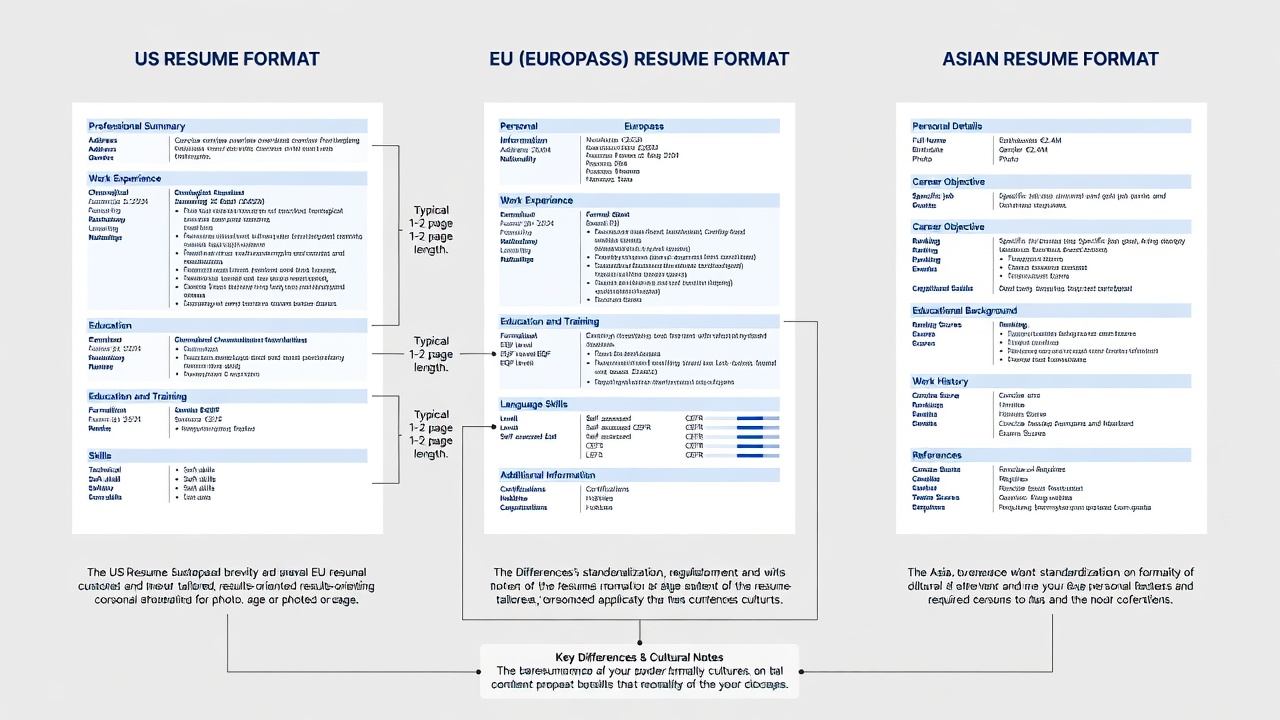
Practical Steps to Customize Your Resume
- Research the target country’s resume norms via local career sites and official government employment portals.
- Translate achievements into measurable global impact using both local currency and USD equivalents where helpful.
- Adjust length and sections based on regional preferences while maintaining a master version for quick edits.
- Proofread for cultural sensitivity and spelling variations (e.g., “organise” vs “organize”).
- Seek feedback from professionals in the destination market through platforms like LinkedIn alumni groups.
- Prepare multiple versions: one for ATS screening and another tailored for human review in specific regions.
Common Pitfalls and FAQ
What are the biggest mistakes when applying internationally?
Overlooking cultural norms, using US-centric language, and failing to quantify achievements are top issues. Always localize rather than translate directly. Another frequent error is sending generic resumes without adjusting for local education credential recognition systems.
Should I include a photo?
Only if standard in the target market, such as parts of Europe or Asia. Otherwise, omit to prevent bias concerns. In countries where photos are expected, use a professional headshot with neutral background.
How long should an international resume be?
Keep it to two pages maximum unless the role demands extensive publication or project lists. Academic and research positions in Europe often allow three pages.
Do I need to translate my resume into the local language?
Yes for most non-English speaking countries unless the job posting specifies English. Provide both versions when applying through international recruiters.
Conclusion
Writing a resume for international jobs in 2026 demands research, precision, and strategic customization. By addressing formats, visa details, and ATS needs, mid-career professionals can position themselves competitively in global markets. Start applying these steps today to unlock overseas opportunities and build a truly borderless career trajectory.

No comments yet. Be the first!