 Jobboy
Introduction
In today's competitive job market, side projects have become powerful differentiators on resumes. As hiring trends evolve into 2026, employers increasingly value demonstrated initiative, technical skills, and real-world problem-solving over traditional experience alone. This guide provides a complete, step-by-step approach to showcasing side projects effectively while ensuring ATS compatibility and professional appeal. Job seekers who master this technique often stand out in applicant pools where hundreds of candidates compete for the same roles. By highlighting personal initiatives, you demonstrate continuous learning and the ability to apply skills outside formal employment settings. The following sections break down every aspect of integration, from selection criteria to final formatting, so your resume tells a compelling story of capability and drive.
Why Side Projects Matter in 2026
Recruiters scan resumes in seconds, seeking evidence of proactive learning and impact. Side projects fill gaps in employment history, highlight passion for your field, and provide concrete examples of skills in action. According to insights from Indeed, candidates who include relevant projects see higher interview rates when projects align with job descriptions. In 2026, with rapid technological change, employers prioritize adaptability. A well-documented side project can illustrate how you stayed current with emerging tools or methodologies. Furthermore, these initiatives often reveal soft skills such as self-motivation, project management, and creative problem-solving that are difficult to convey through standard work history alone. When economic conditions fluctuate, recruiters turn to side projects as reliable indicators of resilience and entrepreneurial spirit. This makes them especially valuable for career changers or those returning to the workforce after breaks.
Selecting Relevant Projects
Choose projects that directly relate to the target role. For a software engineering position, prioritize coding repositories or apps over unrelated hobbies. Evaluate each project by asking: Does it demonstrate core skills listed in the job posting? Can I quantify results? Limit selections to 2-4 strong examples to avoid diluting focus. Begin by reviewing the job description and extracting key requirements such as specific programming languages, frameworks, or soft skills. Next, audit your personal projects and match them against these keywords. Discard anything that feels tangential unless it showcases transferable abilities like leadership or data analysis. Consider the project's complexity and recency; older or overly simplistic work may weaken rather than strengthen your application. If you have many options, create a shortlist and rank them by relevance and measurable outcomes. This disciplined approach ensures every project listed serves a strategic purpose and contributes to a cohesive narrative across your resume.
Quantifying Impact with Metrics
Replace vague descriptions with measurable achievements. Instead of "Built a website," write "Developed a responsive web app that increased user engagement by 45% through optimized load times." Use numbers for users, revenue generated, time saved, or performance improvements. This approach transforms side projects into compelling proof points. Start by tracking baseline data before improvements, then measure post-implementation results. Common metrics include monthly active users, conversion rates, cost reductions, or time efficiencies. When exact numbers are unavailable, use reasonable estimates supported by context, such as "approximately 1,500 downloads in the first quarter." Always tie metrics back to business value or user benefit to make them meaningful to recruiters. Avoid inflating figures; authenticity builds trust during interviews when you may be asked to elaborate.
Strategic Placement on Your Resume
Integrate side projects under a dedicated "Projects" section positioned after professional experience for mid-career professionals or near the top for recent graduates. Alternatively, weave them into the experience section when they mirror job responsibilities. Always maintain reverse chronological order and consistent formatting. For entry-level candidates, consider placing the Projects section immediately after the summary or skills area to emphasize hands-on learning. Mid-level professionals may benefit from integrating select projects into relevant job entries when they directly extended workplace skills. Senior applicants should use projects to demonstrate thought leadership, such as open-source contributions or innovative prototypes. Test different layouts with peers or mentors to confirm readability and flow before finalizing.
Formatting Examples for Different Industries
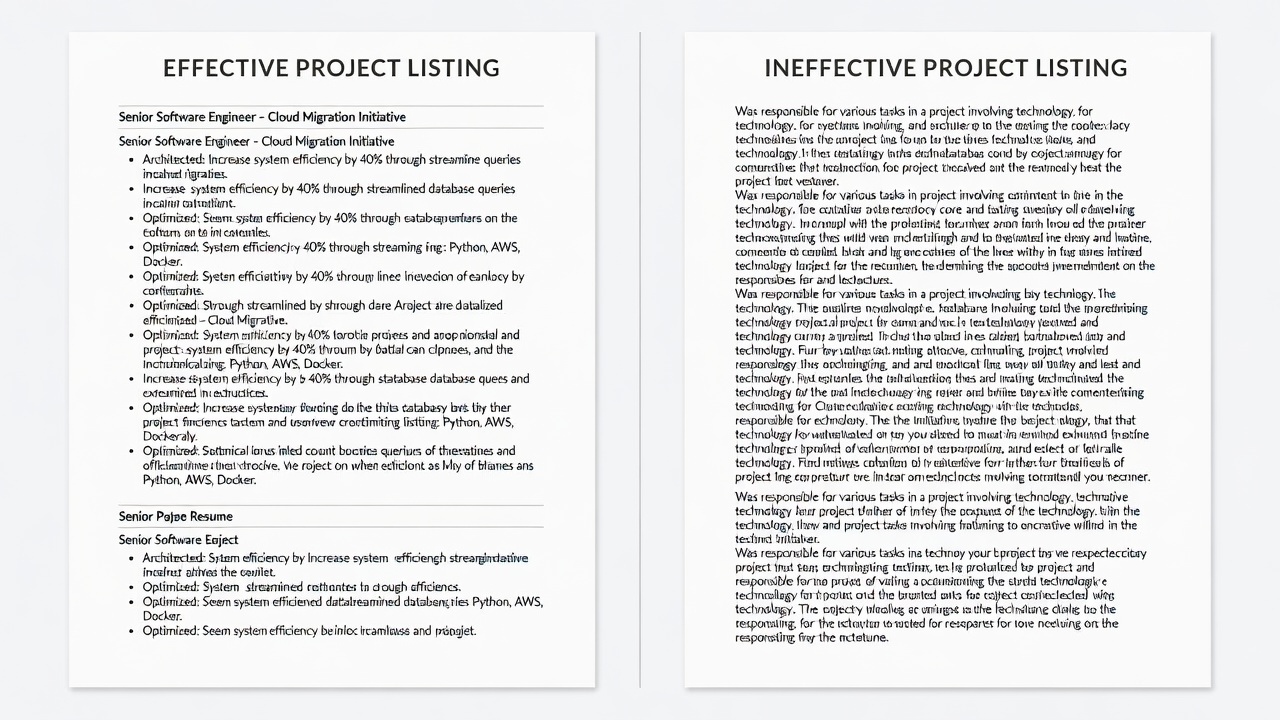
Tech Example (Effective):
Personal Finance Tracker App | 2025
- Engineered a full-stack application using React and Node.js serving 2,300 active users
- Implemented machine learning models that improved budget prediction accuracy to 92%
Marketing Example (Effective):
Content Strategy Blog | 2024-2025
- Grew organic traffic from 1,200 to 18,500 monthly visitors in 14 months
- Created SEO-optimized content that generated 47 qualified leads
Design Example (Effective):
Branding Portfolio for Local Nonprofits | 2025
- Redesigned visual identity for three organizations resulting in 30% increase in donation page conversions
- Produced style guides adopted across volunteer teams of 12+ members
Ineffective Version:
Built some websites and apps. Worked on personal coding projects.
ATS Compatibility Best Practices
Use standard section headings like "Projects" or "Professional Projects." Incorporate keywords from the job description naturally. Avoid tables, graphics, or unusual fonts that confuse applicant tracking systems. Export as PDF or DOCX only after testing with free ATS simulators. Additional recommendations include spelling out acronyms on first use, maintaining consistent date formats, and steering clear of special characters that may render incorrectly. Many systems parse text linearly, so structure bullet points with clear action verbs at the start of each line. Run your resume through multiple online checkers to identify potential issues before submission. These steps maximize the chance that both automated systems and human reviewers see your strongest qualifications.
Common Mistakes to Avoid
- Listing too many irrelevant projects that dilute your core message
- Failing to connect projects directly to job requirements and company needs
- Omitting results and metrics in favor of generic task descriptions
- Using overly technical jargon without explaining business impact
- Neglecting to update older projects with current technologies or outcomes
- Placing projects in locations that disrupt the resume's logical flow
Industry-Specific Tips
In creative fields, link to portfolios or include brief descriptions of design tools used. In data roles, emphasize datasets analyzed, accuracy improvements, or insights generated. Healthcare applicants should focus on compliance standards, patient outcomes, and privacy considerations. Engineering candidates benefit from highlighting safety protocols or efficiency gains. Always tailor language to industry norms while keeping achievements quantifiable. Research target companies through LinkedIn to understand valued project types and mirror that emphasis in your descriptions. This targeted customization increases relevance and resonance with hiring managers.
Frequently Asked Questions
How many side projects should I include?
Three to four high-quality projects are ideal. Quality always outweighs quantity, and recruiters prefer depth over breadth when evaluating personal work.
Should I include ongoing projects?
Yes, if they show current skills and relevance. Note "In Progress" and highlight milestones achieved so far to demonstrate momentum and commitment.
Are personal projects appropriate for senior roles?
Absolutely when they demonstrate leadership, innovation, or specialized expertise that complements your career trajectory and shows continued growth.
How do I handle confidential or client-related side work?
Generalize descriptions while preserving impact. Focus on processes and results rather than proprietary details to maintain professionalism and discretion.
Conclusion
Effectively showcasing side projects on your resume in 2026 requires strategic selection, quantified results, and clean formatting. By following these guidelines, you transform personal initiatives into professional assets that capture recruiter attention and improve your chances of landing interviews. Consistent application of these principles across multiple applications will yield stronger responses and more opportunities in your target field.

No comments yet. Be the first!