 Jobboy

Introduction
Internal job transfers represent one of the most effective strategies for career advancement within an established organization. In 2026, companies across industries are increasingly focused on internal mobility programs to retain top talent, reduce hiring costs, and maintain institutional knowledge. A compelling cover letter tailored specifically for these opportunities can set you apart from both internal peers and external applicants. Unlike standard external applications, an internal cover letter must demonstrate deep familiarity with the company’s operations, culture, strategic objectives, and recent challenges. It positions you as someone who already understands the environment and has contributed meaningfully to its success.
This comprehensive guide explores every element required to craft a persuasive internal cover letter. Readers will learn how to differentiate these documents from external versions, follow a proven step-by-step writing process, optimize for applicant tracking systems, avoid common mistakes, and present quantifiable achievements effectively. The advice draws on current best practices for professional communication in dynamic workplaces.
Key Differences: Internal vs. External Cover Letters
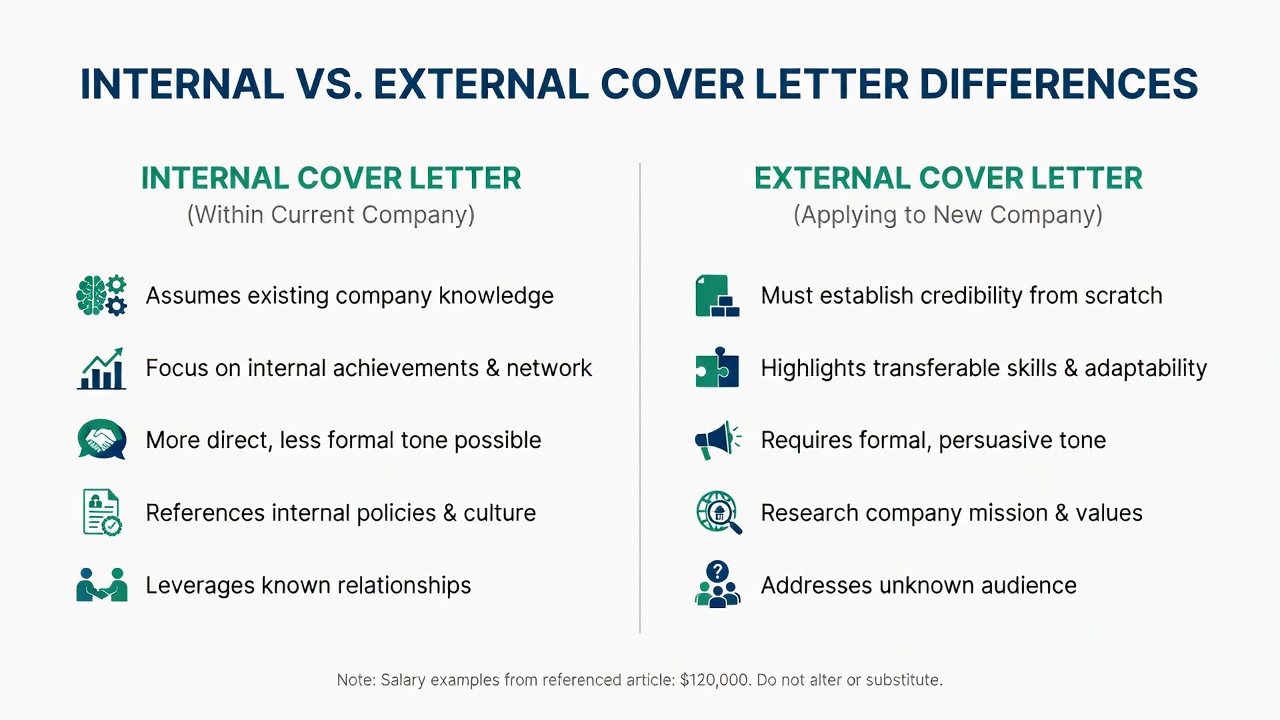
External cover letters serve as an introduction to an unfamiliar employer, requiring extensive background on both the candidate and the organization. Internal cover letters, however, assume the reader already knows your tenure, performance history, and the company context. This shifts the emphasis toward continuity, growth potential, and specific ways your existing contributions can translate into the new role. The tone tends to be more collaborative and confident because you share institutional knowledge with the hiring manager.
| Aspect | Internal Cover Letter | External Cover Letter |
|---|---|---|
| Company Knowledge | Deep references to internal projects and initiatives | General research on the organization |
| Tone | Confident, collaborative, and insider-oriented | Professional and introductory |
| Emphasis | Past internal contributions and transferable skills | Overall qualifications and fit |
| Length & Detail | Concise, referencing known metrics | More explanatory background |
Recognizing these distinctions prevents the common error of treating an internal application like a cold outreach, which can undermine your credibility.
Step-by-Step Writing Process
Follow this structured approach to produce a polished letter that resonates with decision-makers.
- Begin by thoroughly analyzing the target job description. Identify recurring keywords and phrases such as “cross-functional leadership,” “process optimization,” or “stakeholder engagement” that align with ATS requirements. Note any specific tools, methodologies, or outcomes mentioned.
- Next, audit your own performance records, project summaries, and annual reviews from the past two to three years. Select two or three achievements that directly relate to the new role’s responsibilities and can be expressed with measurable results.
- Develop a clear outline consisting of an opening paragraph that states your current position and interest, a body section that connects your experience to the role, and a closing paragraph that reinforces enthusiasm and suggests next steps.
- Draft the content using a professional yet familiar tone that reflects your established relationships within the company. Incorporate company-specific terminology naturally while maintaining clarity.
- Finally, revise for grammar, flow, and alignment with organizational values. Seek confidential feedback from a mentor or colleague outside the immediate hiring process before submission.
Recommended Structure and Tone
Organize the letter into three focused paragraphs. The opening should reference your current role and express clear interest in the target position while acknowledging the internal context. The body paragraph should highlight two or three relevant accomplishments, using language that mirrors the job posting. The closing paragraph should reaffirm your commitment to the organization and propose a discussion about how your background supports team objectives.
The tone must balance enthusiasm with respect for your current responsibilities. Avoid any criticism of your present department or manager. Instead, frame the move as a natural progression that benefits both you and the company.
Common Mistakes to Avoid
Many internal applicants weaken their applications by repeating information already detailed in their resume or by failing to demonstrate how their experience addresses the specific needs of the new team. Another frequent error is neglecting to mention recent company initiatives, which signals a lack of current awareness. Overly formal language can also feel distant when the reader already knows you personally. Finally, submitting a generic letter without tailoring it to the role reduces impact and may suggest limited genuine interest.
Real-World Examples
Example 1 – Marketing Specialist to Product Manager: “In my current role as Marketing Specialist at [Company], I have led three cross-departmental product launches that increased customer engagement by 28 percent. These experiences have given me firsthand insight into user needs and market positioning, which I am eager to apply directly within the Product team to support upcoming roadmap priorities.”
Example 2 – Operations Analyst to Finance Manager: “My recent work streamlining vendor contracts resulted in a documented $120,000 reduction in annual expenses for the operations department. I am now prepared to bring this analytical approach and vendor management expertise to the Finance team’s forecasting and budgeting processes.”
Example 3 – Senior Engineer to Engineering Manager: “Over the past eighteen months I have mentored five junior engineers through our internal leadership development program, helping improve team delivery timelines by 15 percent. This hands-on coaching has prepared me to assume formal management responsibilities in the upcoming departmental expansion.”
Optimizing for ATS and Keywords
Applicant tracking systems continue to play a major role in internal mobility processes. Mirror exact phrases from the job description throughout the letter without forcing unnatural repetition. Use standard section headings and avoid complex formatting such as tables or graphics that may not parse correctly. Many organizations integrate internal job portals with the same ATS used for external hiring, so consistency in keyword usage remains essential.
Preparing Supporting Materials
Alongside the cover letter, update your internal resume to emphasize achievements relevant to the target role. Include any internal training, certifications, or cross-functional projects completed during your current tenure. If the organization requires manager approval for transfers, prepare a brief talking-points document that summarizes your qualifications and explains the timing of the move in positive terms.
Frequently Asked Questions
Should I mention my current manager in the cover letter?
Only reference your manager if you have obtained their explicit endorsement for the transfer. Otherwise, focus exclusively on your accomplishments and how they align with the new opportunity.
How can I best quantify internal achievements?
Connect your results to company-wide goals such as revenue growth, operational efficiency, customer satisfaction scores, or employee retention rates. Use specific percentages or dollar figures whenever possible.
What if the target role is in a completely different department?
Emphasize transferable skills and any prior collaboration across departments. Highlight instances where you worked with stakeholders from the target area on shared initiatives.
Conclusion
Writing an effective cover letter for an internal job transfer requires a strategic blend of company insight, demonstrated results, and forward-looking enthusiasm. By following the structured process outlined above and tailoring each element to the specific role, you position yourself as a strong internal candidate ready for greater responsibility. Begin applying these techniques today to maximize your prospects for a successful transition in 2026. Additional career guidance is available from authoritative sources such as Indeed, SHRM, and LinkedIn.

No comments yet. Be the first!