 Jobboy
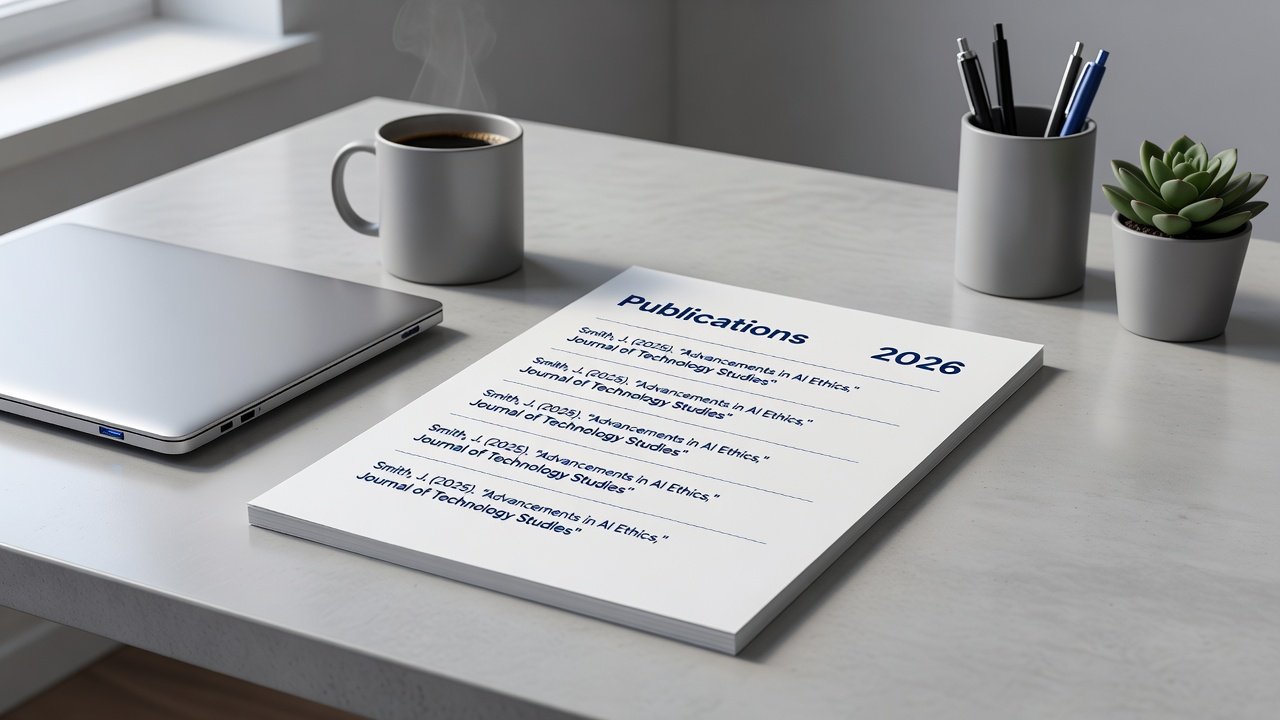
Listing publications on your resume can significantly strengthen your application, especially for academic, research, and specialized professional roles in 2026. Whether you are a career changer highlighting transferable skills or a specialist showcasing expertise, the right approach demonstrates credibility and relevance. This guide covers strategic placement, citation formats, impact quantification, real examples, and more to help you create a compelling resume that stands out to recruiters and hiring managers.
Why Publications Matter on Resumes in 2026
Recruiters increasingly value evidence of thought leadership and research capabilities. Publications signal deep expertise and the ability to communicate complex ideas. For career changers, they bridge gaps by showing how past work translates to new industries. In today's competitive job market, where many roles require demonstrated analytical and communication skills, including relevant publications can differentiate you from other candidates. Data from career platforms shows that resumes with quantified achievements, including publications, receive more attention during initial screening processes.
Strategic Placement Options
Decide where to position your publications section based on your experience level and target role. Place it near the top if publications are central to the job, such as in academia or R&D. For most professionals, integrate it after your experience section or within a dedicated skills area to emphasize transferable outcomes. If you have extensive professional experience, consider creating a separate "Selected Publications" subsection under your professional experience to show direct application. Career changers should place publications strategically to highlight relevance to the new field, perhaps under a "Professional Development" heading that ties directly to job requirements.
ATS-Friendly Citation Styles: APA and MLA
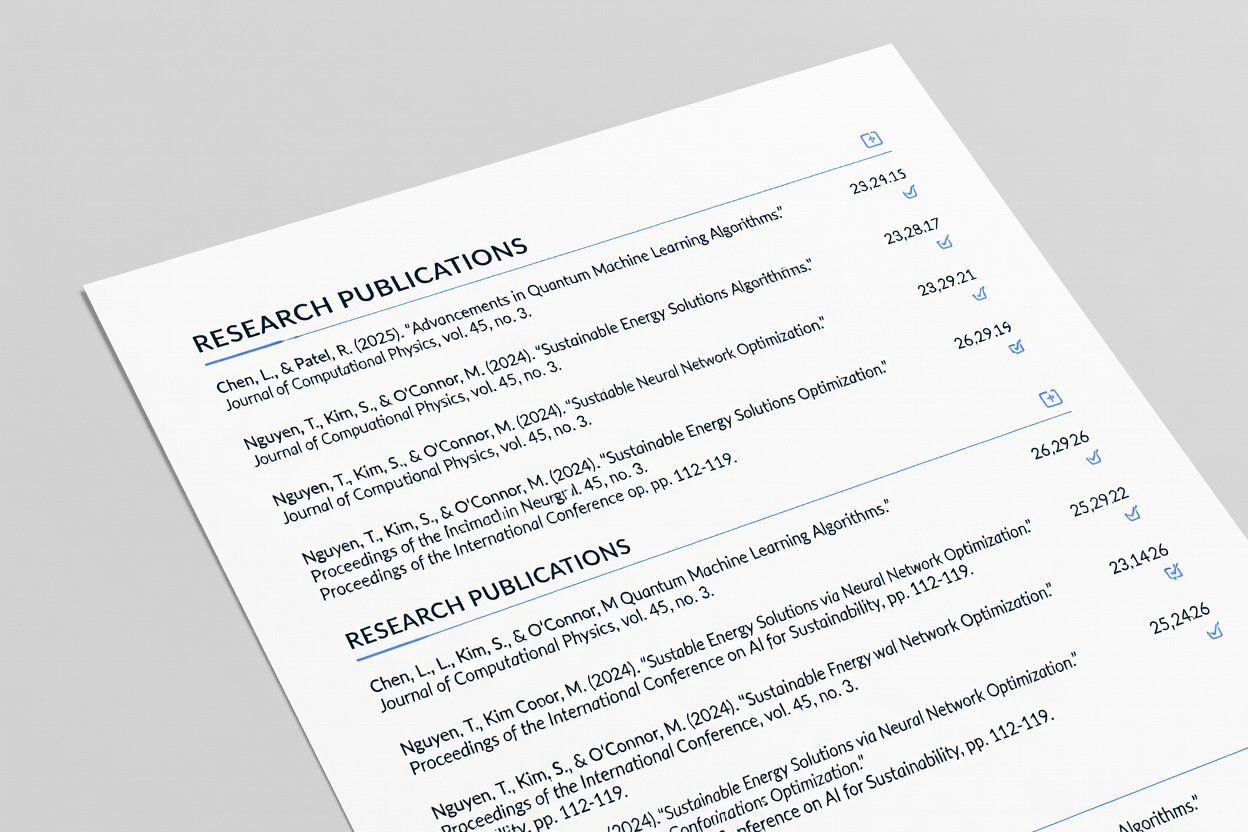
Applicant tracking systems parse text cleanly when you use standard formats. APA works well for social sciences and business, while MLA suits humanities. Follow these consistently. Learn more at Purdue OWL for detailed guidelines. Always include author names, title, publication name, date, and DOI or URL when available. APA format typically structures entries as: Author, A. A. (Year). Title of article. Title of Periodical, volume number(issue number), pages. https://doi.org/xx. MLA uses: Author Last Name, First Name. "Title of Article." Title of Periodical, vol. number, no. number, Year, pp. pages. Check APA Style and MLA Style Center for updates. Consistent use of these styles ensures ATS compatibility and professional presentation.
Quantifying Impact and Integrating Transferable Skills
Go beyond listing by adding metrics like citations, downloads, or influence on policy. Tie entries to skills such as data analysis or project management. For example, note how a publication improved team processes by 25%. This approach turns a simple citation into evidence of real-world value. When integrating transferable skills, describe how the research process developed your abilities in literature review, data interpretation, or stakeholder communication. These details help recruiters see direct connections to the target role.
Before-and-After Examples
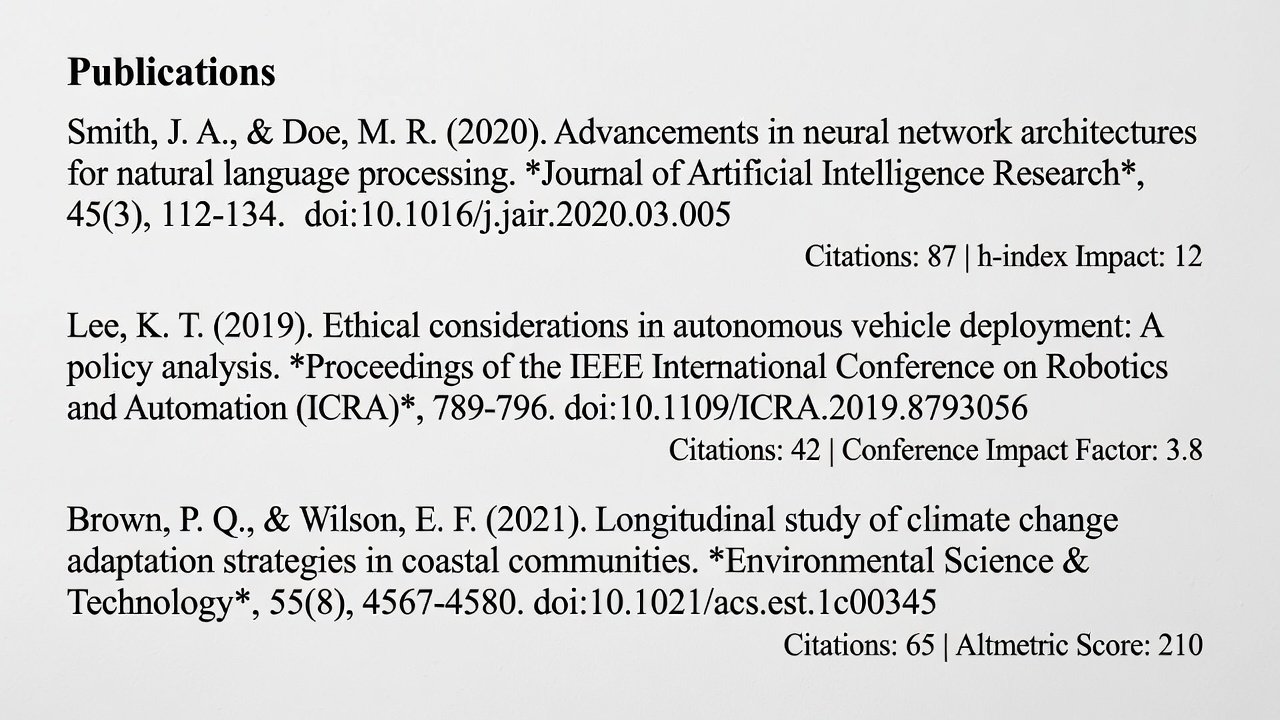
Before: Publications. Smith, J. (2024). Climate Policy. Journal X.
After: Smith, J. (2024). Climate Policy: A Data-Driven Framework. Journal of Environmental Studies, 45(2), 112-130. https://doi.org/xx. Cited 180 times; informed corporate sustainability strategies adopted by 12 firms. Another example for a career changer in marketing: Before: Blog posts on content strategy. After: Johnson, L. (2025). "Content Strategy Frameworks for B2B Growth." Content Marketing Journal, 12(4), 55-68. Generated 45,000 downloads and influenced campaign strategies resulting in 30% higher engagement rates across three client projects.
Step-by-Step Checklist
- Compile all publications in a master list with full details including co-authors and status.
- Select the most relevant 3-5 entries that align with the job description keywords.
- Format using APA or MLA consistently throughout the section.
- Add impact metrics such as citation counts or practical outcomes where possible.
- Align language with job description keywords like "research," "analysis," or "innovation."
- Proofread for consistency, accuracy, and ATS-friendly plain text.
- Update the section for each application to maintain relevance.
- Verify all DOIs and links are active before submitting.
Common Pitfalls to Avoid
Never pad with irrelevant or unpublished works unless they are under review with clear status noted. Avoid inconsistent formatting that confuses ATS. Do not exceed one page for this section unless targeting academic positions. Other mistakes include omitting co-authors, failing to quantify impact, or using non-standard abbreviations that ATS may not recognize. Always prioritize quality and relevance over quantity to maintain credibility.
2026 Recruiter Insights by Industry
In tech and consulting, relevance to innovation trumps volume, with recruiters favoring publications that demonstrate problem-solving in emerging technologies. Healthcare and education prioritize peer-reviewed work that shows clinical or pedagogical advancements. Manufacturing values applied research with measurable business outcomes such as process improvements or cost reductions. Finance roles often look for publications on regulatory changes or economic modeling. Always tailor to the sector using current job postings as reference and research recent industry trends to ensure your selections resonate with hiring teams.
FAQs on Handling Unpublished Works
How do I list works in progress? Note them as “Under Review” with journal name and expected publication date if known. Should I include non-academic blogs? Only if they demonstrate industry authority and align with the role, formatting them similarly to formal publications. What about co-authored pieces? List all authors or use “et al.” after the first three names, maintaining alphabetical order where appropriate. Can I list conference proceedings? Yes, if they underwent peer review and add value; treat them as publications with the conference name included. How should I handle self-published works? Include them only if they have measurable impact, such as downloads or citations, and note the platform clearly.
Practical Templates
Use this structure for APA: [Last Name, First Initial]. (Year). Title. Journal Name, Volume(Issue), pages. DOI. For MLA: Last Name, First Name. "Title." Journal Name, vol. X, no. Y, Year, pp. Z-Z. Tailor for each application and update regularly based on new achievements. Consider creating a master document with all entries to quickly customize sections for different opportunities.
In conclusion, strategic publication listings elevate your resume by proving expertise and results. Apply these methods to stand out in 2026 hiring landscapes by focusing on relevance, clarity, and measurable impact throughout your application materials.
No comments yet. Be the first!