 Jobboy
Introduction
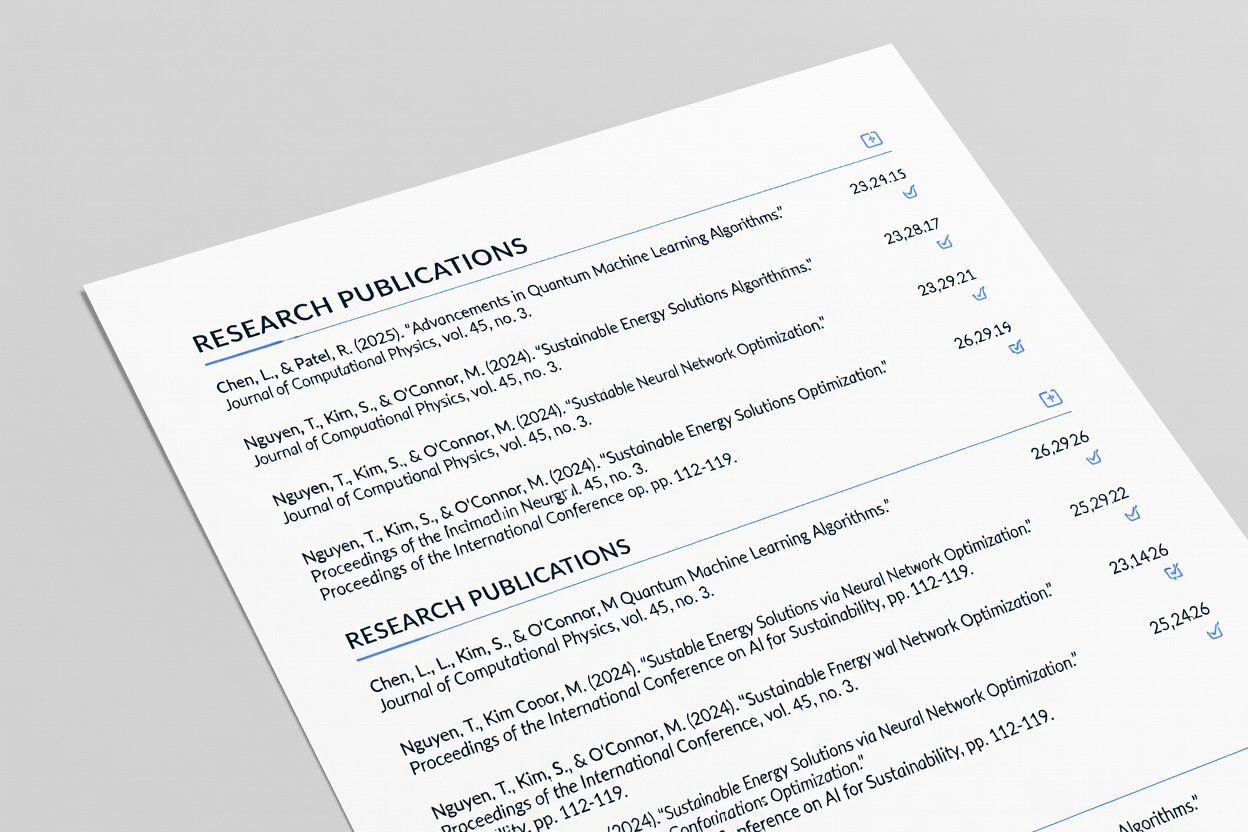
In 2026, effectively showcasing research publications on your resume can significantly boost your chances of landing academic, research, or industry positions. Recruiters and applicant tracking systems (ATS) scan for credible academic output, but poor formatting often leads to overlooked applications. This comprehensive guide explores strategic approaches tailored to modern hiring practices, helping you present your scholarly contributions with clarity and impact. Whether you are a recent graduate entering academia or a seasoned professional transitioning to corporate research roles, understanding how to list publications correctly ensures your resume stands out in competitive applicant pools.
Why Publications Matter More in 2026
With evolving job markets emphasizing evidence-based skills, publications demonstrate expertise and impact. Whether targeting STEM labs or social science think tanks, listing them strategically signals your ability to contribute original work. In today's data-driven economy, employers value candidates who can not only conduct research but also communicate findings effectively. Publications serve as tangible proof of your analytical capabilities, persistence through peer review, and ability to advance knowledge in your field. This is especially true as hybrid roles blending academia and industry continue to grow.
ATS-Optimized Formatting for Publications
ATS software prioritizes clean text over graphics. Use standard fonts like Arial or Calibri, avoid tables for the publications section, and include keywords such as "peer-reviewed" or field-specific terms. Place the section after experience or education depending on your career stage. Additional best practices include using consistent date formats, spelling out journal names fully on first mention, and ensuring no special characters disrupt parsing. Test your resume by copying it into plain text to verify readability before submission.
Choosing the Right Citation Style
Select APA, MLA, or Chicago based on your field. For social sciences, APA remains dominant. APA Style guidelines provide templates for journal articles. STEM fields often prefer IEEE or Vancouver styles. Always include DOI where available for credibility. Humanities candidates benefit from MLA conventions, which emphasize author names and page ranges. MLA resources offer detailed examples. Cross-reference with your target employer's preferred style to avoid immediate disqualification.
Real Examples Across Disciplines
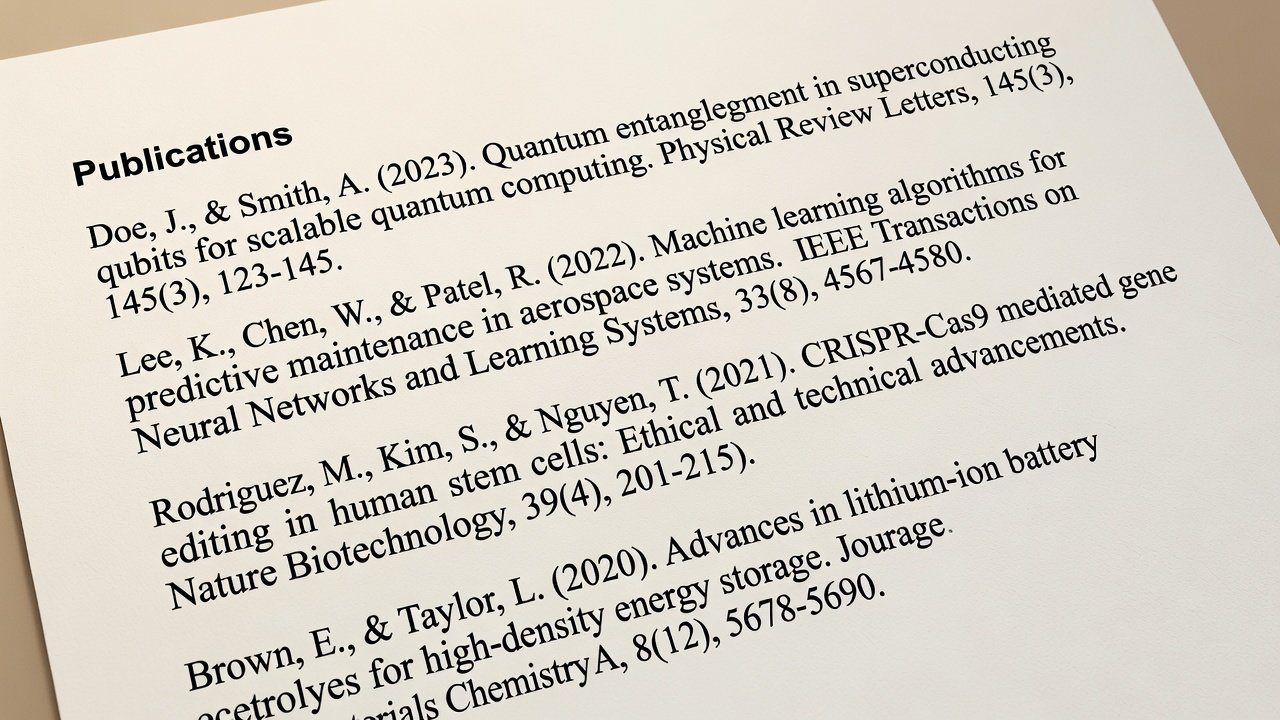
STEM Example: Smith, J., & Lee, K. (2025). Machine learning applications in climate modeling. Journal of Environmental Science, 42(3), 112-128. https://doi.org/10.1234/jes.2025.003
Social Sciences Example: Patel, A. (2024). Urban migration patterns post-pandemic. Sociology Quarterly, 18(2), 45-67.
Humanities Example: Rivera, M. (2025). Narrative structures in contemporary digital literature. Modern Language Review, 120(4), 301-319.
Placement Tips Within Resume Sections
For recent graduates, position publications near the top after education. Experienced professionals integrate them under a dedicated "Publications" heading or within relevant experience bullets. Always lead with the most impactful work. In industry resumes, consider embedding citations into achievement bullets under professional experience to show direct application of research skills. Academic CVs allow longer lists, while industry versions require ruthless prioritization of the top three to five entries.
Quantifying Impact to Stand Out
Go beyond listing by adding metrics: "Publication cited 150+ times" or "Led study resulting in policy adoption by three agencies." This quantifies value for both academic and corporate recruiters. Other strong metrics include journal impact factor, download counts, media mentions, or follow-on grants secured. When possible, note your specific contribution such as "First author on study that influenced FDA guidelines."
Common Pitfalls to Avoid
- Using inconsistent citation formats across entries
- Listing non-peer-reviewed work without clear context or separate headings
- Overloading the section with minor conference abstracts that dilute focus
- Ignoring pending publications instead of noting them appropriately as "In Review"
- Failing to bold your name in multi-author papers, making it hard for recruiters to identify your role
- Omitting DOIs or URLs that allow quick verification of claims
Integrating Transferable Skills for Career Changers
Highlight how research honed skills like data analysis, critical thinking, and project management. Frame publications as evidence of these abilities when pivoting to industry roles outside academia. For example, a biologist moving into biotech consulting might describe a publication as demonstrating expertise in regulatory compliance and stakeholder communication. Use action verbs in bullets to connect research output directly to business outcomes such as innovation pipelines or risk mitigation.
Tools and Software Recommendations
Consider using reference managers like Zotero or EndNote to generate consistent citations quickly. These tools help maintain accuracy when updating your resume for different applications. Many also integrate with ATS-friendly export options. Always double-check generated citations against official style guides to catch any formatting errors introduced by automation.
Step-by-Step Compliance Checklist
- Verify all citations for accuracy and completeness against original sources.
- Format for ATS readability with plain text and standard headings.
- Align citation style with target industry or employer standards.
- Quantify impact with specific, measurable achievements where possible.
- Proofread for consistency across the entire resume document.
- Test with free ATS simulators before final submission.
- Customize the list length and emphasis based on the specific job description.
- Ensure any pending or in-progress work is clearly labeled to maintain transparency.
Balancing Brevity and Credibility
Limit to 3-5 key publications unless applying for pure research roles. Use selective bolding for your name in multi-author papers to draw recruiter attention quickly. For extensive publication records, consider adding a note such as "Selected publications" and directing readers to an online portfolio or Google Scholar profile for the full list.
Frequently Asked Questions
How do I handle pending publications?
List as "Author. (Year). Title. Journal Name. Status: In Review." This shows ongoing productivity without overstating completed work. Update the entry once accepted.
What about non-peer-reviewed work like blog posts or white papers?
Include only if highly relevant, under a separate "Other Publications" heading, and emphasize any measurable engagement or influence on policy or practice.
Should I include preprints?
Yes, for fast-moving fields like computer science, but clearly label them as preprints and note submission status to maintain credibility.
How many publications should appear on an industry resume?
Most industry roles benefit from three to five strategically chosen entries. Focus on those demonstrating skills aligned with the job posting rather than volume.
Is it acceptable to list publications from undergraduate work?
Yes, particularly if the research aligns with the target role and you contributed substantially. Frame it to highlight transferable skills developed early in your career.
Conclusion
Strategic publication listing in 2026 combines precision formatting, impact metrics, and field-appropriate styles to maximize recruiter engagement. Follow the checklist and examples above to create a compelling, ATS-compliant resume section that highlights your research achievements effectively. By tailoring placement, quantifying results, and avoiding common errors, you position yourself as a strong candidate ready to contribute meaningful work in both academic and professional environments.
No comments yet. Be the first!