 Jobboy

Introduction to ESG Values Alignment in Modern Interviews
As companies prioritize sustainability and ethics, demonstrating ESG values alignment has become essential for candidates in 2026. Interviewers seek professionals whose personal ethics match corporate sustainability goals, particularly in tech and finance. This alignment signals long-term cultural fit and helps organizations meet regulatory and stakeholder demands. ESG encompasses environmental stewardship, social responsibility including DEI, and strong governance practices. Candidates who articulate this connection stand out because they show they can contribute to both immediate business objectives and long-term societal impact.
Understanding ESG—Environmental, Social, and Governance—requires candidates to prepare thoughtful responses that weave in real-world examples. This article provides step-by-step frameworks, comparison of answers, case studies, and practical scripts to help you excel. Research shows that companies with strong ESG performance often attract top talent who value purpose-driven work, making preparation in this area a strategic advantage for job seekers.
Step-by-Step Framework for Researching ESG Reports
Begin by identifying target companies and accessing their latest sustainability reports. Download annual ESG disclosures from official websites and analyze key metrics such as carbon reduction targets and diversity statistics. This research forms the foundation of authentic answers that resonate with hiring managers.
- Review the company's most recent ESG report for specific goals and progress, noting timelines and measurable outcomes.
- Cross-reference with third-party ratings from organizations like Sustainalytics or reports available on SEC website.
- Note any mentions of DEI initiatives and climate action plans, including challenges the company has publicly acknowledged.
- Prepare 2-3 personal examples that connect to these priorities, using the STAR method to structure your stories.
- Examine recent news or earnings calls for updates on ESG commitments to ensure your knowledge is current.
This structured approach ensures your responses feel authentic rather than generic. Spend at least two hours per company on this research to uncover nuanced details that weaker candidates miss.
Integrating DEI and Climate Impact Examples
Strong answers link personal values to company actions. For climate impact, discuss reducing personal carbon footprints or leading green projects at previous employers. For DEI, highlight mentoring underrepresented colleagues or advocating for inclusive policies that improved team dynamics. Always quantify where possible, such as “I helped increase team diversity by 25% through targeted recruitment initiatives that also boosted innovation metrics.”
Integrate these examples by tying them explicitly to the employer’s stated goals. Mention how your actions supported broader outcomes like reduced emissions or improved employee retention rates. This demonstrates not just awareness but actionable commitment.
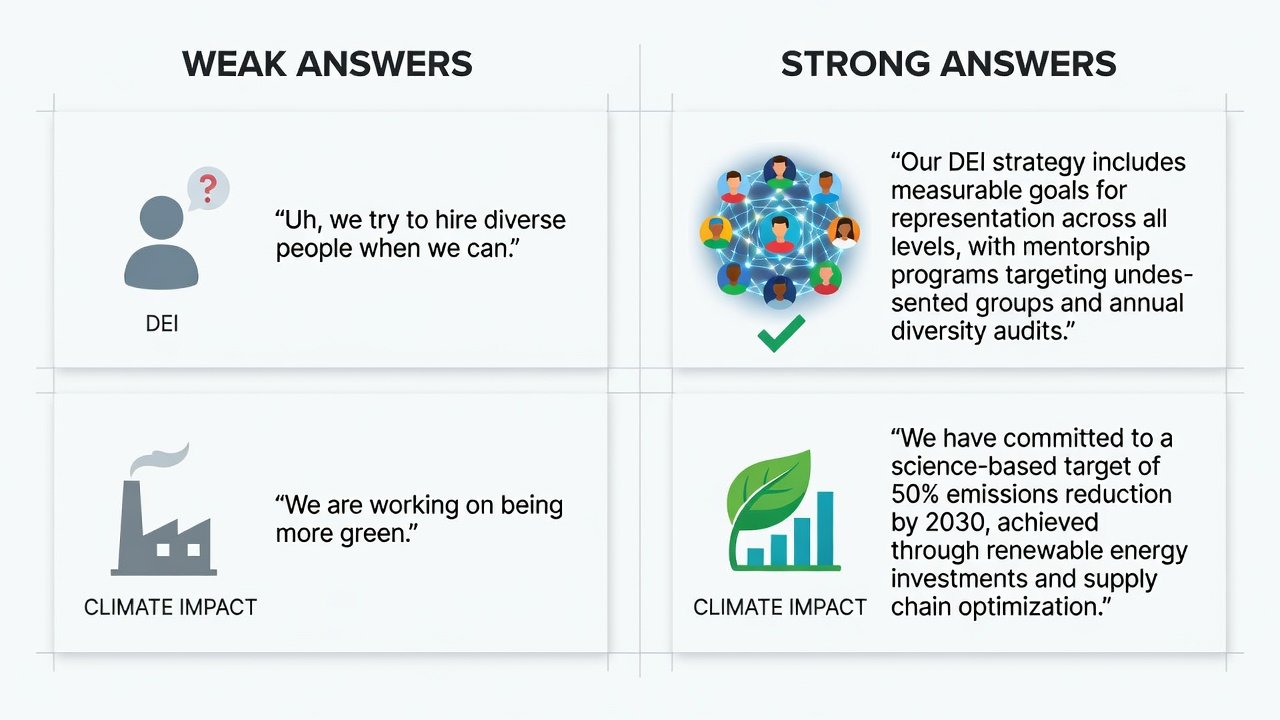
Weak vs. Strong Answers: A Direct Comparison
Weak answer: “I care about the environment and think your company does too.” This response lacks depth, research, and personal connection, leaving interviewers unconvinced of genuine alignment.
Strong answer: “In my previous role, I implemented a recycling program that cut office waste by 40%, aligning directly with your 2025 net-zero commitment outlined in the ESG report. I’m eager to contribute similar initiatives here by adapting those strategies to your supply chain challenges.” The strong version shows research, specificity, and forward-looking enthusiasm that positions you as a proactive contributor.
Another weak example might ignore governance entirely, while a strong one references board diversity or ethical sourcing policies from the company’s disclosures.
Real Case Studies from Tech and Finance Sectors
In tech, a candidate at a major firm referenced aligning personal advocacy for ethical AI with the company’s governance policies on data privacy, securing the role by discussing specific frameworks like bias audits. In finance, an applicant shared experiences with sustainable investing that matched the bank’s climate risk framework, leading to an offer after detailing how they evaluated ESG factors in portfolio decisions.
These examples illustrate how values alignment turns interviews into conversations about shared impact. A third case from a fintech startup involved a candidate who connected their volunteer work on financial literacy programs to the firm’s social responsibility goals, resulting in an accelerated hiring process.
Practical Scripts for Common ESG Interview Questions
Question: “How do you align with our sustainability goals?”
Script: “I’ve followed your progress toward 50% renewable energy by 2028. In my last position, I led a virtual team initiative that reduced travel emissions by 30%, and I’d love to apply similar strategies here to support those targets while improving operational efficiency.”
Question: “Tell me about a time you faced an ethical dilemma.”
Script: “When a supplier used questionable labor practices, I raised concerns through proper channels, leading to a policy review. This reflects the governance standards I admire in your operations and on EPA resources for responsible sourcing.”
Additional question: “How would you handle conflicting priorities between short-term profits and long-term ESG targets?” Script: “I would propose data-driven pilots that demonstrate ROI, such as energy-efficient upgrades that pay back within 18 months while advancing climate goals.”
Tips for Using AI Tools in Interview Preparation
Leverage AI chatbots to simulate ESG questions and refine responses. Input company-specific ESG data into tools for personalized feedback on tone and content. Practice with voice AI to improve delivery and confidence during behavioral segments. Always verify AI suggestions against official reports for accuracy and update them with the latest 2026 disclosures. Combine AI practice with peer mock interviews for well-rounded preparation.
Behavioral Interview Keywords for ESG Alignment
Incorporate keywords such as “sustainability integration,” “stakeholder engagement,” “ethical decision-making,” “DEI advocacy,” “climate resilience,” and “governance transparency.” Use them naturally in stories to match applicant tracking systems and interviewer expectations for cultural fit.
Common Mistakes to Avoid
- Overgeneralizing without company-specific references.
- Focusing only on environmental aspects while neglecting social and governance pillars.
- Failing to quantify impact in examples.
- Ignoring potential conflicts between personal values and corporate realities.
FAQ: Handling Ethical Dilemmas in ESG Interviews
- How do I address conflicts between profit and sustainability? Frame it as finding innovative solutions that deliver both, citing examples of long-term value creation and referencing frameworks from United Nations sustainable development resources.
- What if I lack direct ESG experience? Emphasize transferable skills like project management in resource efficiency or team inclusion efforts with measurable results.
- Should I mention personal activism? Only if it ties professionally to the role and demonstrates balanced judgment without appearing extreme.
- How to respond if asked about a company’s past ESG controversies? Acknowledge the issue factually, then pivot to how you would contribute to ongoing improvements based on their current reports.
Conclusion
Mastering ESG values alignment positions you as a thoughtful candidate ready for 2026 challenges. By researching thoroughly, crafting specific responses, and preparing for dilemmas, you demonstrate genuine cultural fit. Apply these strategies to stand out in competitive interviews across tech and finance, turning values discussions into compelling reasons to hire you.

No comments yet. Be the first!