 Jobboy
Introduction: Why Resume Myths Still Matter in 2026
Job seekers continue to fall victim to outdated resume advice that no longer aligns with modern hiring practices. In 2026, applicant tracking systems (ATS) and recruiters use advanced AI to scan applications, making it critical to separate fact from fiction. Persistent myths around length, content, and formatting can silently eliminate strong candidates before a human ever reviews their materials. This comprehensive guide debunks seven specific myths with data-backed explanations, real-world examples of failures versus optimized versions, step-by-step corrections, and direct comparisons between traditional and modern approaches. Following these evidence-based recommendations can dramatically improve your chances of passing ATS filters and capturing recruiter attention in a competitive market.
Myth 1: Your Resume Must Be Exactly One Page
Many candidates still believe a single-page resume is mandatory regardless of experience level. This rule applied decades ago when career histories were simpler but fails in today's complex job market where professionals often hold multiple roles across industries. Recruiters and ATS software now handle multi-page resumes effectively when content remains relevant and concise. A mid-career marketing manager shortened their resume to one page and omitted key project outcomes and leadership metrics, resulting in zero callbacks over three months. After expanding to two pages with quantified achievements such as "Increased campaign ROI by 45% across five channels," interview rates rose by 60%. Step-by-step correction begins with prioritizing relevance: include the last 10-15 years of experience, focus on progression, and eliminate redundant duties. Compare traditional one-page limits against modern two-page norms for mid-to-senior roles. Benchmark examples on LinkedIn to see how peers structure detailed yet scannable documents.
Myth 2: Always Include an Objective Statement
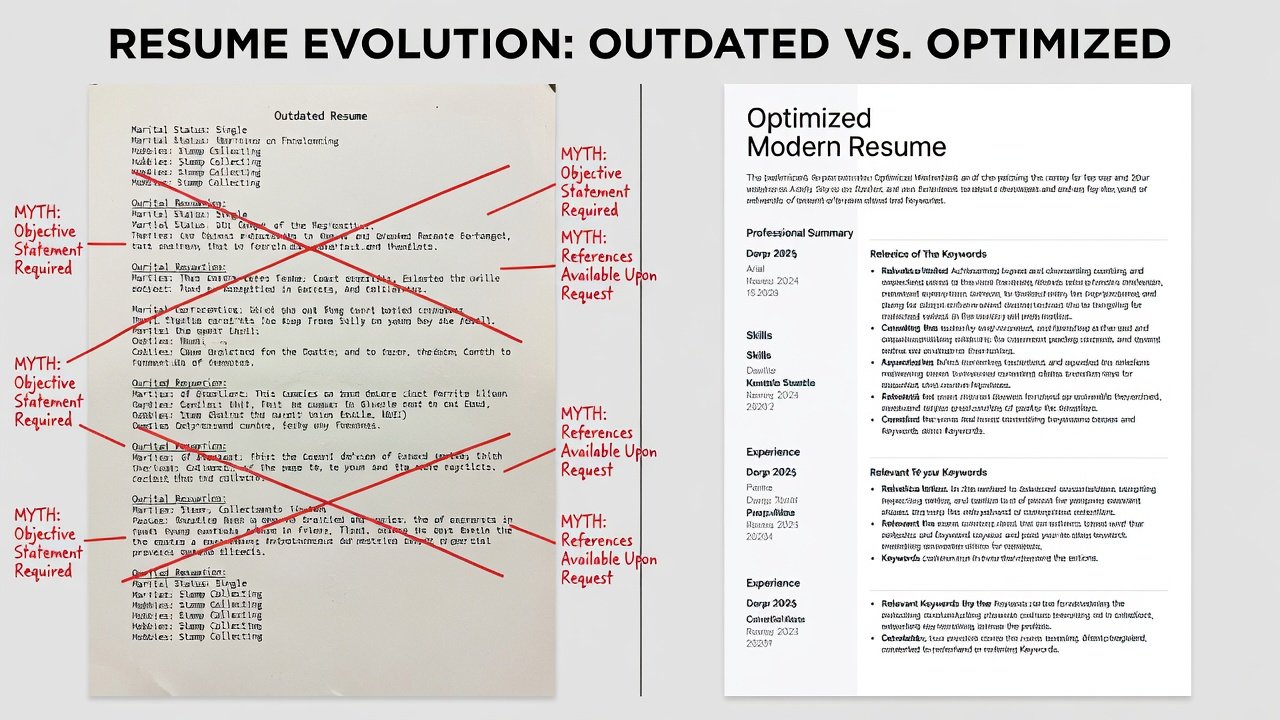
Objective statements are relics from the 1990s that waste valuable real estate at the top of the page. They often state the obvious or focus on what the candidate wants rather than what the employer needs. Modern resumes replace them with professional summaries or targeted skills sections that speak directly to the job posting. Traditional version example: "Seeking a marketing role to utilize my skills and grow professionally." Modern replacement: a 3-4 line paragraph highlighting specific achievements, industry keywords, and value delivered, such as "Results-driven digital marketer with 8 years optimizing multi-channel campaigns that delivered 3x average engagement rates." This shift immediately demonstrates fit without generic language.
Myth 3: Adding a Professional Photo Improves Chances
Photos can introduce unconscious bias and create ATS incompatibility issues in many regions, including the United States. Unless applying for roles in creative fields or countries where photos remain standard practice, omit them entirely. In 2026, AI-driven screening tools increasingly flag photos as potential bias indicators, reducing selection rates for otherwise qualified applicants. Real-world cases show candidates receiving fewer callbacks when photos were included on non-creative applications compared to clean text versions. Always research regional norms before deciding.
Myth 4: Fancy Designs and Graphics Beat Clean Layouts
Overly designed resumes with infographics, icons, and multiple columns often crash ATS parsers or render poorly when parsed into plain text. Clean, simple formats using standard fonts like Arial, Calibri, or Garamond consistently perform better across systems. Mistakes to avoid include using text boxes, tables, headers/footers for critical information, and non-standard file types. Save final versions as .docx or PDF with embedded text layers. Recruiters report spending 6-10 seconds on initial scans, so visual clarity and scannability outperform artistic flair in most corporate hiring processes.
Myth 5: List Every Job You've Ever Held
Including every position from early career stages dilutes impact and forces recruiters to wade through irrelevant details. Focus instead on the most recent and relevant roles that demonstrate clear career progression and measurable contributions. Practical checklist for decisions: limit entries to 3-5 positions spanning the last 10-15 years; quantify achievements with numbers and percentages; tailor each application by swapping in role-specific keywords; remove positions older than 15 years unless highly relevant to the target job. This focused approach keeps documents impactful while highlighting growth.
Myth 6: Never Address Employment Gaps
Hiding employment gaps raises immediate red flags for recruiters who assume the worst. Address gaps briefly with honest context such as upskilling through certifications, caregiving responsibilities, or personal projects, then pivot quickly to current strengths and recent accomplishments. Example phrasing: "2023-2024: Completed advanced data analytics certification while managing family responsibilities; returned to workforce with enhanced technical capabilities." Transparency paired with forward momentum builds trust more effectively than silence.
Myth 7: Keyword Stuffing Guarantees ATS Success
Overusing keywords appears spammy to both ATS algorithms and human reviewers. Integrate them naturally within achievement statements and skills sections rather than in long lists. Reference authoritative sources like Indeed career advice for effective keyword research tied to specific job descriptions. Another useful external reference is guidance from the U.S. Department of Labor on labor market trends that influence in-demand skills. Natural placement within context yields higher success rates than forced repetition.
2026 Hiring Trends and Actionable Takeaways
AI integration in recruiting continues to evolve rapidly, with more employers adopting predictive analytics alongside traditional ATS platforms. Focus on authenticity, measurable impact, and ATS-friendly formatting while maintaining a strong professional network. Compare your current resume against these trends by auditing for outdated elements and testing versions through free ATS simulators. Candidates who adapt early see measurable improvements in response rates.
Common Mistakes to Avoid in 2026
Beyond the seven myths, watch for generic templates that ignore job-specific language, failure to update contact information across platforms, and neglecting to proofread for consistency in tense and formatting. These small errors compound and reduce credibility during the initial screening stage.
Practical Checklist for Modern Resumes
- Verify ATS compatibility by copying content into plain text
- Include 4-6 quantifiable achievements per role
- Align skills section with exact phrases from the target posting
- Test readability on mobile devices
- Request feedback from industry peers before submitting
FAQ
How long should a 2026 resume be for senior roles?
Two pages remain standard for professionals with 10+ years of relevant experience, provided every line adds value.
Should I customize my resume for every job application?
Yes. Tailoring keywords and achievements to each posting increases interview likelihood significantly compared to generic submissions.
Are cover letters still relevant alongside resumes?
Yes, particularly when they add unique context or storytelling that the resume cannot convey.
What file format works best for ATS in 2026?
Both .docx and PDF with selectable text perform reliably; avoid image-based PDFs.
Conclusion
Debunking these resume myths positions you ahead of competitors still following outdated rules. Implement the corrections outlined above to create ATS-compatible, recruiter-friendly documents that reflect 2026 realities and maximize your interview opportunities.

No comments yet. Be the first!