 Jobboy

Introduction: Tailoring Your Resume for Neurodivergent Strengths in 2026
Neurodivergent job seekers, including those with autism, ADHD, dyslexia, or other cognitive variations, bring unique strengths like hyperfocus, pattern recognition, and innovative problem-solving to the workplace. In 2026, crafting a resume that showcases these abilities while navigating application systems and potential biases requires intentional strategies. This guide provides comprehensive advice to help you create documents that stand out for the right reasons. Standard resume templates often overlook sensory and cognitive needs, leading to overwhelm or misinterpretation of career paths. By focusing on inclusive design and quantified achievements, you can present a compelling narrative that resonates with hiring managers seeking diverse talent pools.
Many professionals face challenges in traditional application processes, from sensory overload during reviews to explaining non-linear career trajectories. This expanded resource dives deep into each element, offering practical examples drawn from real candidate experiences and updated best practices for the current hiring landscape.
Highlighting Neurodivergent Strengths Without Oversharing
Emphasize abilities such as sustained attention on complex tasks or identifying data trends. For example, instead of generic statements, use bullets that quantify impact: "Developed a pattern-recognition algorithm that improved data processing efficiency by 35%, leveraging hyperfocus during extended analysis sessions over a six-month project." Another illustration might involve a candidate who used their attention to detail in quality assurance, resulting in a 40% reduction in errors for a software deployment. Avoid framing neurodivergence as a deficit. Focus on contributions that align with job descriptions, such as creative solutions derived from non-linear thinking. This approach allows you to demonstrate value directly tied to business outcomes without unnecessary personal disclosures.
Real candidate examples show success when strengths are positioned as assets. One software engineer highlighted their ability to maintain focus through marathon debugging sessions, leading to faster resolution of critical issues. Tailor these mentions to the role, ensuring they feel natural within achievement-oriented language.
ATS-Friendly Formatting to Minimize Sensory Overload
Applicant Tracking Systems (ATS) parse resumes using simple structures. Use standard fonts like Arial or Calibri at 11-12 point size, with 0.5-1 inch margins. Avoid tables, graphics, or columns that confuse parsers and create visual clutter. Opt for clean layouts with consistent headings and ample white space. This reduces cognitive load during review and improves readability for both machines and humans. 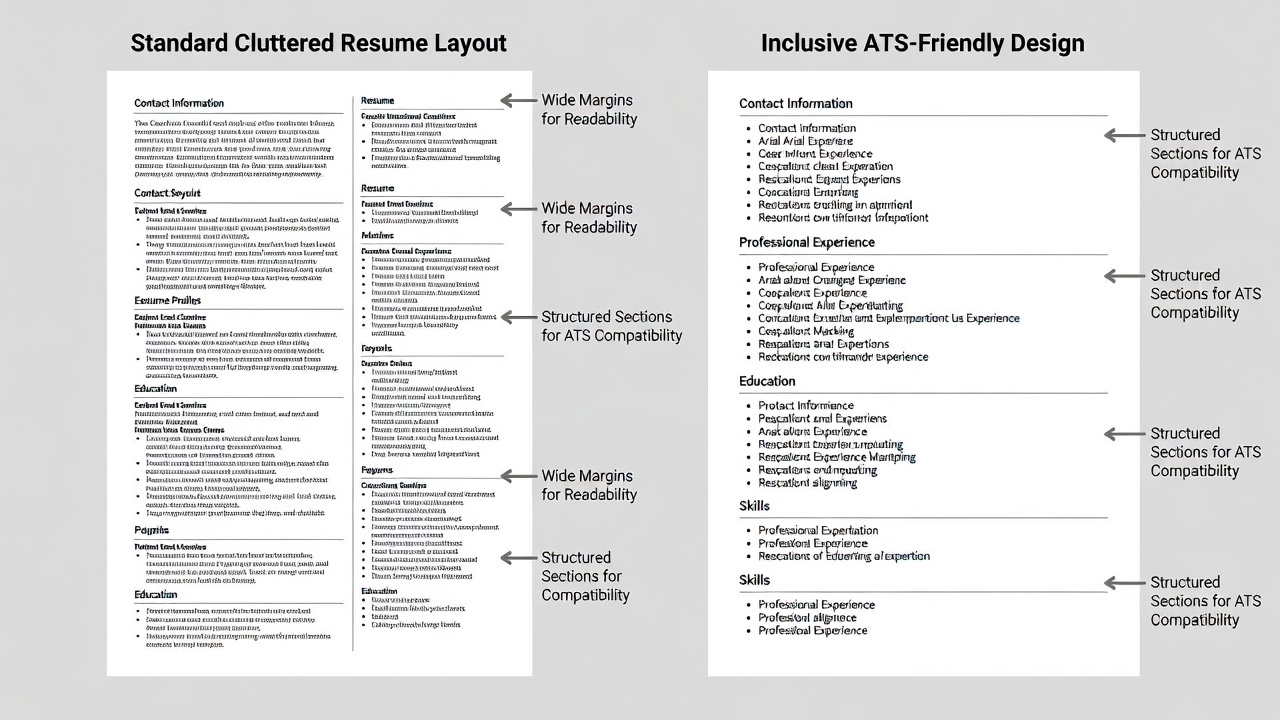
Key Formatting Tips
- Limit to one page for under 10 years of experience; two pages maximum otherwise.
- Use bullet points starting with action verbs such as "Optimized," "Analyzed," or "Implemented."
- Incorporate keywords from the job posting naturally throughout the document.
- Save as PDF to preserve formatting, but test compatibility first with online tools.
- Include section headers like "Professional Experience" and "Skills" in bold for quick scanning.
- Maintain consistent spacing between sections to prevent visual fatigue.
These choices ensure your resume passes automated filters while remaining approachable for reviewers who may spend only seconds on initial scans.
Addressing Employment Gaps and Non-Linear Career Paths
Many neurodivergent individuals experience non-traditional trajectories due to burnout, health management, or exploratory roles. Frame gaps positively by highlighting transferable skills gained during those periods, such as freelance projects or self-directed learning. Example: "Career break 2023-2024: Completed advanced certification in data analytics while managing personal wellness strategies, resulting in enhanced pattern-recognition expertise applied in subsequent roles." Provide context around skill-building activities rather than personal reasons. Another approach involves grouping contract or project-based work under a single heading to show continuity. This technique prevents gaps from appearing as red flags and instead positions them as periods of growth.
Quantified Bullet Points That Showcase Unique Contributions
Transform experiences into measurable wins. Compare standard versus neurodivergent-optimized examples: Standard: "Analyzed datasets for trends." Optimized: "Utilized hyperfocus-driven deep dives into datasets to identify overlooked patterns, uncovering insights that drove a 22% increase in quarterly revenue as of mid-2026." Additional examples include a project manager who noted "Streamlined workflow processes using pattern recognition techniques, reducing project completion time by 28% across five cross-functional teams." Always tie contributions to tangible results like efficiency gains, revenue impact, or error reductions to make your resume more persuasive.
Cover Letter Approaches Emphasizing Innovative Thinking
Use cover letters to expand on creative problem-solving. Structure: Open with a specific strength example, connect to company needs, and close with enthusiasm. Keep concise, around 250-300 words. For instance, begin with how your pattern recognition led to a novel solution in a previous role, then link it to the target company's challenges. This narrative format allows more room to illustrate innovative thinking than the resume alone permits. Integrate keywords from the job description seamlessly while maintaining an authentic voice.
Comparing Standard vs Inclusive Resume Designs
Standard designs often feature dense text and multiple columns, which can trigger overload and reduce ATS compatibility. Inclusive versions prioritize simplicity, high-contrast text, and logical flow. Test both versions with free ATS simulators for compatibility. In practice, an inclusive design might use single-column layouts with larger line spacing, while a standard one packs information tightly. The inclusive approach not only aids neurodivergent applicants but also improves overall reader engagement in fast-paced hiring environments.
Practical Steps for Requesting Accommodations
After receiving an offer, request accommodations via HR. Steps include: 1) Identify needs like flexible scheduling for focus periods or quiet workspaces. 2) Provide documentation if required, focusing on functional impacts rather than diagnoses. 3) Reference the Department of Labor guidelines on workplace adjustments. Prepare a brief written request outlining specific supports, such as modified interview formats or software tools. Follow up in a timely manner and keep records of communications. This process empowers you to advocate effectively while complying with 2026 legal frameworks.
Inclusive Language Checklist
- Use person-first or identity-first language consistently based on preference.
- Avoid ableist terms like "overcome" or "suffer from."
- Focus on skills and results rather than limitations.
- Ensure pronouns and names are accurate throughout all materials.
- Review for neutral phrasing that emphasizes capability and innovation.
- Cross-check against company values for alignment where possible.
FAQ on Legal Considerations in 2026 Hiring
Q: Can employers ask about neurodivergence? A: No, under laws enforced by the EEOC, inquiries must relate directly to job functions only.
Q: What protections exist for gaps? A: The Americans with Disabilities Act prohibits discrimination based on disclosed conditions when reasonable accommodations are requested.
Q: How should international applicants handle disclosures? A: Consult the World Health Organization for global neurodiversity insights and local regulations if applying internationally.
Stay informed about evolving policies to protect your rights throughout the process.
Conclusion
By implementing these 2026 strategies, neurodivergent professionals can create resumes that authentically represent their value. Iterate based on feedback and track application success to refine approaches over time. With thoughtful preparation, your unique strengths can become your strongest selling points in competitive job markets.


No comments yet. Be the first!